| Article | |
 PLEASE NOTE: This guide gives you a small insight into the related broadband technology, how it works, what it is and how much it'll cost. A satellite is a specialized wireless receiver/transmitter that is launched by a rocket and placed in orbit around the earth. There are hundreds of satellites currently in operation. They are used for such diverse purposes as weather forecasting, television broadcast, amateur radio communications, Internet communications, and the Global Positioning System. Modern satellites can receive and re-transmit thousands of signals simultaneously, from simple digital data to the most complex television programming. This makes them a viable alternative for Internet access. Satellite Internet access comes in two different forms:
Existing Internet enabled Satellites are based on either analogue or digital technology and often transmit TV signals in tandom with the connection; meaning bandwidth is shared and can cause highly variable speeds. Newer 'Digital' only satellites, those specifically design for Europe wide Internet accesses, have closer to ADSL & Cable Modem speeds.
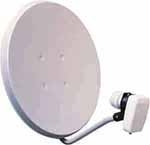
Sadly satellite technology can be quite complex to understand and thus an ISP must be well equipped to handle customer support issues, more so than any other type of provider. Costs & Hardware Satellite Internet access, be it new or old (Analogue / Digital), is not for the faint of heart or light of pocket. It helps to have a good knowledge of networking and at least some experience with installing a satellite dish and or related PC card. A Typical DVB PC Card will set you back around £100-£250 (quality does vary), while a dish (Analogue & Digital combo dish is recommended) will add a further £40-£100.
The monthly rental for access itself is likely to be between £15 and £300 per month, with speeds of 64Kbps to 4Mbps (VARIABLE!) being possible on the newer digital standards. Note that many business providers will charge upwards of £800 for the hardware and installation alone! Residential ISPs usually offer a cheaper setup (£100 to £300). The newer Digital systems will still not be ideal for gamers, Satellite is specifically designed for downloads and streaming media/live TV. A relay from Earth > Satellite > Earth under analogue will take 350-400ms; under digital it's 250ms. This means that multiplayer performance will never be lower than around 260ms - very poor. Satellite technology is a viable choice if you can't get the other broadband options, yet bad if you have little money or limited technical knowledge. Modern ISPs are, thankfully, easier to setup.
Have something
to say? Check out the ISPreview Forum -->
http://www.ispreview.co.uk/talk |