Home » ISP News »

UK Adopts FAST START Initiative to Boost the Superfast Broadband Rollout

Posted Friday, January 25th, 2013 (8:12 am) by Mark Jackson (Score 636)
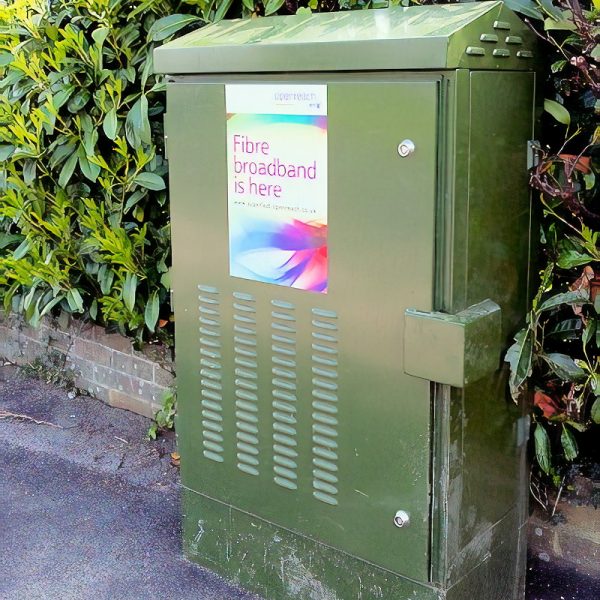
bt rural fibre broadband cabinet uk

The politicians responsible for the United Kingdom’s already heavily delayed national roll-out of superfast broadband services now have a new phrase to swing around, “Fast Start”, which will soon be available right across the country. The “new approach” will apparently smooth the deployment of faster connectivity by avoiding further delays.

According to the government’s Communications Minister, Ed Vaizey, the “Fast Start” approach is designed to ensure that delivery of the new services are “not hampered” any further by “complications that may arise at individual locations“. Apparently the first area to experiment with the scheme will be Norfolk in eastern England.

The amazing new feat of ingenuity (spoken with not even a hint of sarcasm) is apparently to be achieved by gathering together local representatives from all related parties (BT, council leaders etc.) in order to discuss the roll-out, identify any areas of concern and agree a course of action.

The discussions will apparently focus on a number of key development issues like planning, prioritising street works, improving the power supply to related street cabinets (some cabinets can be very expensive to upgrade), the best biscuit to use with a cup of tea and facilitating overhead lines and access to existing buildings and new developments. The biscuit part may not be accurate.

Ed Vaizey MP, Communications Minister, said:

Norfolk is on track to double access to superfast broadband for homes and businesses, and by having these discussions now, we can help ensure that the people of Norfolk will receive all the benefits that superfast broadband has to offer at the very earliest opportunity.”

Bill Murphy, BTs MD of Next Generation Access, added:

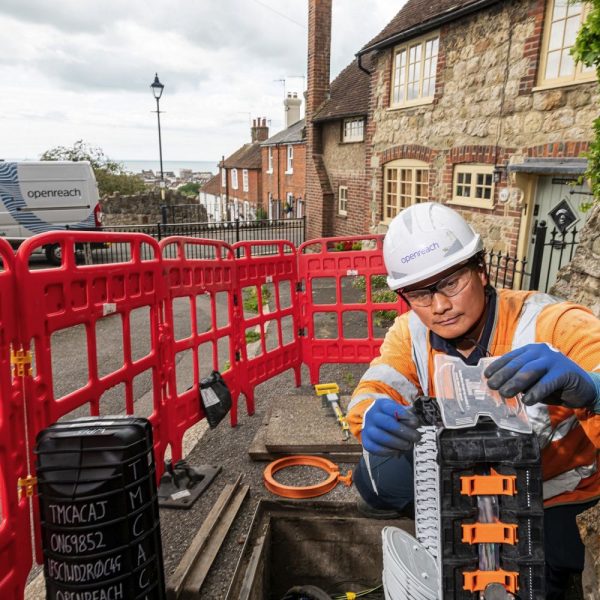
Rolling out fibre broadband across a large, rural terrain is a complex engineering and logistical challenge. Collaborative working is key to understanding and overcoming the challenges associated with a project of this scale, and the Government’s Fast Start initiative is an important step forward in moving Norfolk into the broadband fast lane without delay.”

In case anybody needs reminding. BT and the Norfolk County Council recently become one of the first areas in the UK to sign a new £41m deal, which will help to make superfast broadband (25Mbps+) services available to “more than” 80% of local premises by the autumn of 2015 (i.e. below the UK’s national target of at least 90%).

On the one hand it’s good to see politicians from different parties, and telecoms firms, coming together to discuss the forthcoming deployment strategy. On the other hand we’re surprised that this hasn’t already happened. Similarly we’re certain that no end of people will, in light of all the past delays, point towards the perhaps contradictory nature of calling it “Fast Start“. At least it’s not “Superfast Start” as that would really be taking the mickey.

The Government will next look to adopt this scheme throughout the UK.

Delicious
Add to Diigo
Add to Slashdot
Leave a Comment
8 Responses
  1. Sounds like a shoeIn for build and benefit to me. Get the people to build it and BT benefit. Next thing we’ll see is the CLA and NFU wayleaves being used to get free access for BT because its for the ‘benefit of the community’. No it isn’t. Its for the benefit of the incumbent who is protecting its copper assets with cabinets instead of building a futureproof modern fibre infrastructure. You really couldn’t make all this up.

    • DTMark

      Well put.

      “Rolling out *fibre broadband* across a large, rural terrain is a complex engineering and logistical challenge.” [BT]

      No, rolling out *cabinets* in area where they don’t fit on pavements necessitating digging up a road to put said cabinet on the other side, or where people don’t want a six foot high monstrosity outside their window ruining their view is perhaps the challenge.

      And given the ducting for the E-sides exists anyway, why is rural more complex than urban? Because these cabinets have to be powered? Well, there’s an answer to that one.

      The irony of the “Fibre broadband is *here*” sticker still makes me giggle.

  2. Fast start needs to include ammendments by Ofcom on Bt Undertakings so it is obliged to reveal incrmenal costs of NGA when it is selected as the preferred bidder.

    Openreach stated on BBC radio on 13th and 16th Dec that a Cabinet/Path costs £100k and every exchange costs a £1m. BT contractor case study for Northern Ireland suggest much much less (c£15k a path/cab ) as do BT own statements for the commenercial roll out in Q3.

    Ed Vaizey said Value for Money was a work in progress on Novemeber 28th at the EFRA committee. At the same meeting John Moore said who knows he is having to deal with a monolopy access provider so who knows? This candidness is to be admired.

    Fast Track must be supported by greater scrutiny on BT costs so state aid is only paid on factually proven incremental costs, not relying on clawback as a VFM measure. An over reliance by BT on pernicious confidentiality agreements and lack of transparency and trust in their numbers is the real barrier to the rural roll out.

    • Bob

      The £15K igure sounds more realitic for most cabinet installations.Rural areas should be no more expensive it is swings and roudabouts. Some costs will be less & some more. Power should not be an issue. There is hardlya road inthe UK that does not have power. It may be marginally more expensive as there may be no lamppost or street sign to hook it up to so will haveto be connected directly to the power cable. f they ned to dig across the road that may actually be more expensive due to the fact hey may have to close the road totally whilst they work on it

      Quite why BT are not liasing with the local councils already is a total mystery. The same lack of liasing with the power companies seems to occur also

    • dragoneast

      Might just possibly be the problems are not only on BT’s part. In my time I’ve come across plenty of local government (and utility) officers who take the view that everything has to take its place in the queue, and it’s a foolish one who doesn’t play it by the book with the tendency of the great British public to get upset at anything. And any business that doesn’t maximise its income and minimise its costs isn’t going to be around for long.

    • dragoneast

      i.e. charge as much as possible for doing as little as possible, just to make the point clear.

  3. dragoneast

    How does anyone ever manage to do their job if they don’t have a politician peering over their shoulder?

  4. Bob

    “Might just possibly be the problems are not only on BT’s part. In my time I’ve come across plenty of local government (and utility) officers who take the view that everything has to take its place in the queue”

    How else do you think you can plan thinghs. If BT does not operate to a proper plan ity can hardly expect power companies and Councils to rip up their program just to suit BT

    Most companies try to accomodate changes but they dont have people siting around twiddling their thumbs just in case BT want to change their schedule. If they can juggle things around theyy will but frequently they cannot

Leave a Reply

Your email address will not be published. Required fields are marked *

You may use these HTML tags and attributes: <a href="" title=""> <abbr title=""> <acronym title=""> <b> <blockquote cite=""> <cite> <code> <del datetime=""> <em> <i> <q cite=""> <strike> <strong>

Comments RSS Feed

* Your comment might NOT appear immediately (the site cache re-syncs periodically) *
Promotion
Poll
The Top 20 Category Tags
New Forum Topics
Promotion

Copyright © 1999 to Present - ISPreview.co.uk - All Rights Reserved (Terms, Privacy and Cookie Policy, Links (.), Website Rules)