By: MarkJ - 3 February, 2012 (9:47 AM) - Score: 3461 - Fixed Line Broadband, Statistics
fibre optic cable installuk mapA new study from consultancy firm Analysys Mason has suggested, theoretically, that a mix of band plan, vectoring and line bonding solutions could allow up to around 98-99% of UK homes and businesses to received superfast broadband ISP services via FTTC (e.g. BT-Infinity ) technology. In reality there are problems and many unknowns with this prediction but it might have some merit.

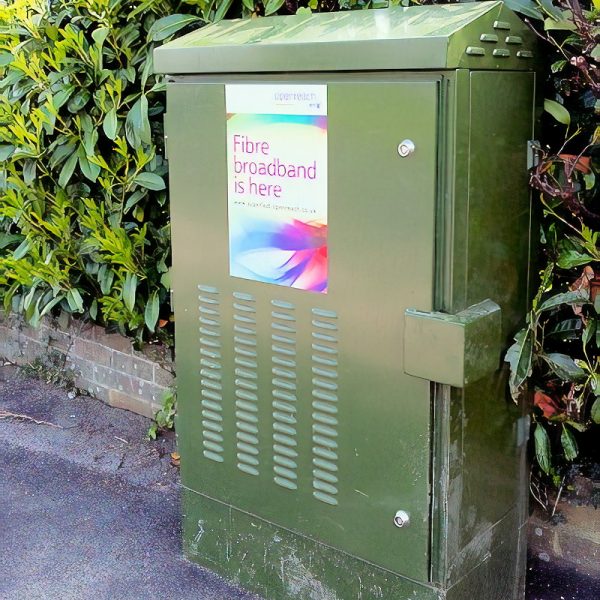
At present Fibre-to-the-Cabinet (FTTC) works by delivering a fast fibre optic cable to street cabinets, while the remaining connection (between cabinets and homes) is done using VDSL2 (similar to existing ADSL broadband but faster over short distances) via existing copper cable.

BT already uses this solution to deliver download speeds of up to 40Mbps to 30% of UK homes and it plans to reach 66% of homes by 2014. BT has repeatedly said that the service could potentially reach 90% of the UK (i.e. roughly equal to its eventual 21CN coverage) if it gets the lion's share of public money, but we'll leave that often heated debate aside for today.

A "band plan" (increased spectrum allocation) related upgrade during this spring will boost FTTC's top download speed to 80Mbps (20Mbps uploads) and a similar upgrade in the future could push that to 100Mbps+.

uk fttc copper line coverage increase

According to Analysys Mason, adding pair-bonding (using one or more spare copper pairs [phone lines] to increase speeds) and vectoring (works to cancel out interference [crosstalk]) could make FTTC faster and available to about 8% of lines over and above those covered by the current band-plan changes.

Analysys Mason Statement

In the UK, the potential gains are significant, but smaller. BT has already publicly indicated that a combination of band-plan changes, vectoring and public funding could extend the reach of non-cable 50Mbps services to over three quarters of UK premises. Analysys Mason's Viewpoint report, which draws on our work for the UK's Broadband Stakeholder Group, calculates that about 8% of lines could be enabled for at least 30Mbps services over and above those covered by the band-plan changes.

In the real world, mathematical assumptions like this and actual deployments don't always meet up quite so precisely and usually sidestep other problems. For example, some premises would not have the necessary amount of copper pairs to benefit from bonding.

The assumptions about speed also forget that as FTTC performance rises, usually for those closest to their street cabinet, it falls for people who reside further away. Real-world performance is usually very poorly reflected by predictions of theoretical capability (i.e. expect to get a lot less).

Then you have the financial issue. Both vectoring and bonding in particular would cost more money and this in turn is likely to make them more expensive for consumers; in some cases prohibitively. On the other hand there are those who would be more than happy to pay double if it meant getting a superfast connection.

It's worth pointing out that we don't yet know the full details of how BT would, if it got the funds, reach that 90% figure. This could easily impact Analysys Mason's prediction so we're taking it all with a pinch of salt. Thanks to Ian Grant for pointing us towards the report.
Share: Slash., Stumble, Facebook, Digg, Blink, Reddit, Delicious, Diigo
Option: Link | Search

Comments: 30

asa logoBT SUCKS
Posted: 3 February, 2012 - 11:18 AM
Link to comment

No chance of 98% of homes in YK will get FTTC soon. BT won't do this.
asa logoSledgehammer
Posted: 3 February, 2012 - 12:11 PM
Link to comment

In a word BOLLO*
asa logoHawaii501
Posted: 3 February, 2012 - 5:12 PM
Link to comment

Agree this is total nonsense. The honest answer to offer Fibre to a large number of premises quickly is for Ofcom to force Virgin to allow BT to use their cable ducts. Then BT can start to enable other areas of the UK rather than focusing on a competitive battle against Virgin.
asa logoDeduction
Posted: 3 February, 2012 - 6:02 PM
Link to comment

quote"offer Fibre to a large number of premises quickly is for Ofcom to force Virgin to allow BT to use their cable ducts."

What sense does that make? Using Virgins ducts is not going to make the deployment footprint of Fibre any larger it would just mean more overlap with BT and Virgin offering their fibre products in the same areas and no new ones.
asa logoJames
Posted: 3 February, 2012 - 6:44 PM
Link to comment

think he meant it the other way around
asa logoBob
Posted: 4 February, 2012 - 9:30 AM
Link to comment

This make no sence. No mater how BT dress it up copper has bandwidth limitation and band planning and vectoring will make little difference in real application. Yes under lab conditions you can demonstrate an impressive spped over a single coper pair but that not real. You can do the same with cars you can demonstrate a normal production car can do a 100 mpg but you will not get that or anywhere near it under real road & driving conditions

For rural areas bandplaning & vectoring may work but in Urban areas FTTH is the way to go rather than further investment in an end of life technology
asa logoNeil McRae
Posted: 4 February, 2012 - 1:47 PM
Link to comment

Bob,
Your statement is totally void of fact.

The bandplan change will double everyone's line speed, then depending on what service ISP's offer you will be able to get upto 80M download and 20M uploand, this is proven as the band plan BT is moving towards is deployed in other countries where the evidence speaks for itself.

Vectoring reduces line noise and can benefit certain lines to increase onto of the band plan up to around 20M. Again, this is tried and tested technology and not just in the lab. Alcatel Lucent and a number of other vendors have been trailing this technology for some time.
asa logoNeil McRae
Posted: 4 February, 2012 - 1:48 PM
Link to comment

Just for clarity the band plan change affects users with FTTC only, not ADSL/2/2+
asa logoDeduction
Posted: 4 February, 2012 - 3:03 PM
Link to comment

quote"The bandplan change will double everyone's line speed"

NONSENSE and AAISPs recent trial of 80Mb which is only small numbers shows that with customers getting between 57Mbps - 79.7Mbps.
http://www.ispreview.co.uk/story/2012/01/13/aaisp-reports-first-real-world-80mbps-uk-fttc-broadband-trial-speeds.h
tml

Vectoring doesnt reduce line noise either, it either eliminates it or doesnt, it can not only "reduce it".

Obvious who you are with that statement once again, total disinformation as you posted a few months back about vectoring.
asa logoGadget
Posted: 4 February, 2012 - 5:34 PM
Link to comment

"Vectoring doesnt reduce line noise either, it either eliminates it or doesnt, it can not only "reduce it".

@Deduction try thinging of noise cancelling headphones - do you know of any (even Bose) that claim to eliminate noise???? I'll even give you a link http://www.bose.co.uk/GB/en/home-and-personal-audio/headphones-and-headsets/acoustic-noise-cancelling-headphones/quietcomfort-15-headphones/

and to make it easy
"Are QuietComfort® 15 headphones noise cancelling?

Yes. Proprietary Bose® Acoustic Noise Cancelling® headphone technology electronically identifies and dramatically reduces noise – while preserving the audio or tranquility you desire."
asa logoBob
Posted: 4 February, 2012 - 6:48 PM
Link to comment

Noise cancelling does not eliminate noise though the noise is cancelled out which actually increase the use of bandwidth
asa logoDeduction
Posted: 4 February, 2012 - 6:53 PM
Link to comment

Headphones have nothing to do with it
asa logoGadget
Posted: 4 February, 2012 - 7:25 PM
Link to comment

If you can't follow the analogy then perhaps you could indicate some substance to your prior unsubstatiated claim that "Vectoring doesnt reduce line noise either, it either eliminates it or doesnt, it can not only "reduce it".
asa logoDeduction
Posted: 4 February, 2012 - 8:05 PM
Link to comment

Perhaps you should prove your own claims first.
asa logoPB
Posted: 5 February, 2012 - 1:16 PM
Link to comment

If G4 technology gets deployed quickly enough and is priced similar, would you want FTTC?
asa logoNew_Londoner
Posted: 5 February, 2012 - 3:56 PM
Link to comment

The chances of 4G delivering speeds close to FTTC in an urban environment are not great. And what about usage limits? Not ideal for HD streaming!
asa logoDeduction
Posted: 5 February, 2012 - 4:53 PM
Link to comment

4G is technically capable of more than FTTC...
http://en.wikipedia.org/wiki/4G
asa logoNew_Londoner
Posted: 5 February, 2012 - 6:04 PM
Link to comment

@Deduction
So can give 200Mbps to multiple users simultaneously?
asa logoNew_Londoner
Posted: 5 February, 2012 - 6:25 PM
Link to comment

See computer World for real world 4G performance.

http://www.computerworld.com/s/article/9201098/3G_vs._4G_Real_world_speed_tests?taxonomyId=79&pageNumber=3
asa logoBriecheese Totalpong
Posted: 5 February, 2012 - 7:00 PM
Link to comment

http://fwd.channel5.com/gadget-show/videos/challenge/future-tech-what-is-4g

http://www.gizmodo.co.uk/2011/11/o2s-testing-londons-first-4g-lte-network-and-giz-uk-readers-can-help/

faster than any current UK FTTC as he said.
asa logoBriecheese Totalpong
Posted: 5 February, 2012 - 7:01 PM
Link to comment

AT&T and Sprint in the US are known to be poor performing and slow. Verizon is better over there.
asa logoMike
Posted: 5 February, 2012 - 7:29 PM
Link to comment

If that is replicated for people it will be great, as good as 90Mbps, superb.
asa logoDeduction
Posted: 6 February, 2012 - 12:21 AM
Link to comment

Yep 4G and others services be them fixed line or mobile will more than likely be great when they finally arrive, only a supporter of one company would try to dis any others products before they arrive ;)
asa logoNew_Londoner
Posted: 7 February, 2012 - 7:01 AM
Link to comment

^^^^

Quote "only a supporter of one company would try to dis any others products before they arive"

Of course this comment doesn't apply to any references to FTTC, vectoring, Profile 30a, FTTP on demand..... wink
asa logoMike
Posted: 7 February, 2012 - 12:44 PM
Link to comment

The original remark...
"The chances of 4G delivering speeds close to FTTC in an urban environment are not great"

wrong as usual. 4G easily able to do 90Mb
A) No plans for vectoring current FTTC
B) Profile raise only brings FTTC to 80Mb
C) You specifically said FTTC not FTTP

Buy a GPS you are lost.
asa logoNew_Londoner
Posted: 7 February, 2012 - 10:29 PM
Link to comment

@Mike
No doubt you already get >10Mbps with 3G? Remember the hype? National average closer to 1.5 Mbps

The original remark...
"...only a supporter of one company would try to dis any others products before they arrive". Quite!

A) No plans for vectoring current FTTC - does my post above say otherwise?
B) Profile raise only brings FTTC to 80Mb - suggest you google Profile 30a, which is what I mentioned, not profile 17a. The former is up to 200Mbps.

In your words, buy a GPS you are lost (or at least glasses to read!) cool
asa logoDeduction
Posted: 9 February, 2012 - 1:27 AM
Link to comment

There are no plans for any profile increases to bring FTTC speeds in the UK above 80Mb either is there??? If so can you link to that information it would be appreciated rather than hearsay.

Oh and yes if you read my link 4G is easily capable of 200Mb to multiple users, it can actually (at least in theory cant say in practice as ive never used it and i doubt you have either) go to 1Gbps.

100Mbps and possibly higher should be possible even when moving fast, when stationary with the right candidate system employed 3x that is more than possible.

4G is not like 3G far more information is carried in a smaller radio stream. It should not suffer like 3G if configured properly. You can have a much higher ratio of users to a tower (so to speak) than 3G and still get good speeds.

Its thought by many that mobile within the next 10 years will be the most used. Wireless is the real future.
asa logoBob
Posted: 9 February, 2012 - 6:38 PM
Link to comment

If you look at the graphs vectoring has only a small effect. The spped increases are largely obtained by line bonding. Vectoring might improve perforrmance on about 4% of lines. Not exactly impressive
asa logoGadget
Posted: 9 February, 2012 - 10:50 PM
Link to comment

Ericsson Research seem to believe vectoring has a more significant effect and have produced this output from their research

http://cms.comsoc.org/SiteGen/Uploads/Public/Docs_Globecom_2009/Vector_globecom2009_final_v2.pdf

These effects if replicable would give a significant improvement.
asa logoDeduction
Posted: 11 February, 2012 - 1:03 AM
Link to comment

Nice document page 4 and 8 confirms what i have told others before vectoring only cancels line noise it does not reduce the levels of it (either gets rid of it or doesnt).

Vectoring only helps significantly if a line previously has cross talk, as shown on page 9.


Generated in 0.61372 seconds.
DB queries: 8

Copyright © 1999 to Present - ISPreview.co.uk - All Rights Reserved (Terms, Privacy Policy, Links (.), Live Chat & Website Rules).