Ofcom set out KCOM changes to boost competition and broadband in Hull UK

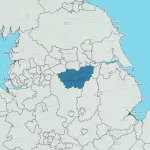
The UK telecoms regulator, Ofcom, has today set out their final decisions for how they intend to regulate the fixed telecoms markets that underpin gigabit broadband, mobile networks and business connections in the Hull Area of East Yorkshire (England) – reflecting c.198,000 premises, which remains dominated by KCOM’s local network.
Ofcom typically conducts a single holistic review of the markets for both Business Connectivity (i.e. Leased Lines / Ethernet and Dark Fibre etc.), and the more residential focused Wholesale Local Access sector (i.e. broadband products like FTTP and FTTC etc.), every 5 years. In fact, they already published their Telecoms Access Review 2026 (TAR) changes for the rest of the UK earlier this year, but Hull has always been different.
At the last review, back in 2021 (here), the Macquarie-backed KCOM was still deemed to hold Significant Market Power (SMP) in the Hull area and its full fibre (FTTP) lines had already covered the vast majority of local premises. The operator has since expanded their fibre into other parts of East Yorkshire and Lincolnshire (England) – covering over 305,000 premises – but Ofcom’s review only focuses upon their SMP patch in Hull.
Advertisement
However, Hull is not the same today as it was in 2021, which is because in that time three rival alternative networks (see above) have now built their own FTTP networks across most of the city (Grain only covers a smaller patch) and have thus significantly weakened KCOM’s grip. At the same time, KCOM has been busy shifting customers off their old copper-based services (analogue phone, ADSL etc.) and on to fibre.
Suffice to say that Ofcom’s market review might normally address all this change by softening KCOM’s regulation in certain areas and we do see a bit of that via the removal of Dark Fibre requirements (i.e. rivals won’t be able to install their own equipment at either end of the KCOM’s unlit fibre within cable ducts). Despite this, the regulator notes that 70-80% of all premises in the Hull Area currently still purchase a fixed broadband service over KCOM’s network and around 10-20% premises still have no other choice.
In short, Ofcom found that “network competition is not yet established and altnets face challenges in winning customers given KCOM’s incumbency advantages“. As a result, the regulator has opted to maintain much of their original regulation and imposed new requirements for KCOM to introduced a Physical Infrastructure Access (PIA) style product – like the one they already require Openreach to offer (i.e. making it easier for rivals to run new fibre via KCOM’s existing cable ducts).
Ofcom’s Changes for Hull UK and KCOM (2026 – 2031)
We find that KCOM has significant market power in the wholesale local access and leased line access markets in the Hull Area. We are imposing a set of remedies to address the competition concerns that arise as a result. We have decided to:
– Improve access to KCOM’s telegraph poles and underground ducts:
A key element of our approach to promoting network competition is to require KCOM to give other providers access to its duct and pole infrastructure. As in the rest of the UK, we have decided to introduce a specific network access remedy to provide altnets with more certainty. We have also decided that rental charges should be fair and reasonable, and benchmarked against Openreach’s rental charges. We have also decided that any costs associated with making the infrastructure usable will be recovered from all users of the infrastructure (subject to a financial limit). To ensure a level playing field between KCOM and other network operators, we have decided that KCOM will be subject to a no undue discrimination obligation and required to provide transparency over its compliance with this obligation if directed.
– Maintain access to existing wholesale services in both the wholesale local access and leased line access markets.
This includes a requirement on KCOM to provide an Ethernet service for the leased line access market, and to provide a wholesale local access service to meet its general network access obligations. All wholesale services should continue to be provided on fair and reasonable terms with no undue discrimination.
– Remove the specific obligation on KCOM to provide dark fibre access.
As a result of increased network competition and the potential for this to develop further, we have decided to remove the specific requirement for KCOM to provide access to its leased line access services using the dark fibre element of a leased line. We also have decided on a three-year transition period for any dark fibre ordered from KCOM before these new regulations come into force.
The catch above is that some of these changes (e.g. the positive infrastructure sharing improvements) are arriving a little too late to help a consumer market where rival networks (altnets) have largely stalled their own deployments or at least slowed them to a crawl. Admittedly, it’s possible the pace may pick up again in the future, due to the new infrastructure sharing changes, although we haven’t yet seen any concrete commitments (we can see business connectivity in central Hull potentially benefitting).
Advertisement
On the surface, the Dark Fibre removal might also seem more contentious, but ISPreview understands that take-up of the old solution was very low and thus the impact is expected to be fairly small. Crucially the core reason for this particular change is because there’s now plenty of competition for Dark Fibre across the area.
Overall, it’s a bit of a mixed bag, with pros and cons for different players. Still, given how Australian investment group Macquarie have previously been reported as trying to sell or merge away from KCOM (here) and recently revealed a huge c.£530m write down in the value of their assets, they’ll probably be unhappy that Ofcom didn’t soften regulation on KCOM to a stronger degree.
The new regulations are set to take effect from 1st November 2026 and, going forward, Ofcom said they would continue to monitor market developments and actively engage on PIA implementation (inc. monitoring of market pricing etc.).
Ofcom’s Changes for KCOM and Competition in Hull
https://www.ofcom.org.uk/../consultation-promoting-competition-and-investment-in-fibre-networks-hull-area-review-2026-31



Mark is a professional technology writer, IT consultant and computer engineer from Dorset (England), he also founded ISPreview in 1999 and enjoys analysing the latest telecoms and broadband developments. Find me on X (Twitter), Mastodon, Facebook, BlueSky, Threads.net and Linkedin.












« Copper cable thieves strike Essex town and disrupt Openreach’s broadband
Advertisement
Leave a Reply
Privacy Notice: Please note that news comments are anonymous, which means that we do NOT require you to enter any real personal details to post a message and display names can be almost anything you like (provided they do not contain offensive language or impersonate a real person's legal name). By clicking to submit a post you agree to storing your entries for comment content, display name, IP and email in our database, for as long as the post remains live.
Only the submitted name and comment will be displayed in public, while the rest will be kept private (we will never share this outside of ISPreview, regardless of whether the data is real or fake). This comment system uses submitted IP, email and website address data to spot abuse and spammers. All data is transferred via an encrypted (https secure) session.
















I wonder if BT/Openreach will eventually end up acquiring KCOM. It would seem the natural “home” for the business.
I’m hearing through the jungle drums that its likely to be acquired by a close neighbour of theirs (and at a massive loss to the current shareholders).
Quickline?
They should target ofnl first since they literally have 3x more properties passed
Still leaves Hull looking like a third world city with duplicate and triplicate telegraph poles down most streets and roads of Hull and surrounding villages and towns . Still leaves duplicate and triplicate telegraph poles installed with no fibre connected between the poles, therefore not capable of providing the choice of broadband yet still blighting our streets . The telecoms industry as a whole and OFCOM couldn’t care less about the visual impact of our homes and communities
I guess you have KCOM to blame for that.
@James not only KCOM but MS3 , Connexin .and UK government legislation . In the way permitted development for telecommunications installations allows duplicate and triplicate infrastructure ,does not mandate sharing of infrastructure when it is accessible,and companies such as KCOM or openreach have significant market power .or mandate minimising of telegraph poles. Grain built infrastructure underground in Hull , they exhibited better practice . MS3 had two trials to share infrastructure after much pressure on them and KCOM to provide PIA
MS3’s first attempt to use KCOM ducts/poles was in 2018.