  Telecoms operator BT is investing a staggering £2.5bn over the next few years so that 66% of the UK population can use its next generation of fibre optic broadband internet access services by 2015. Presently this roll-out has been dominated by 'up to' 40Mbps Fibre-to-the-Cabinet (FTTC) technology but all that will soon change when the commercial deployment of
To understand FTTP we must first take a look at how its sibling works. FTTC delivers a fast fibre optic cable to BT's street level cabinets, while the remaining connection (between cabinets and homes) is done using VDSL2 (similar to current ADSL broadband but faster over short distances) via existing copper cable; FTTC can deliver speeds of up to 40Mbps, rising to 60Mbps in the future (uploads can reach up to 10-15Mbps). By contrast Fibre-to-the-Premises (FTTP) takes that fibre optic cable directly to your home. This cuts out the interference and instability of using existing copper cable and can therefore deliver download speeds of up to 110Mbps. According to BT Openreach the FTTP product will also offer upload speeds of up to 15-30Mbps. This description sounds identical to the more commonly known Fibre-to-the-Home ( FTTH ) but there is a reason why BT are calling it FTTP instead of FTTH and that is because the term also encompasses Fibre-to-the-Building (FTTB). Confused? BT use both FTTH + FTTB and just call it FTTP. This is best explained with the aid of an illustration (note: core network is effectively your ISP).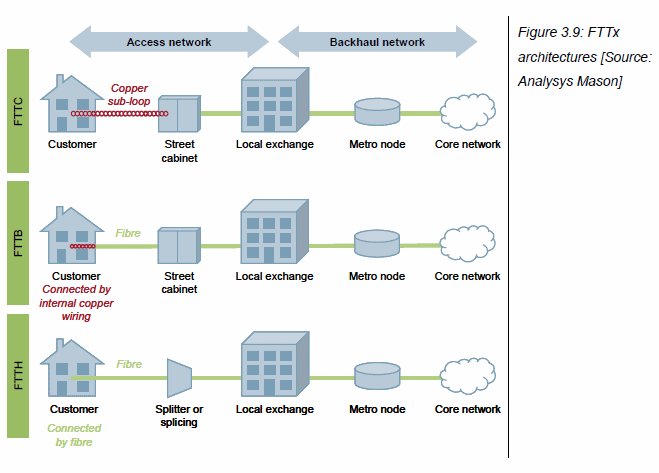 On the flip side FTTH is generally used for newly built (Greenfield) sites/homes where the fibre optic cable can be put in as the buildings are constructed, it is designed mostly for homes rather than office blocks and big shared flats. 
|