MS3 Recovers After Melted Cable Knocked Out Broadband Across Scunthorpe
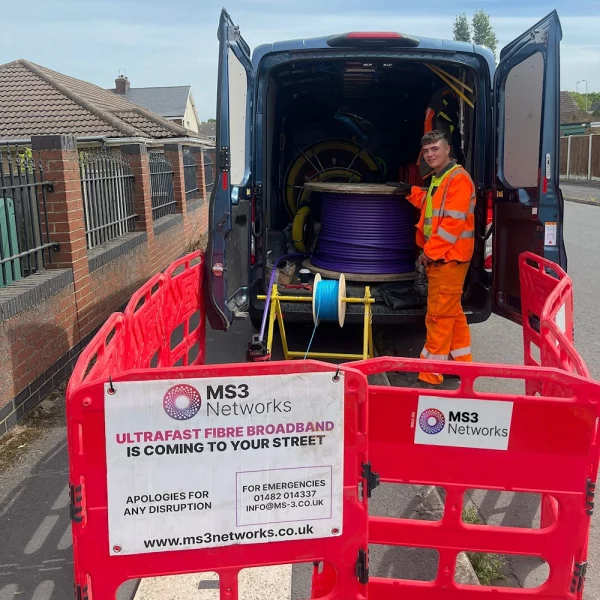
Hull-based alternative network operator MS3, which has built a full fibre (FTTP) broadband network across 234,000 premises (213k RFS) in the North of England and connected 20,000 customers via various retail ISPs, have managed to restore services across the Lincolnshire town of Scunthorpe after one of their core fibre cables melted.
The operator’s network, which reaches about 37,000 premises across the town, began to suffer problems at around 3-4pm yesterday and this also appears to have involved one of their network partners (Virgin Media Business). After a few hours it was identified that a faulty electrical cable had managed to melt a nearby core fibre cable.
The complex installation and splicing of a replacement fibre cable began at around 9pm last night and the first customers then finally started to come back online at around 1:35am this morning. In the past few minutes several of MS3’s broadband ISPs have confirmed that the situation has now been fully resolved, although some local customers may need to reboot their router and Optical Network Terminals (ONT). Credits to mrpops2ko for the report.
Advertisement






Mark is a professional technology writer, IT consultant and computer engineer from Dorset (England), he also founded ISPreview in 1999 and enjoys analysing the latest telecoms and broadband developments. Find me on X (Twitter), Mastodon, Facebook, BlueSky, Threads.net and Linkedin.










« Full Fibre UK Broadband ISP CommunityFibre Cuts Prices by 25 Percent















I can only assume that the faulty electrical cable was conducting through the ground & heating the ground all around the fibre cable. I can’t imagine the fibre cables would be allowed to come into close contact with a mains electric cable.
I can’t speak to this specific area or incident, but fibre optic cables do sometimes share ducts, chambers and trenches with low-voltage electrical cables. I think there are rules around this though, such as the fibre needing to have a certain level of protection/armour etc. More common with older deployments I think.
It continues to amaze me that critical elements such as core fibre routing aren’t diverse for some providers.
Wouldn’t it be sensible to have two (or more) links routed separately in a core network?
Adding resilience costs money and most customers choose their broadband provider based on who is cheapest.
ISPs can’t survive with a fully resilient network and no customers.
If a joint on the DNO’s network has blown it’s quite possible that the fibre in the ground was above this joint and so was melted by the flames from the blown joint, I’ve seen that happen mpre than once.