ISP Derbyshire Broadband Settles 4 Year Long Planning Dispute
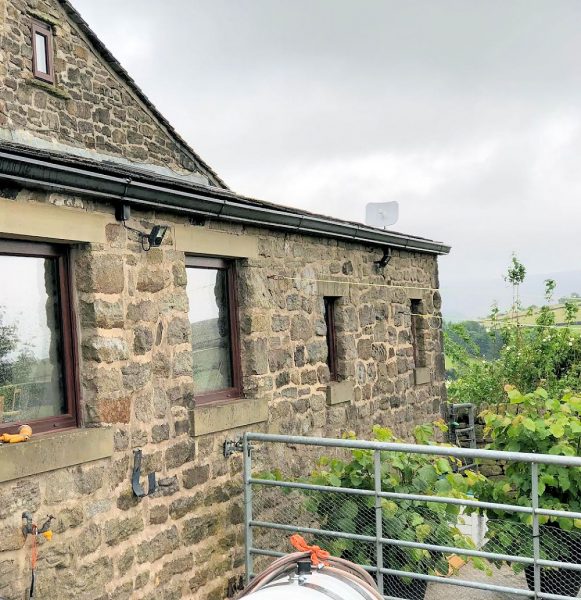
Fixed wireless access (FWA) ISP Derbyshire Broadband, which built a network to serve rural parts of Derbyshire, Cheshire and Lancashire in England (mostly around the Peak District), has finally settled a 4-year-long planning dispute over a 3.5-metre tall antenna (pole) that had stalled their ability to invest and add new customers.
The situation started in 2017 after a consortium of several local businessmen and farmers invested £120,000 to build a new antenna on the moor at Cown Edge Farm in the Peak District, which was setup on the understanding that it would be permitted by the regulations.
However, after using the antenna to reach some 500 customers – mostly those in areas where superfast broadband speeds would not normally have been possible, the Peak District National Park Authority (PDNA) later informed the ISP that their antenna was in breach of planning controls, and so began a long battle.
Advertisement
According to the Buxton Advertiser, the situation was only resolved after the local High Peak MP, Robert Largan, stepped in to help mediate and a mutually agreeable solution was found. Sadly, the article doesn’t say precisely what that solution was.
Collin Hanson-Orr, Founder of Derbyshire Broadband, said:
“We did this because nobody else was going to. We were the people who are now our customers, and were, are, and will remain a community project. We have dug deep again and again in restructuring and improving our service to the extent that we are now able to recommence operations and begin to bring the service to many not-spots.
We are now ready to accept orders for the supply of superfast broadband within the Peak park and beyond.”
However, a quick look at Derbyshire Broadband’s website suggests that they’ve already built so many new sites that the closure of their main site at Cown Edge Farm, had it occurred, would not have been terminal. Indeed, last month, the operator commissioned this new network to serve the “entirety of our customer base” with download speeds of up to 100Mbps.
The ISP is now looking at their options for future network expansion. Residential customers typically pay from £30 per month for an unlimited 25Mbps (5Mbps upload) package and that rises to £80 for their top 84Mbps (10Mbps upload) plan, while the installation fee on a 12-month term will set you back £199.
It’s not cheap, but if you’re in a slow broadband spot, then it’s a wonderful option to have. However, if the UK Government’s Project Gigabit programme does ever achieve its long-term coverage aspirations, then the network may need to significantly increase its performance, or risk facing new competition from faster rivals.
Advertisement






Mark is a professional technology writer, IT consultant and computer engineer from Dorset (England), he also founded ISPreview in 1999 and enjoys analysing the latest telecoms and broadband developments. Find me on X (Twitter), Mastodon, Facebook, BlueSky, Threads.net and Linkedin.











« ISP TalkTalk Raise Broadband and UK Call Prices for Some Users















Wow all that fuss over a 3.5m pole ? I guess that’s why we have to throw hundreds of thousands of pounds at these people every month, who else is going to make a mountain out of a mole-hill but the council planning department. I was hoping all these telecom planning permission issues would be dealt with by the governments new proposals but it seems that plans are still routinely being denied. Central government really only has one option left and that is to remove authority over telecoms applications that meet certain conditions and before anyone says that’s nuts, that’s exactly what Openreach does when they stick a giant telegraph pole in your front garden. They don’t require permission, only notification.
I think you mean “stick a giant telegraph pole [in front of your] garden,” since Openreach does need permission to install their poles if it’s on your private property, but public land (pavements, verges etc.) is another matter.
Democracy working at its best… Not, all that fuss for nothing, did the locals who enjoyed internet access, did they raise any objections I wonder, does anyone know?
When I read things like this I wonder if planning were enjoying a slow day and decided to throw the big size 18’s in to justify the big bucks they earn.
For people in remote areas councils should be making every effort to ensure people can get the services they need, really they have made themselves look foolish in my opinion.
To be fair to the planning authorities, they often have to be very careful about setting a precedent that could have unintended consequences. The “today it’s a broadband antenna, tomorrow it’s thousands of much worse things” mentality etc.
For £80/month for a tentative 80/10 I would consider Starlink offering stable twice more than that.
That’s all good and well if you’re happy to have 300meg for 10 mins then nothing for the next half hour, with little to zero customer support.