Sharp developing universal satellite broadband dish to connect with Starlink
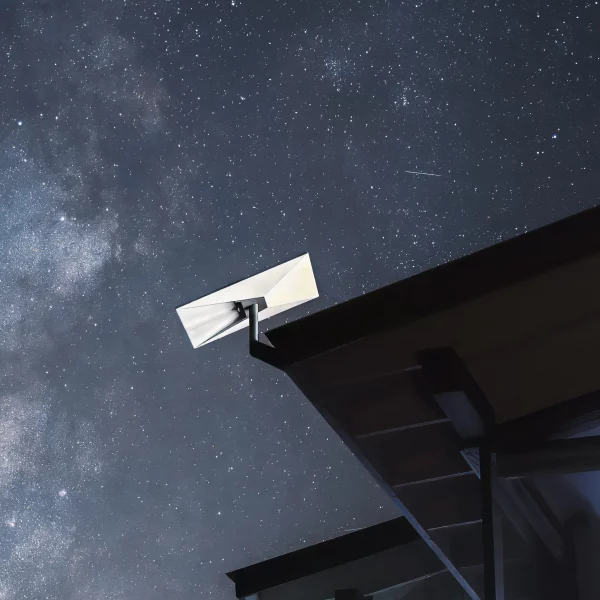
Japanese electronics giant Sharp has revealed that it’s developing a compact satellite terminal (dish / antenna) that will technically be able to connect to multiple different satellite communications networks, potentially including Starlink, OneWeb, SES and others. The goal is to make it easier for customers to switch between different networks as competition grows. Easier said than done.
The new terminal is being developed as part of Sharp’s proposal under a new project from Japan’s Ministry of Internal Affairs and Communications (JMIAC), which has committed over £33 million to support up to three projects that can develop compact, lightweight universal antennas by 2030. Further details on Nikkei Asian.
The idea is a good one, although what most of the articles on this fail to consider is that a lot of satellite networks use various methods to lock you into using their own bespoke hardware (i.e. anybody building a third-party antenna is likely to need the support of the relevant satellite operators for it to work).
Advertisement
For example, Starlink uses a proprietary phased array terminal with custom, as well as complex, silicon chips to dynamically steer beams to track fast-moving Low Earth Orbit (LEO) satellites. On top of that the network also uses its own proprietary encryption protocols, not to mention various network locking measures to authenticate terminals via secure hardware checks etc.
Suffice to say, you can physically build a third-party antenna to work across multiple networks, but actually making it connect to the service is another matter entirely.



Mark is a professional technology writer, IT consultant and computer engineer from Dorset (England), he also founded ISPreview in 1999 and enjoys analysing the latest telecoms and broadband developments. Find me on X (Twitter), Mastodon, Facebook, BlueSky, Threads.net and Linkedin.













Advertisement
Leave a Reply
Privacy Notice: Please note that news comments are anonymous, which means that we do NOT require you to enter any real personal details to post a message and display names can be almost anything you like (provided they do not contain offensive language or impersonate a real person's legal name). By clicking to submit a post you agree to storing your entries for comment content, display name, IP and email in our database, for as long as the post remains live.
Only the submitted name and comment will be displayed in public, while the rest will be kept private (we will never share this outside of ISPreview, regardless of whether the data is real or fake). This comment system uses submitted IP, email and website address data to spot abuse and spammers. All data is transferred via an encrypted (https secure) session.
















The potential existence of a second hardware source is a sign of increasing maturity of high speed satellite broadband and relevant to some bigger commercial/governmental contracts.
As such I would not expect suppliers like Starlink to unreasonably block additional hardware suppliers (may charge licenses and require lengthy certification testing) but there is a danger that it turns into a hardware cartel, cost wise, and thus of limited benefit except to allow rapid switching to other services or dynamic service fallback (also commercially useful)
This is cool.
I saw a while back some people were hacking with SDRs to connect to Starlink. Not sure if they could get full WAN access or just data packets from the Starlink satellites.