Sky UK extends satellite TV partnership with SES into the 2030s
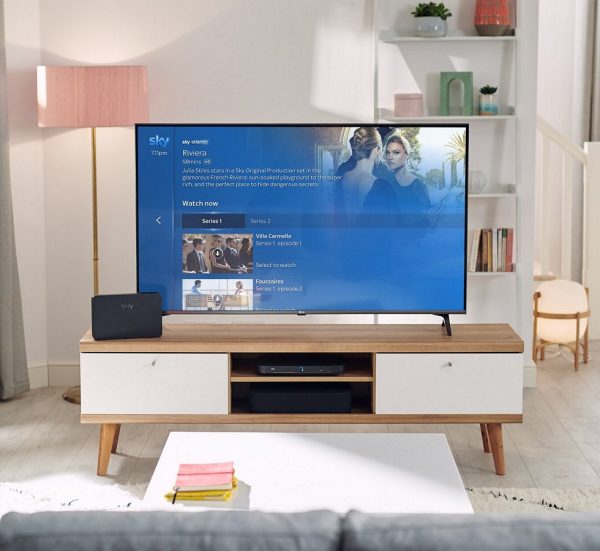
Global satellite provider SES, which operates a large global network of satellites that can deliver video and data services to 99% of the world’s population, has today signed another extension of their existing partnership with Sky. This will see them continuing to provide capacity to support the Sky Q TV service in the UK and Ireland beyond 2029, and into the 2030s.
Sky UK has spent the past few years putting a lot more effort into pushing their new internet-based streaming platforms, Sky Glass (Sky integrated streaming TV set) and Sky Stream (streaming set-top-box), which are standalone products that use your home broadband ISP and Wi-Fi connection to stream Sky’s on-demand video content and live TV channels – without the need for a satellite dish.
However, Sky’s last agreement with SES in October 2024 confirmed that they would continue supporting existing customers of their satellite-based TV products, such as Sky Q, until 2029. That agreement also reflected a multi-year contract renewal for satellite capacity and back-up services from SES’s prime video neighbourhood of 28.2/28.5 degrees East.
Advertisement
Under this morning’s new “multi-year agreement“, Sky will continue to leverage SES’s satellite capacity at the 28.2 degrees East orbital position to deliver direct-to-home (DTH) television services to millions of households across the United Kingdom and Republic of Ireland.
Interestingly, SES hasn’t included a clear end date for this agreement, which suggests that Sky don’t yet went want that information to be known. Instead, SES merely states that the new agreement will be “running into the next decade” (i.e. until some point in the 2030-2039 time frame).
Nick Herm, Group Chief Operating Officer at Sky, said:
“As we give customers more choice in how they access Sky, satellite continues to play an important role in how we deliver our services to customers across the UK and Ireland. This agreement with SES provides the reliability, reach and service quality we need to continue delivering the viewing experience our satellite customers expect.”
The move isn’t all that surprising as Sky are still a long way from encouraging all of their existing satellite TV users to adopt their new broadband-based Glass and Stream TV products. Suffice to say, Sky won’t have wanted to push their existing subscribers into a cliff edge situation and the new deal gives them extra time to adopt a more natural and gradual migration path.
On the flip side, Sky Q is starting to get quite old and, without a major hardware refresh, it may increasingly start to fall behind Sky’s more modern platforms.
Advertisement






Mark is a professional technology writer, IT consultant and computer engineer from Dorset (England), he also founded ISPreview in 1999 and enjoys analysing the latest telecoms and broadband developments. Find me on X (Twitter), Mastodon, Facebook, BlueSky, Threads.net and Linkedin.










Advertisement
Leave a Reply
Privacy Notice: Please note that news comments are anonymous, which means that we do NOT require you to enter any real personal details to post a message and display names can be almost anything you like (provided they do not contain offensive language or impersonate a real person's legal name). By clicking to submit a post you agree to storing your entries for comment content, display name, IP and email in our database, for as long as the post remains live.
Only the submitted name and comment will be displayed in public, while the rest will be kept private (we will never share this outside of ISPreview, regardless of whether the data is real or fake). This comment system uses submitted IP, email and website address data to spot abuse and spammers. All data is transferred via an encrypted (https secure) session.

















Interesting, one take from that is management obviously aren’t confident that Sky’s streaming services are up to the job of retaining customers if they stopped satellite services.
Sky Q is very dated now but can’t see Sky investing in upgrades such as a 4k mini box unless they plan for another decade of satellite.
> management obviously aren’t confident that Sky’s streaming services are up to the job
Sky Stream has had a couple of niggles, but it is a pretty stable. In my antidotal experience, its more the customers of Sky Q who aren’t confident in the streaming service, because it’s not just the connection into the home, but the Wi-Fi setup at home too.
My step brother and his wife as an example, are not confidant enough to ditch Q and swap to Stream (despite having a 1gpbs connection, a good Wi-Fi setup, and a power-line network extension for the Sky Q box), because they don’t want buffering on live TV (mainly sports). He is happy with what he has, and is in the mindset of “If it ain’t broke, why fix it?”, atm one of two things will push him from Sky Q 1) Sky jacking up the prices of Q 2) Sky discontinuing Q. And the same applies to his next door neighbour.
But that is only regrading customers who can get a good connection at home. In urban areas, more than 99% of the population can get a >=30meg connection. But in rural areas that figure drops to ~90%. So 10% of those communities either can barely use Sky Stream or not use it at all.
(Granted, such homes could get Starlink 100meg for £40pm, but on a month to month contract, and at the whims of the service changing the terms at any time)
I have had stream on a rolling cotract for 2 years. It’s never let me down. Even when I had to change the box it was set up within 2 mins as they are programmed to account – and then it all downloads being of course cloud based
I pay £35 a month – no issues there as I know the 24 month contract will go up and up and I can walk away with 30 days notice
Sky also has non-UK/EI services on 19.2E and 13E so I think that may be general EU wide coverage agreement. I could be wrong of course!
May be provision of FTTP is more difficult in parts of the EU.
13E is a Eutelsat position, and Sky no longer has any presence on 19.2 (except for an international version of Sky News) after selling off Sky Deutschland to RTL
This move is great for Sky: it now gives them a lot more time to develop Sky Stream into a genuine replacement of Q, while giving the network builders time to roll out full fibre to 100% of the population, which is the only timeframe that can genuinely allow Sky to ditch satellite services completely. While no end date has been announced, satellite customers ultimately benefit from not having to be forced onto Stream when its not ready for them.
Given that SES is coy in sharing a timeframe, I suspect this is a relatively short contract extension, perhaps only a couple of years while Sky continues to push customers to IP-based TV.
The Astra satellites only have a limited life so how long they have left and whether SES is intending to replace them?
I want to hold on to Sky Q for as long as possible, I prefer having a local DVR and not having the TV tied to the internet.
Even if I was willing to give up on the latter, having a bunch of recordings would help offset any internet issues.
Racing TV is on satellite the only reason many keep sky satellite. Who wants heavily delayed so called live TV? Personally I’m ok with it as use live bookmaker feeds. Come to think who wants low quality streaming anyway like sky cinema or Netflix So called quality yet heavily compressed compared to 4k Blu-ray.
I’d urge anyone to consider freely. I brought one for my folks and have one for myself. Yes it’s early days but talking pictures tv and many others have never looked so good. My enigma2 sat feed box will be redundant once ITV streams catch up in quality.
Well well well, everyone was so quick to declare Sky Q dead and jump ship to Stream. I will be holding onto my box longer.
Since getting full fibre 4 years ago, down time of Internet access 8 weeks. Down time of Sky satellite none.
Until the Internet is more failsafe we wont be getting rid of the dish
Does Sky’s solution for pubs still rely exclusively on satellite?
From published bandwidth minima, 70Mbs tier of FTTC would work OK for UHD for ingle screen households, and 30Mbs tier FTTC would be OK for HD for single screeen. FTTP non-availability is therefore not a blocker.
Obviously more screens simultaneously needs more bandwidth but I think FTTC would be enough for much of the current SkyQ customer base.
Mobile broadband (with the inherent variability) maybe less viable, hence an overlap between customers wanting to keep SkyQ satellite and USO satisfied by 4G/5G alternative.
Still using a sky+ HD box here…. replaced the hard drive for a proper dvr spec one 5 years ago and its still going strong and doing everything we need it to.
If they do come out with a new sat box, as long as it does local recording we might upgrade to it (Q dint offer enough for us to consider it), even though we have 1gig fttp i dont like the fact its all cloud/catchup recording.
there is a 2tb q box. q is local recording ie the same as sky + hd is, both have hard drives in. sky stream is currently testing cloud recording though
@graham Sky stream& glass has had cloud recordings since it launched years ago. Limited to sky channels and some others.
The beta as the thread on their community says is it just has a better interface
Hopefully we get a new satellite box and I would certainly consider returning as a customer, considering the other alt-net tv service(Virgin) isn’t available to me.
The current fleet serving the 28.2°E orbital position — Astra 2F, 2E, and 2G — was launched between 2012 and 2014 with standard 15-year design lifespans, which squares with Sky’s previous contract with SES up to the twilight window around 2029. This new agreement means that SES will eke out the service into the early or mid 2030s as no new direct replacement DTH satellite (an Astra 2H or whatever it may be called) has been been announced.
Sky would find it hard to migrate all of its Sky Q users onto Sky Glass/Stream by 2029 and needs more time. The bigger picture is that Freeview will continue until 2034 and very possibly up to 2044, and a forced migration from Sky Q by 2029 will just make some go to alternatives like Freeview, the Freely-based Vodafone TV or Virgin Media’s Flex. A more gradual migration to Sky Glass/Stream enables Sky to retain most of its customer base.
So is this a win-win for Sky and SES: Sky is a long way from migrating all of its STBs onto Sky Glass and Sky Stream and needs more time, and SES can continue to get revenue from its fleet of ageing satellites.
I’ve had Sky Stream for just about 2 years. It was a bit buggy to start with, but have 4 boxes running at home, and no issues at all, all works seamlessly for me.
Wouldn’t ever go back to cable for TV now, And ditched satellite years ago as the signal was always a problem here with obstacle’s in the way.
Probably ekeing out another year or 2 out of the transponders on the existing Astra’s at 28.2e. SES haven’t announced another satellite going up – they launched 1 of 2 for 19.2e (Astra 1P) with 1Q to launch in 2028 but this is serving mostly Europe/Africa/Middle East.
I am grateful for this good news! I hope satellite TV, as well as Cable and Terrestrial, continues forever!
Internet Protocol based streaming services are not fit for purpose. If I’m watching Live sports, DVB-C/S/T is the only way I want to watch it. Broadcast television (DVB) is the only way to get 100% guaranteed uncontested packet delivery. Internet protocol on the other hand works completely differently, the packets are going through over a dozen exchange points, each adding latency, dropping packets, simply a terrible way to send real-time video transport streams. DVB is the king of real-time broadcast mechanisms because it doesn’t care about anything except broadcasting one signal. Whether there are 1 or 1,000,000,000 receivers doesn’t matter for DVB. Try doing that with Internet Protocol where live sport streaming very often puts global internet capacity very close to it’s limits, and 5G, don’t even go there!
Some of the pitfalls of IP broadcasting can be alleviated using full fibre and proper multicasting system but these are still just “patches” for using a delivery method that was never designed for delivering live broadcasting. The internet is designed for sending non-time critical messaging. Just because we can get away with communicating in real time over the internet doesn’t mean it was designed to do that. DVB on the other hand is a system which is designed from the ground up for transmitting real-time, perfect quality unbuffered video, it has one job to do and it does it brilliantly. In my opinion DVB is better and always will be better for real-time video delivery than pushing everything to Internet Protocol.
And this means Freesat keeps goibg?
If the channels keep broadcasting and update the EPG. Each individual broadcaster will take their own view. I see they’re already talking about pushing the Freeview shutdown back 10 years. Given in 2010 they were talking about shutting off National FM radio in 2015 and 11 years later it’s still going strong (good job too DAB sounds awful) I wouldn’t hold my breath.
Three reasons people aren’t switching:
1. Lack of confidence in their broadband (FTTC? Excessive downtime?)
2. Live sports delays (I’m sure they’ll fix this at some point)
3. Lack of on-board storage for recording (nobody cares about playlists)
Further technical development and putting a 500GB SSD in the Sky Stream/Glass will go a long way to solving these problems.
I’m pleased to read there’s a life extension for the Q box . I’ve just set up a ‘new’ replacement box – lost a few favourite films and programmes otherwise – it was a very painless changeover, new box arrived on day two after speaking with call handler and courier took away defective machine which I had already boxed up ready to go . I admit to being a bit of a tyro technology wise and my question is.. why can’t Sky develop a Q type device which is driven by the internet rather than satellite, the Q box already has an ethernet cable plugged in . Surely that is not beyond the wit of man to create such a device! I think the Q box is a brilliant device, gutted that my original one died but the changeover was so easy I’m willing to forgive them .
I’m a and will be Sky Q hold out. My main Gripes
Sky haven’t fixed the latency issues properly for streaming sports.
no DVR means more adverts Sky Q as long as it’s not an app lets you skip adverts with no extra subscription.
Also we use Freesat built into 2 TV’s for free TV too.