Confusion as SpaceX Rebrands Some Starlink Satellite Broadband Kit
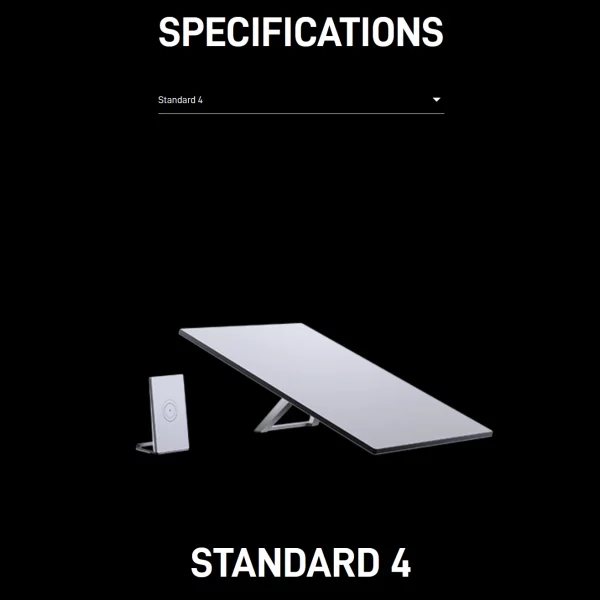
The Starlink service from SpaceX, which offers ultrafast broadband to the UK and globally via its massive constellation of satellites in Low Earth Orbit (LEO), appears to have rebranded some of their existing hardware bundles (creating a little bit of confusion in the process) and has also revealed a new power supply (PSU) block.
According to Starlink’s own support page, the company has decided to “simplify our product naming” and as a result residential packages that previously shipped with “Starlink Standard Kit” will now be known as Standard 4 X, while packages that shipped with “Starlink Standard with the Router Mini” will now be known simply as Standard 4. So far, so simple.
The current generation of Starlink’s standard dish (terminal) was already considered V4, so this does kind of make sense, although it starts to get a bit more confusing once you recognise that their dish and routers are often on different generations (e.g. the current router is Gen 3 – ‘Router 3’ – and that’s before we consider the different ‘Router Mini’ model on what is now known as Standard 4).
Advertisement
As the ever-observant folk over at PC Mag point out, the Standard 4 kit is now being shipped to customers who sign-up for Starlink’s entry-level 100Mbps residential plan, while those taking 200Mbps and Max (400Mbps) get the Standard 4 X bundle (note: Max users also get a “free Mini Mesh” and free rental for a Starlink Mini router). So don’t go thinking that just because there’s a 4 in front of the hardware bundle now, that it means all the kit is on a 4th generation of the hardware.
In addition, Starlink doesn’t yet appear to be using this branding logic everywhere on their website and that’s partly because the new bundle / names are only available as a rental to subscribers, which may add some further confusion to the change.
Finally, it’s been spotted that the new Standard 4 bundle includes a new / different power supply, which includes two PoE (Power of Ethernet) ports for the router and dish. But the suspicion is that those two PoE ports may use Starlink’s own proprietary PoE standard, which limits what you can connect. By comparison, the PSU with Standard 4 X connects to the Gen 3 Router, which can in turn be connected to the Starlink dish, while still featuring two extra Ethernet LAN ports. But both bundles do still appear to support third-party WiFi routers.
Starlink currently has over 10,100 satellites in orbit – mostly at altitudes of between c.340-550km. Residential customers in the UK usually pay from £35 £25 a month for the ‘Residential 100Mbps’ unlimited data plan (kit price may vary due to different offers), which also promises uploads of c.15-35Mbps and low latency connectivity. Faster packages exist at greater cost, while more restrictive (data capped) options also exist for roaming users (e.g. £50 per month for 100GB of data).
Advertisement






Mark is a professional technology writer, IT consultant and computer engineer from Dorset (England), he also founded ISPreview in 1999 and enjoys analysing the latest telecoms and broadband developments. Find me on X (Twitter), Mastodon, Facebook, BlueSky, Threads.net and Linkedin.










« KCOM in Hull UK Reach Agreement to Restructure its Current Capital Structure

















I’d hope they adopt standard POE, not least because manufacturers such as Unifi are adding LEO support to their equipment. You can connect the Unifi UCG-Industrial router directly to a Starlink Mini, and in the Unifi interface see data from the Starlink such as firmware status, time obscured etc. At the moment it requires a POE splitter on the dish end to work, but if Starlink add POE support then you could just plug it straight in.
PoE stands for Power over Ethernet, just FYI