BT Expect to Fix Subsea Fibre Optic Cable Break on Orkney by Tomorrow UPDATE

The UK telecoms operator, BT, has confirmed that the subsea cable repair ship (Pierre de Fermat) they contracted to resolve the recent fibre optic break between Evie on the Orkney Mainland and nearby Westray, which disrupted local broadband and 4G mobile connectivity, is set to be fully resolved on Saturday (18th April).
As reported a few weeks ago (here and here), the “major” incident began on Monday 16th March 2026 (its cause remains unclear) and promptly disrupted both fixed broadband and some mobile connectivity for over 500 customers in the North Isles (inc. Eday, Stronsay and Sanday) – part of an archipelago off the northeastern coast of Scotland.
The situation initially meant that only landline phones in the area were still functional, as well as mobile services from EE and Three UK, although capacity issues were still impacting 4G based mobile broadband connectivity. After a few days most of Vodafone’s (VodafoneThree) mobile customers were, however, back online, once they were able to harness a second Three UK site on Westray to share coverage.
Advertisement
Since then it’s been a case of needing to wait for the typically gradual pace of subsea cable repairs to take its course, which often takes a few weeks. The cable repair ship arrived over a week ago and has been busy working on the problem since then, but the latest update from the Orkney Local Emergency Co-ordination Group (OLECG) indicates that this work is still on course to complete by 18th April 2026 (tomorrow).
UPDATE 19th April 2026
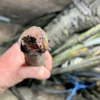
The cable was repaired as expected and the survey team said the break was due to wear and tear against the rocky seabed over time.






Mark is a professional technology writer, IT consultant and computer engineer from Dorset (England), he also founded ISPreview in 1999 and enjoys analysing the latest telecoms and broadband developments. Find me on X (Twitter), Mastodon, Facebook, BlueSky, Threads.net and Linkedin.










« NordVPN Tops 100 Terabits per second in Aggregate Network Capacity

















See https://www.marinetraffic.com/en/ais/home/centerx:-2.943/centery:59.239/zoom:12
It is pretty clear what happened, and the Russians will be at the bottom of it. It may a time for the UK to actually do something about all these shadow ships and take them out of action.
It seems an unlikely target for Russian sabotage. What would they gain by cutting off 1 small island? More likely a fishing trawler scraping the bottom.
In the location of the cable break it seems more likely to be a fishing trawler, as Big Dave said above, or weather/storm related damage. But of course nobody has yet attributed a clear cause, so there’s always room for speculation.
The Russians striking at the heart of Great Britain by stopping a few dozen folk watching Netflix for a couple of weeks? Bizarre. Cable damage is a fact of life for subsea cables.
I used to help look after the terminal equipment for the cross channel UK-France 2 and 3 cables and the frequent breaks were not caused by the Russians. Fishing trawlers, anchors, and the odd bit of aquatic life attracted to the electrical currents and fields the amplifier power feed generated.
The failure was caused by tidal movements of the fibre against rocks. 8Km of fibre was replaced and re-routed as a result.