Starlink Reveals Details of New V5 Dish Terminal for Consumer Broadband
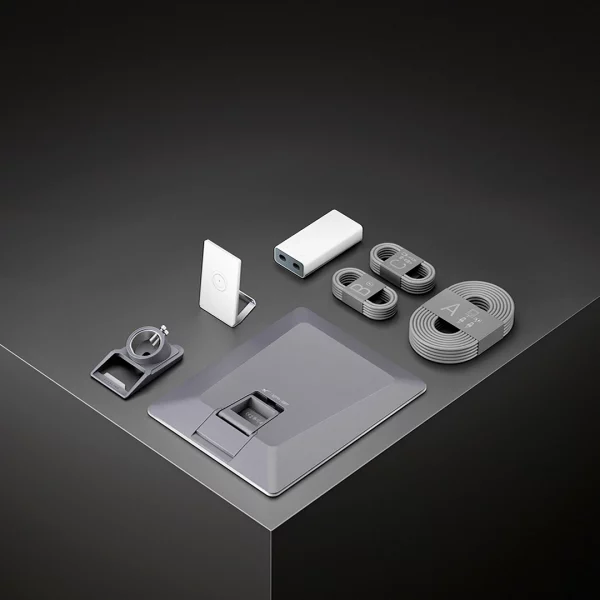
The Starlink (SpaceX) service, which operates a massive constellation of low latency and ultrafast broadband satellites in Low Earth Orbit (LEO) for the UK and the world, has finally published the specifications for their next generation V5 dish terminal. In short, it’s smaller, lighter weight and doesn’t gobble as much power, but peak service speeds are slightly slower.
Regular readers will know that we’ve been hearing about the looming launch of a new V5 dish and mini dish terminal for the past few months (here and here), although until now Starlink has opted not to reveal much in the way of official details about the hardware. But that changed this week after the V5 started appearing in the Starlink app and then official specifications were added to their website (here and here).
According to a new social media post from Starlink: “Starlink V5 has a smaller form factor and lightweight design with greater power efficiency than the Starlink V4. With speeds up to 375+ Mbps, Starlink V5 delivers seamless connectivity for streaming, video calling, gaming and more. Currently available in select areas. As production ramps, Starlink V5 will be available in additional areas” (select areas means in the USA, for now).
Advertisement
We should point out that the V5 dish is NOT intended for in-motion use and, aside from the key specification differences summarised below, the new kit is broadly the same as the V4 (i.e. the same operating temperature, snow melt capabilities, field of view etc.). Otherwise, the fact it’s smaller and lighter is nice, but we think the biggest win is likely to be in terms of the significantly reduced power draw (V5 averages 35-50 watts vs V4 on 75-100 watts) – that’s a big win in a country like the UK, where electricity costs are very high.
Quick Starlink Hardware Comparison
| Hardware | Starlink V4 | Starlink V5 |
|---|---|---|
| Peak Download Speeds | 400+ Mbps | 375+ Mbps |
| Product Dimensions | 594 mm x 383 mm x 39.7 mm (23.4 in x 15.1 in x 1.5 in) | 384 mm x 306 mm x 34 mm (15.12 in x 12.05 in x 1.34 in) |
| Weight | 2.9 kg (6.4 lb) | 1.1 kg (2.4 lbs) |
| Power Consumption | Average: 75 – 100 W | Average: 35 – 50 W |
| Router Compatibility | Compatible with Router 2, 3, and Router Mini | Compatible with Router 2, 3, and Router Mini |
The V5 currently appears to be targeted more toward Starlink’s mid-tier or entry-level consumer packages (100Mbps and 200Mbps in the UK), while those on their fastest residential tier (Max) are likely to still get the more powerful V4. At present, in the UK, customers of the 100Mbps tier get Starlink’s Mini X hardware, while 200Mbps comes with V4.
The service currently has around 10,850 satellites in Low Earth Orbit (LEO) – mostly at altitudes of between c.340-550km. Residential customers in the UK currently pay from £40 a month for the Residential 100Mbps unlimited data plan (plus £10pm for the hardware), which also promises uploads of c.15-35Mbps and low latency connectivity (c.20ms). Faster packages exist at greater cost, while more restrictive (data capped) options also exist for roaming users (e.g. £55 per month for 100GB of data).
Advertisement
However, Starlink has yet to officially announce their new battery powered mini dish, which is expected to follow close behind the V5’s introduction.






Mark is a professional technology writer, IT consultant and computer engineer from Dorset (England), he also founded ISPreview in 1999 and enjoys analysing the latest telecoms and broadband developments. Find me on X (Twitter), Mastodon, Facebook, BlueSky, Threads.net and Linkedin.












« Grain Restarts 2Gbps Full Fibre Broadband Rollout in UK Town of Swindon

















Does it have an Ethernet port?
Yes – as that’s needed for the mini router. SL sent me a mini router and a car adapter out of no where 6 months after I got my mini. The problem is the price keep going up – and it’s starting to not be worth it.
Mini X and Standard 4 are all over the website – rental or paid versions.
Smaller “Plate” size and lighter weight means it should be less affected by high winds, which can also be a problem in parts of the UK.
Weird that a successor device launching ahead of this year’s 1gb Starlink launch will be incompatible with it