BT and Virgin Media O2 in Competition Spat Over £50 UK Broadband Discount UPDATE

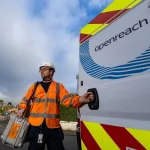
Remember when Openreach (BT) recently announced that it was going to give broadband ISPs on its network an extra £50 rebate for winning incremental new “full fibre” (FTTP) customers in areas where it competes with Virgin Media (here)? Well, the latter isn’t very happy, naturally, and has accused the incumbent of trying to “choke” off competition in the market.
“From 1st October 2026, in addition to the national Incremental New to Openreach customer offer, Openreach will give providers an extra £50 rebate for winning incremental new FTTP customers in areas where it competes with Virgin Media O2. The offer only applies to customer wins above baseline levels, so it’s designed to drive genuinely incremental new end customer wins,” said Openreach’s briefing at the time.
The somewhat controversial discount was announced by Openreach at the start of June 2026 alongside a number of other incentives, all designed to boost take-up of their Fibre-to-the-Premises (FTTP) broadband lines among partner ISPs in an already highly competitive market. But the CEO of Openreach, Katie Milligan, later acknowledged that they were also trying to “test the waters” of Ofcom’s new market regulation via the recent Telecoms Access Review 2026 (TAR) changes.
Advertisement
Ofcom are currently consulting on the new discounts, which are a positive development for consumers, but which rival networks will clearly want to raise a few concerns over. The Telegraph (paywall) highlights how VMO2 is particularly upset over Openreach’s targeted approach and they may have a point.
Lutz Schüler, CEO of VMO2, said:
“For many, [the TAR] was seen as a welcome sign of Ofcom providing stability and being prepared to keep the incumbent in check. For BT, it seems Ofcom’s conclusions were heard as a dinner bell to start feasting on fibre challengers as it launched a platter of hefty discounts.
…
Ofcom should approach these offers as a serious threat to the emergence of long-term network competition, not as routine pricing proposals.”
Katie Milligan, Openreach CEO, said:
“Ofcom has said that Openreach should be allowed to compete, and we agree … We realise competition is tough for some but, like any business in a competitive market, we regularly develop offers to support customers and investment. We’ll continue to compete hard, but fairly, and our track record shows we consistently follow the regulator’s pricing rules.”
An Ofcom spokesperson said:
“We are assessing whether any of these offers raise competition concerns that require intervention, and are carefully considering all responses to our call for input. We will publish our consultation later this month.”
Suffice to say that VMO2 would like Ofcom to block Openreach’s proposed discounts and warned that the regulator would be setting a “dangerous precedent” if they allowed it. The move has come at a particularly sensitive time for VMO2, which via nexfibre is in the process of trying to acquire rival network operator Netonmia for £2bn and has pledged to build a more significant scaled-wholesale competitor to Openreach.
The aforementioned deal is currently subject to a sensitive competition review (here), but the CEO of rival network CityFibre, Simon Holden, warned that the proposed agreement could “significantly reduce competition and the choice available to consumers, as well as force hundreds of thousands of Netomnia customers back to VMO2” – potentially raising the prospects of the UK returning to a duopoly between Virgin/nexfibre and Openreach.
One other challenge is that, so far, VMO2/nexfibre have not been able to attract any non-group retail ISPs to their growing consumer wholesale network, despite plenty of effort (example). The competition watchdog (CMA) will be taking factors like this into account as they review the deal, which could have consequences for their final decision. Ofcom’s recent £28m fine of VMO2 for customer service failings might not have helped (here).
Advertisement
As usual, all the main players will be speaking from the position of their own vested interests, which is something that Ofcom will have to balance before reaching their final decision on Openreach’s new discounts.
UPDATE 13th July 2026 @ 1:58pm
The CEO of VMO2 has now posted his full statement on this.
Lutz Schüler, CEO of Virgin Media O2, said:
“As the infamous 1990s BT advertising strapline said: “It’s good to talk.” But while Britain’s telecoms incumbent still enjoys the dominance it did when Bob Hoskins was on our screens, it seems the modern-day monopolist would now quite like the market to fall silent.
Even with billions of pounds of investment over the past decade, the UK’s fibre landscape is now more fragmented and unstable than ever, with around 100 struggling alternative networks, many backers looking for the fire exit and still no national-scale alternative to BT’s Openreach.
While the green shoots of meaningful competition are starting to emerge, it’s clear the next stage of the UK’s fibre story will be about consolidation to improve economics and create a genuine challenger to the incumbent. That will result in proper network choice at scale for other operators and in turn better services for consumers and businesses.
Earlier this year Ofcom published the conclusions of its major broadband market review, which largely echoed this sentiment. The regulator was clear that rules on Openreach must remain, as it takes time for other networks to “achieve scale and for competition to become established”.
Ofcom stressed that it would “restrict Openreach’s ability” on certain offers unless they gain consent and reemphasised concerns on other terms that could undermine network competition.
For many, this was seen as a welcome sign of Ofcom providing stability and being prepared to keep the incumbent in check. For BT, it seems Ofcom’s conclusions were heard as a dinner bell to start feasting on fibre challengers as it launched a platter of substantial discounts.
Given Ofcom waived through previous pricing packages, you can’t blame BT for trying, but these offers are different and come at a crucial time. The carefully designed proposals encourage providers to lock in and move more customers on to the Openreach network through a series of interrelated discount structures, amounting to two years of free fibre line rental in some cases.
In areas where Virgin Media O2 operates, Openreach is going further by geographically incentivising the poaching of customers in an attempt, to quote its chief executive, “test the waters” and then elbow drop the biggest future competitive threat it faces.
While the soundbite of lower rates may sound great on the surface, and Openreach will spin this as benevolently passing on efficiencies, don’t be fooled. BT’s behaviour is a prime example of a dominant force flexing its muscles to squeeze out emerging competition and then raise prices later.
The big issue here is that the incumbent is repeatedly drip-feeding new offers into the market in a tactical way, so providers rely on the Openreach discount drug and think twice about making commitments with other networks. This is not a fair playing field. It creates uncertainty for investors and goes against the direction Ofcom set for the market in March. At a time when Britain’s fibre market is wobbling, we have a window to act, and that moment is now.
In the short term, Ofcom should stick to the principles of its telecoms market review and stop BT using its significant power to harm emerging wholesale competition by blocking these offers. But the longer-term solution here is structural.
The CMA is currently reviewing Nexfibre’s acquisition of Netomnia – a landmark deal that kickstarts necessary consolidation, unlocks £3.5bn of investment into the UK, accelerates fibre access and leads to a wholesale fibre competitor covering 20 million homes. It’s crucial that this transaction is cleared at pace, so BT Openreach faces the scaled competition it clearly fears. That’s what real, fair challenge looks like.
The UK telecoms industry faces a fundamental choice – keep the status quo of a BT Openreach network monopoly or ensure this dominance is broken once and for all. While it’s good to talk, now is the time for action.”






Mark is a professional technology writer, IT consultant and computer engineer from Dorset (England), he also founded ISPreview in 1999 and enjoys analysing the latest telecoms and broadband developments. Find me on X (Twitter), Mastodon, Facebook, BlueSky, Threads.net and Linkedin.













« TalkTalk’s Wholesale Arm PXC Reportedly Receives Bids from Several Parties
















Simon Holden is wrong it INCREASES competition. It’s just that he’s on the receiving end. “They don’t like it up ’em Mr Mannering”.
Exactly so! 🙂
And they certainly deserve it up ’em, as it were.
Don’t panic! Mr Holden.
“and has accused the incumbent of trying to “choke” off competition in the market”
Sorry? didn’t they just Netomnia, no doubt in an attempt to do the same thing!?
If they doing it to an altnet (I mean an altnet and not what VMO2 pretends is an altnet) I would be sympathetic, but VMO2 is an established player and Openreach are well within their right to compete with them.
Martyn, 70-80% of the AltNet footprint overlap with VMO2 therefore they are doing it to the AltNet sector. Arguably it impacts AltNets further because we have to grow our customer base and those offers will enable bigger discounts for new customers.
Not to be funny Jeremy but VMO2 are likely to take you off the altnet map & since you are largely overbuilt with VMO2/Nexfibre HFC/RFOG/FTTP and CityFibre are also largely overbuilt with them this seems more to do with preventing a potential merger between the 2 of you and presenting a scale competitor to them.
Got to agree with @Big Dave,we all know CityFibre/Netomnia would be a massive threat to VM so of course they are doing this.
but remember Jeremy is just getting his payday from it so doesn’t matter.
Dear VM, maybe make your service better?
Had 2 VM sales people at my door the other day, despite having a great big grey VM box by the front door.
Told them I was in contract with Giffgaff, 2 years at £32pm, cheaper than VM with symmetrical speed and no mid-contract price rises, they quickly left.
I see no reason as of now to consider the main VM service, at least my parents got a DVR and ‘landline’ with their old coax service.
If only openreach would hurry up and get xgspon rolled out, they’d probably win the battle. But maybe not the war, VM can do some crazy discounts, but I would rather pay a little more and not be with VM, but I’d rather have 1000/1000 then not have it >.<
Why would you rather pay a little more and not be with VM? I know VM customer service can be iffy, but then so can most providers these days.
Not sure which way I would go if I only had a choice of VM or Openreach. At least with Openreach I would have a choice of providers.
Thankfully I have an Altnet here which at the moment is doing just fine for me,
Maybe Virgin Media just needs to do better and win. Also you say they haven’t attracted any non group providers, doesn’t this just prove a point that maybe no one has faith in them?
CityFibre seem to be doing something correct if the likes of Sky, Vodafone and TalkTalk are using it.
Maybe Virgin could lower the price too? Nobody is saying overcharge people. I’m stuck with them and have been for years because no one else in my area has the same speed, think that was due to some contract only allowing them to build it first. So how can they complain about anyone.
There will be changes in the boardroom at BT Group if the leadership does not act to reduce net losses and demonstrate to Ofcom that BT is overregulated with the pending entry of Telefonica as a major player in the UK market.
There will be no “increased competition”. VM themselves talk about: “necessary consolidation”. This is precisely so that there will be *Reduced* competition. This has always been the purpose of “consolidation” irrespectively of sector, from the car industry, to airlines.
@Bob
There will be increased competition in the UK market because the consolidation of the Telefonica operations will be the first to be able to compete with the BT Group at the same scale and breadth.
BT Group has already been making changes to wholesale pricing since the deal was signed off.
If I had vm and fttp via openreach I would always go to openreach. Vm is awful customer service. Coax and extremely pricey. Rude when you want to leave and do a poor install in general. The field guys don’t really take too much price in customers houses and in general quite rude. They won’t be getting a pound note from me unless I have to use them.
Ofcom should not be nobbling Openreach pricing to pay for Virgin’s decision to pay way over the odds for Netomnia.
“The CMA is currently reviewing Nexfibre’s acquisition of Netomnia – a landmark deal that kickstarts necessary consolidation”.
Really, VMO2? And would you mind saying what has always followed after the “consolidation”?
The increased competition will help shake out the deadwood in the sector.
Black kettle and calling springs to mind as VMO2 just done this with Netomnia. Taking out a competitor because VO2 were losing customers to Netomnia. I know one thing when my contract is up in 2027 with Youfibre I will be moving to another ISP and a good one as well. I don’t want anything to go with Nexfibre or VMO2 as they don’t have the best customer service. Once the deal does go through with Netomnia and nexfibre I can see a lot of people leaving Youfibre as well. As VMO2 don’t have the greatest customer service and haven’t they just been recently fined for not allowing customers to leave. This the bed you are jumping in with VMO2.
Telefonica did not acquire netomnia to eliminate a competitor, it is a strategic move to help accelerate the fibre roll-out and to reduce operation costs amongst other benefits.
Maybe if VMO2 managed to get some providers other than themselves to use Nexfibre then they’d be in a better state.
Besides, I’m sick to death of being told competition is good, as it’s very much an unnecessary dance every 18 months to two years to try and keep pricing down. That sort of competition only benefits providers, not end users.
I’m just grateful my employer provides my internet for free so I don’t have to do the silly dance.
Competition benefits customers and those providers who can improve their service delivery. Weak competitors will be crushed.
Action like this is patently not fair because of the disparity in size between the two big players and the rest of the service providers. This is particularly the case with BT . . which of course, with its current shareholding, isn’t British any longer. BT should be halved in size and the separated half sold off to other providers. The whole broadband installation thing is just a corporate greed scrum, where customers are sacrifriced without second thought.
its the War of the Telecom Roses meets 1920s Chicago gangsters, with the lesser participants just waiting on the hillside before declaring their undying allegiance to winner of the battle between the big two sides.
If OFCOM think that a competitive market will result at the end of this process they need their bumps felt.Two party oligopoly is the most likely outcome. That’s really unhealthy, because it falsely gives the impresiion of competition,when all that’s happening is that the Great Powers are carving up the GB telecom market. One can only conclude that OFCOM’s actions and those of successive governments never intended to achieve a balanced market outcome in the first place . . i.e. that its just a fiction for consumption by the masses.
BT is a minnow these days because of overregulation in the home market and the time it took to eliminate the former civil service managers. Its main European competitors are far bigger and they have been jockeying to take control of BT for some time.
I would also point out that BT has a significant number of UK shareholders, whereas most of the AltNets are owned by overseas private equity and investment firms. None of the Altnets has a sustainable business model for a number of reasons, whereas BT does. Most of the investment firms are also far more powerful than BT.
There will be plenty of niches in the UK market for low-cost ALtNets, but there will likely only be room for three, and possibly only two major players – all because of competition that drives cost reductions and productivity improvements.