Vodafone UK and Ericsson trial network level mobile AI language translation UPDATE
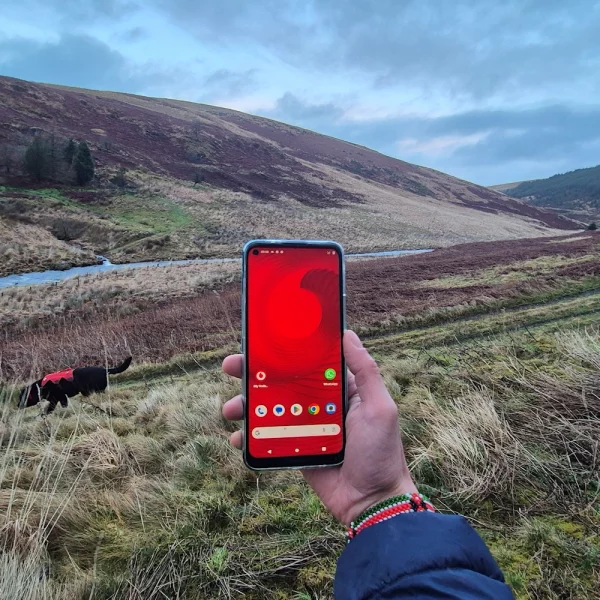
Mobile operator Vodafone has revealed that they’ve joined forces with strategic supplier Ericsson to conduct a new trial, which embedded AI technology into a test mobile network to deliver instant language translation during standard voice calls. The network-level implementation meant this works without the need for a special app or modified Smartphone.
Engineers from both companies were able to instantly translate conversations between people speaking in English, Spanish, Italian, French and German (this can easily be expanded to support additional languages). Suffice to say, this could come in very handy when you need to arrange overseas travel, accommodation, restaurant bookings, conduct international business or need to communicate more effectively in emergencies.
The successful trial demonstration also featured “live noise cancellation“, which alongside the language translation feature helped to improve call clarity for mobile phone users in busy or noisy locations such as train stations.
Advertisement
Both the noise-free calls and the AI translation service used Vodafone’s application server and in-house AI platform in conjunction with Ericsson’s AI gateway and core network technology. Applications Programmable Interfaces (APIs) were then used to “seamlessly bridge” the telecom and AI domains.
Marco Zangani, Director of Network Strategy and Architecture, Vodafone, said:
“AI is giving the mobile network back its voice. More than 50 years after the first mobile call, innovation is accelerating and shifting back into the network. Over the past few years, we have built the infrastructure, data capabilities and safeguards needed to unlock AI for our customers to converse more clearly.”
The operator states that they don’t intend this to “replace specialist services“, but they do acknowledge that delivering such services through the network rather than individual apps or devices makes them available by default to customers on any handset. Such capabilities would surely be quite attractive to customers and can could be deployed across multiple countries at the same time.
At present it’s not known whether or when Vodafone might begin deploying this to their live commercial mobile network or whether it would attract an additional cost (i.e. would it be a default or a paid add-on), but the successful demonstration is a big step toward that.
UPDATE 11:01am
Advertisement
Vodafone has informed ISPreview that they haven’t yet made a commercial decision to launch, although they are working on possible applications for next year.
In addition to offering the service themselves, the operator is also looking at potentially offering it to third-party businesses, such as for use by travel companies or a multi-national organisation with employees located in different countries.






Mark is a professional technology writer, IT consultant and computer engineer from Dorset (England), he also founded ISPreview in 1999 and enjoys analysing the latest telecoms and broadband developments. Find me on X (Twitter), Mastodon, Facebook, BlueSky, Threads.net and Linkedin.













« Octopus goes cold on bid for TalkTalk’s UK wholesale business PXC
Advertisement
Leave a Reply
Privacy Notice: Please note that news comments are anonymous, which means that we do NOT require you to enter any real personal details to post a message and display names can be almost anything you like (provided they do not contain offensive language or impersonate a real person's legal name). By clicking to submit a post you agree to storing your entries for comment content, display name, IP and email in our database, for as long as the post remains live.
Only the submitted name and comment will be displayed in public, while the rest will be kept private (we will never share this outside of ISPreview, regardless of whether the data is real or fake). This comment system uses submitted IP, email and website address data to spot abuse and spammers. All data is transferred via an encrypted (https secure) session.
















It is an interesting experiment to demonstrate what is possible – the kind of trial project CSPs used to undertake with all sorts of technologies at one time. However, a few thoughts come to mind about a production deployment of such a service:
– Would the providers accept liability if the translation was inaccurate or incorrect in a life-threatening situation?
– Would the providers retain the transcripts, as a condition of use, to improve the service, in a similar practice to that followed by many cloud services
– Would access to the service be made available to authorities and agencies both in the UK and elsewhere?
All good questions.
My proposal for what good would look like
– account level and call level opt-in, including marketing opt-in
– call transcripts/recording made available for download with a configurable keep period
– “right of erasure” within limits of UK GDPR/UK law, so customer can withdraw access for specific transcripts/recordings from supplier
(and transcripts/recordings only available via a proper court warrant, same as a wiretap request)
– supplier not allowed to mine the transcript/recording for improvement/marketing until 48 hours after the call (to allow customer time to withdraw the recording/transcript)
@MilesT:
The problem is that you leave little room for the provider to make a profit. I also doubt that deletion of transcripts would be allowed.