Home » UK ISP News Archive » Article Tag: Project Gigabit (660 Posts)
You are viewing a news and article archive for the Project Gigabit tag (category), where older items are stored for readers to access and view.
Articles for Category Tag - Project Gigabit

18th February, 2022 (6 Comments)
Alternative network ISP Fibrus, which is currently building a new gigabit-capable Fibre-to-the-Premises (FTTP) broadband network across Northern Ireland and Northern England, has today announced that their full fibre infrastructure has now reached 104,381 premises (up from 58,000 premises in August 2021).

11th February, 2022 (22 Comments)
The MP for Chesham and Amersham, Sarah Green, has challenged the UK Government to make progress on commitments made to local authorities along the Phase One rail route for High Speed 2 (HS2), which among other things included the promise to construct a new “broadband superhighway” to help expand faster internet access.

9th February, 2022 (17 Comments)
The UK Government’s Building Digital UK team has published an update on the start of their first procurements under the £5bn Project Gigabit broadband rollout, which is now inviting bids for contracts worth up to £292m to upgrade rural premises across Cumbria, Durham, Northumberland, Cambridgeshire, Dorset and Teesdale.
Advertisement

8th February, 2022 (12 Comments)
The UK Government has just published a response to its consultation on the question of how significantly faster broadband ISP networks can be extended to reach the final 0.3% of the country (i.e. under 100,000 premises), which are too expensive for their new £5bn Project Gigabit programme to reach in its current form.

8th February, 2022 (1 Comment)
The UK Government has today awarded £4m to support 8 new 2-year long pilots under the Digital Connectivity Infrastructure Accelerator (DCIA) project, which will test ways of making it easier for network operators to access and deploy 5G mobile (mobile broadband) infrastructure on street furniture and public buildings.

7th February, 2022 (16 Comments)
A number of weekend reports have claimed that the UK Government is close to securing a significant £10bn investment from the Australian-based Macquarie Group, which would go toward various British infrastructure projects in the digital infrastructure (i.e. fibre broadband and mobile) and energy sectors.
Advertisement

5th February, 2022 (11 Comments)
The Broadband Delivery UK team have just published a new batch of Public Reviews (PR) and Open Market Reviews (OMR) for additional parts of England – mostly covered by Phase 2 of the Government’s £5bn Project Gigabit broadband rollout. Both aim to identify which areas need state aid support for future builds.

5th February, 2022 (18 Comments)
Since April 2017 the UK Government has allowed broadband networks to claim 100% business rates relief on new fibre infrastructure, but this “Fibre Tax” holiday is about to expire and there’s been no indication of an extension. Some operators fear this will add “significant cost and uncertainty to the investment case for full fibre.”

2nd February, 2022 (30 Comments)
The government will today publish their “flagship” Levelling Up White Paper, which sets out their “plan to transform the UK by spreading opportunity and prosperity to all parts of it” and also confirms their revised broadband target – that “by 2030, the UK will have nationwide gigabit-capable broadband.”
Advertisement

26th January, 2022 (17 Comments)
A recent report from banking giant Credit Suisse has estimated that Fibre-to-the-Premises (FTTP) broadband networks will cover 90% of the UK by 2025. The country was also found to be the “most attractive market” for incremental investment in such networks, thanks to “strong build momentum and interest” in faster broadband.

21st January, 2022 (11 Comments)
The First Minister of the Scottish Government, Nicola Sturgeon, has issued a short update on the LOT 1 (North Scotland and Highlands) contract with BT (Openreach) under their £600m Reaching 100% (R100) project, which is extending “superfast broadband” (30Mbps+) coverage across rural parts of Scotland (mostly via FTTP).

20th January, 2022 (5 Comments)
A new report produced by property consultants Cluttons and polling firm YouGov, which surveyed 103 UK MPs, 577 councillors, 101 IT decision markets and 1,996 citizens, has highlighted various problems that could obstruct the move to adopt 5G mobile and gigabit-capable (1Gbps+) broadband ISP connections.
Advertisement
17th January, 2022 (9 Comments)
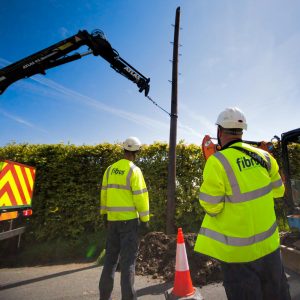
The £165m state aid supported Project Stratum scheme in Northern Ireland, which is working with UK ISP Fibrus to spread a gigabit-capable Fibre-to-the-Premises (FTTP) broadband network into rural areas, has just re-announced a network expansion that will add another 8,500 premises to the coverage and a big rollout delay.

17th January, 2022 (117 Comments)
Reports over the weekend appear to have all but confirmed that the UK Government will end the existing BBC TV licence fee from 2027 and replace it with a new funding model, which could include a Netflix style subscription model, government grants, more advertising or possibly a levy or tax on consumer broadband ISP bills etc.

12th January, 2022 (2 Comments)
The latest State of Rural Services report, which is being published today by Rural England CIC, has warned that many people in the country’s small towns and villages still face being “digitally excluded and locked out of key services” due to an “underinvestment in rural connectivity” (e.g. broadband and mobile infrastructure) and skills.

6th January, 2022 (25 Comments)
The UK Government’s Building Digital UK team has today “soft launched” a new “Rolling National Open Market Review” (RN-OMR) process for their £5bn Project Gigabit broadband scheme, which aims to do a better job of identifying areas that will benefit from a commercial rollout so that they can more effectively target public money towards those who will miss out.

23rd December, 2021 (10 Comments)
The Shropshire County Council (SCC) in England has this week allocated another £1 million (total so far of £2m) to help boost the value of the Government’s local rural gigabit broadband vouchers, which now offers grants worth up to £4,000 (homes) or £7,000 (small businesses) to cover the costs of installing such a network.
Cheapest Big ISPs for 100Mbps+


Latest UK ISP News






Promotion
Cheapest ISPs for 100Mbps+


Large Availability | View All
Helpful ISP Guides and Tips











Promotion


Latest Interviews





Sponsored
Copyright © 1999 to Present - ISPreview.co.uk - All Rights Reserved - Terms , Privacy and Cookie Policy , Links , Website Rules , Contact