Broadband ISP Fibrus Questioned for Charging Rural Areas More
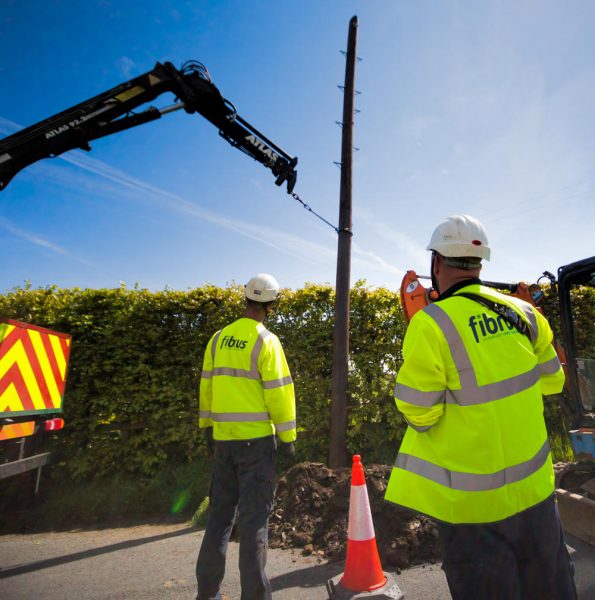
UK ISP Fibrus, which holds the £165m state aid supported Project Stratum contract to build a new gigabit speed Fibre-to-the-Premises (FTTP) broadband network to 85,000 of the hardest to reach (e.g. rural) premises in Northern Ireland, has defended charging rural users more than those in commercial urban areas.
At present Fibrus offers the same entry price for all of their customers in Northern Ireland, but those covered by the Project Stratum build (i.e. a predominantly rural deployment) are reportedly unable to avail themselves of the same discounts offered to people in their commercial build areas (i.e. more urban locations).
According to The Independent, the co-Founder and Chair of Fibrus, Conal Henry, told a scrutiny committee for the Department for the Economy (DfE) that discounts are offered in urban areas because the market is more competitive, and they needed to incentivise consumers to sign-up. Henry warned that doing the same in their Project Stratum areas could undermine the overriding aim of the subsidised project (i.e. extending FTTP coverage).
Advertisement
Conal Henry said:
“Stratum is a gap funded model – the wider the gap between economic payback and the cost to build a network, either the larger the subsidy or the fewer the homes that can be afforded with a subsidy in hand. So, if money is invested in discounts that then undermines or reduces the commercial return to an operator (and) that will actually increase that operator’s requirement for subsidy or reduce the operator’s ability to generate coverage, which again would be, would go against policy.
If we reduce the revenue available on the network you increase the amount of subsidy that is required to build that network and the result of that is against policy, because either you need more subsidy to deliver the same number of houses, or the same subsidy delivers a reduced number of houses and either of those outcomes I would have thought would be against policy.”
The position being taken by Fibrus is not a particularly new one in this market. A fair few broadband providers will charge customers living in remote parts of the UK more than those living in more competitive areas (in some cases they may even decline to serve the slowest lines), which largely reflects the fact that it costs more to deliver and serve those remote areas.
In recent years this kind of approach to pricing has become less common as competition has improved, but those in some copper ADSL-only areas can still face issues on certain ISPs. Nevertheless, we’ve not really seen this being replicated on the new generation of full fibre networks, at least not until now.
“I think in the long run, there’ll be a fairly flourishing competition for retail service providers on [the Project Stratum] network. But, at the moment, it just takes a little while for that to bed in,” added Conal. However, this position is open to debate, since it would depend upon how much flexibility is given to ISPs to differentiate their products at wholesale (it’s unclear how much flexibility Fibrus gives or how many ISPs they will even be able to attract).
Suffice to say, we think that more competition at infrastructure level, such as via Openreach or Virgin Media’s ever expanding commercial builds, is far more likely to drive effective competition. But this assumes those operators will conduct an extensive – and perhaps somewhat contentious – overbuild in parts of the state aid funded Project Stratum area. We are expecting more of this.
Advertisement






Mark is a professional technology writer, IT consultant and computer engineer from Dorset (England), he also founded ISPreview in 1999 and enjoys analysing the latest telecoms and broadband developments. Find me on X (Twitter), Mastodon, Facebook, BlueSky, Threads.net and Linkedin.










« CityFibre Boost UK Gigabit Rollout with Visual Automation















Comments are closed