O2 UK Deploy 5G Standalone Mobile Broadband Network to 5 Towns in Dorset
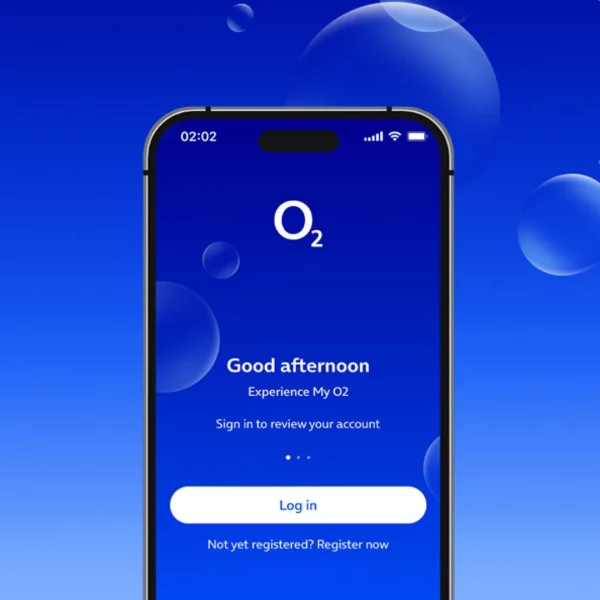
Mobile operator O2 (Virgin Media) has this morning announced that they’ve just switched-on their next-generation 5G Standalone (5GSA) mobile broadband network across five “major towns” in the county of Dorset (England). The operator’s 5GSA network is now live across a total of more than 500 UK locations (70% of the population, or c.49 million people).
O2’s 5GSA rollout first began in February 2024 (here) and they usually aim to reach “at least 90% outdoor coverage” in every location they add. The same should hold true for the five towns in Dorset, where roughly 380,000 residents will now be able to benefit from the 5GSA network. The towns include Bournemouth, Poole, Dorchester, Swanage, and Christchurch.
Just to recap. 5GSA networks are pure end-to-end 5G that can deliver ultra-low latency times, greater energy efficiency, better speeds (particularly uploads), network slicing, improved support for IoT devices, increased reliability and security etc. Existing 5G networks often use a Non-Standalone (NSA) approach, which is hobbled by being partly reliant upon older and slower 4G infrastructure.
Advertisement
Dr Robert Joyce, Director of Mobile Access Engineering at O2, said: “Our new 5G Standalone network is now live in Dorset, providing an impressive upgrade for local people and businesses and creating new opportunities in and around the county. We are investing every single day to improve our mobile network and provide a more reliable experience for our customers, futureproofing our connectivity and paving the way for exciting innovations that lie ahead.”






Mark is a professional technology writer, IT consultant and computer engineer from Dorset (England), he also founded ISPreview in 1999 and enjoys analysing the latest telecoms and broadband developments. Find me on X (Twitter), Mastodon, Facebook, BlueSky, Threads.net and Linkedin.









« EE Wins Big in Opensignal Study of Best 4G and 5G UK Mobile Networks














I had difficulty to understand what actually changed or what was / is different.
For those who are curious there is a video which explains the Stand Alone 5g.
https://www.youtube.com/watch?v=9c0nehuw4Cg
Top tip, if you are in an 02 5Gsa area and have a 5g enabled phone, but not seeing any improvement, check if you need a new SIM or can convert to eSIM, I converted to eSIM and my download improved dramatically.
That is interesting @FasterMobile.
So what you saying it is not only the backend which need to change but your sim does need change as well? Sounds very odd as the sim itself has not changed.
@anon
I was told that my sim was not an ‘R15’ as it was an older one, so needed to swap to an ‘R15’ sim or use eSIM.
Faster mobile is right. On O2, 5G SA only works if our SIM is an R15 (and the phone is part of their SA whitelist).
Unfortunately, for reasons no one understands, O2 was sending older SIMs to customers even after releasing 5G SA, so unless your SIM/eSIM is ~6 months old or newer, there’s a chance you need to request a new SIM.
It takes around 5 minutes at a store. If they have no idea what you’re talking about, just ask them for a new R15 SIM.
On the same sites VF had 5G SA 4 years ago?
Unfortunately the VMO2 coverage map is very disingenuous and I cannot understand why they cannot be honest and show expected indoor and outdoor 5G, as well as the fact that there are so many places where coverage is expected, but it falls very short. On the face of it, VMO2 5G coverage looks very good. The reality however is that in many places, their 5G speeds are no better than VF3 4G. I also found that I missed many calls when I know my device was on, and in coverage area.
It is a shame, I thought that VM02 would be pulling ahead as I don’t think they had to deal with the whole Huawei decom requirements, but it doesn’t seem that way. Too many customers/MVNOs? Perhaps it’ll get better once 3G is fully retired and they eventually get around to re-farming spectrum for 4G/5G?