Vodafone UK Unify Core and Radio Network Sharing Over Multi-Vendor 5G Network
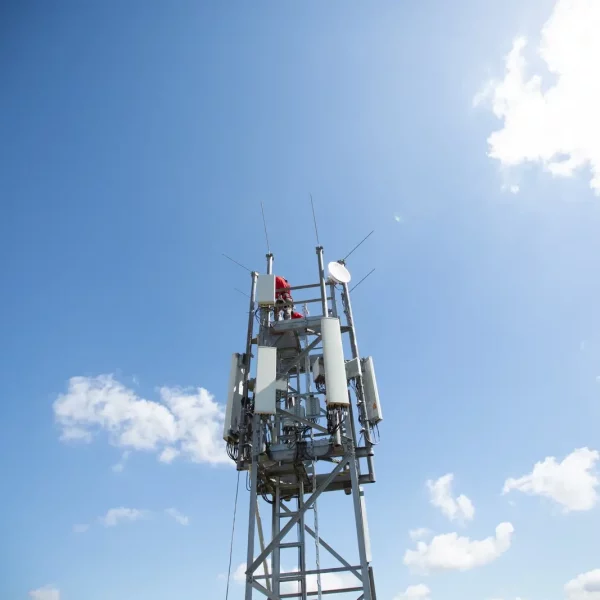
Mobile operator Vodafone UK (VodafoneThree) and network supplier Ericsson today claim to have completed a “world-first network upgrade” by becoming the first mobile operator to successfully unify core and radio network sharing over a multi-vendor 4G and 5G network – helping to unlock faster mobile broadband speeds for around 71% of UK people.
The work forms part of VodafoneThree’s post-merger plan to invest £11bn into upgrading the UK’s 5G mobile infrastructure and coverage over the next decade (here, here and here). The combined business has also previously stated that it aspires to reach more than 99.95% of the UK population with their 5G Standalone (5GSA / 5G+) network by 2034 and push fixed wireless access (mobile home broadband) to 82% of households by 2030.
The latest development in this effort essentially completes VodafoneThree’s work to unify core-level sharing through their Multi-Operator Core Network (MOCN) technology with its existing Multi-Operator Radio Access Network (MORAN) infrastructure.
Advertisement
As it stands today, up to 28.6 million Vodafone and Three UK customers are now automatically connecting to the best available coverage, at no extra cost – “eliminating 16,500km² of mobile not spots, improving speeds when using 4G and 5G, and boosting network capacity and resilience to provide a better experience for all customers“.
The latest development is covered in a new white paper from Ericsson, which shows how the new network works and its benefits. The result is said to be a “single, intelligently orchestrated platform that delivers measurable improvements in performance, reliability and efficiency“. As part of this, they’ve also unlocked the benefits of shared C-band spectrum (3.4GHz to 3.8GHz) across sites nationwide with up to 50 million people (71% of the UK population) claimed to be seeing faster 5G speeds.
Stated Benefits of the Latest Upgrade
➤ Dynamic access to the best coverage – Vodafone and Three customers are automatically using each other’s network, getting the best available coverage, at no extra cost. This seamless transition improves speeds, enhances reliability and crucially, requires no action from the user.
➤ Eliminating 4G not spots – By providing 4G coverage to areas of the UK where it wasn’t previously available to either brand’s customers, VodafoneThree has removed 16,500km² of not spots, an area ten times the size of London.
➤ Enhanced 5G coverage – Up to 50 million people, around 71% of the UK population, now have access to VodafoneThree’s fastest 5G speeds, thanks to bringing the networks together and an accelerated 5G roll out plan.
➤ Reliability and resilience – Busy times, such as rush hour, put a strain on the network, as sites can be flooded with more customers than they can provide a good quality service to. Thanks to this technology, customers will be moved from a busy site to one that is able to provide the required level of performance. This reduces congestion, improving performance for affected users and providing a better experience for all customers.
➤ Improved coverage for high-footfall venues – Strategic coverage, including tactical deployment on temporary sites, indoor solutions and upgrades at high-footfall venues such as stadiums, airports and event spaces, ensure service levels remain strong during spikes in demand.
The improvements mentioned above form part of VodafoneThree’s “first phase of network integration“, with more to come.
Andrea Donà, Chief Network Officer at VodafoneThree, said:
“This world-first network upgrade shows how VodafoneThree is using cutting-edge technology to transform the UK’s digital infrastructure. By unifying core and radio sharing at a national level, while also introducing intelligent orchestration and dynamic capacity management, we’re setting a new benchmark for network performance.
This upgrade means customers are already experiencing improved reliability and coverage and as well as access to our fastest 5G speeds today, but this is just the beginning. As we continue rolling out upgrades through our £11 billion investment, customers can expect even better performance, with even faster speeds.”
Take note that Vodafone and Three UK eventually aim to have a single core network that will do away with the need for the MOCN side of things, but that’s still “many years away” and MOCN itself is currently still being deployed (i.e. the roll-out of MOCN is expected to complete by 2033). The reason why some masts take longer is because many of the initial batches were merely software upgrades, while others will need new hardware, especially in remote rural areas (that takes time).
Advertisement






Mark is a professional technology writer, IT consultant and computer engineer from Dorset (England), he also founded ISPreview in 1999 and enjoys analysing the latest telecoms and broadband developments. Find me on X (Twitter), Mastodon, Facebook, BlueSky, Threads.net and Linkedin.























On a related point, Vodaphone apparently is having a few issues with correctly handling inbound calls (affecting a friend of mine, Voda failing to resolve quickly, and from discussions with Voda helpdesk there are a number of customers affected)
In the specific case, the phone (5G) can dial out fine, use data, and send/receive texts but inbound results in caller hearing “number is not recognized”.
Phone was working until about a week ago, in North London.
The number was ported in from another network (and I suspect that’s relevant)
I’m wondering whether the ability to roam to Three masts has been enabled in the area (MOCN/MORAN) has exposed a “porting in” misconfiguration when the phone is using a Three mast.
Hmm… Where I work we have in-building femtocells — the Three one doesn’t work but Vodafone is fine. Any ideas when they might fix that sort of thing? I _assume_ a femto behaves similarly to a normal mast, but…
Three Uk have failed for over 12 months now to fix a capacity issue in Llandudno Junction in North Wales. You cannot make or receive calls and the internet if it does work will take a good few minutes to load Google. Since the merger it has not improved at all.
My experience has been that since Vodafone and Three got together, the network has become worse. Beforehand, Vodafone was acceptable and Three was terrible (mast out of action for 2+ years and heavy congestion). Now Vodafone 4G is also struggling with sub par data speeds and flakey incoming calls, presumably from all the Three customers and coverage of 5G seems to have shrunk.
I’ve been a Three user for over a year and my experience is the service has worsened. Most frustrating issue is having a signal but no data throughput. Wife has same issue with iPhone on Three. UK mobile networks are getting worse. I use EE for work and it used to be great but now not much better. We were recently in Japan and had 5G pretty much everywhere and could barely see a mast anywhere.
As a customer of both vodafone and three id love to have some kind of rollout tracker because in the areas I live I often get no servixe on one but do on another and they do not roam networks.
That is exactly my experience too. Plenty of announcements about Three customers being able to use the Vodafone network, but not seeing it in reality anywhere that it would be useful.
http://www.vodafone.co.uk/newscentre/vodafonethree-network-improvement-checker claims to tell you if there’s been an update in your postcode ‘in recent months’ but gives no detail or prediction
They also warn your coverage may already be so fab, you won’t be getting one either. Which will be most places according to their fantasy mapworld.
> Mobile operator Vodafone UK (VodafoneThree) and network supplier Ericsson today claim to have completed a “world-first network upgrade” by becoming the first mobile operator to successfully unify core and radio network sharing over a multi-vendor 4G and 5G network – helping to unlock faster mobile broadband speeds for around 71% of UK people.
That’s amazing, Vodafone. Fantastic job!
https://x02.me/i/8EJMQR.png
Oh.
Is this going to help my signal.
As since Vodafone went in with 3three
My signal drops constantly.
Am on 3thee network mask and
Believe it’s piggyback on Vodafone
Network?
But it’s useless.
Does the network sharing extend to MVNO such as Lebara and iD?