Rural UK broadband altnet Gigaloch suffers delay to CVA creditors agreement

Fife-based alternative broadband operator Gigaloch, which had been rolling out a new full fibre (FTTP) network into rural parts of West Cheshire (England) and Scotland until they ran into financial difficulties last year, appears to be suffering a delay to implementation of a Company Voluntary Arrangement (CVA) – due to the receipt of a secondary preferential claim from HMRC.
The operator, which primarily focused on building across remote rural parts of Scotland (Perth and Strathearn, Highland Perthshire and Inverness-shire), originally aspired to cover 200,000 UK premises. But it’s unclear how far they got with that aspiration before running into financial difficulties. A quick look at their recent records on Companies House shows plenty of developments related to this.
One of those developments was the reaching of a CVA just over a year ago. A CVA allows a company with debt problems, or that is insolvent, to reach a deal with its business creditors (i.e. paying them back over a fixed period), which usually means that the company can continue trading while slowly paying back what they owe. Such agreements are often preferable to failure, especially if the business is deemed to have a viable foundation.
Advertisement
The latest development is that the CVA supervisor, insolvency specialist Kevin Mapstone of BTG Begbies Traynor, has published his first progress report on the agreement. The report notes that the CVA was due to be funded by a third-party contribution of approximately £155,000 from the secured creditor, Cohortis Capital.
The aforementioned contribution was expected to be paid within 3 months of the CVA’s approval and was to be used to meet the costs of the arrangement and to fund the proposed distributions to creditors. But the report notes that “no contribution has been received from Cohortis to date“.
CVA Supervisor’s statement
We understand that the delay is principally due to the receipt of HMRC’s secondary preferential claim in late July 2026, the directors’ ongoing of the claim and the related VAT repayment position, which need to be clarified before the final claims and distribution position can be confirmed. As previously mentioned in our report, the company is usually in a repayment position for VAT purposes.
In January 2025, submissions were made by the company to HMRC that suggested that a VAT repayment of £257,000 was due to the Company. It is, however, accepted by the Supervisor that the figure of £89,OOO which is stated in the company’s statement of affairs as being due to the HMRC, in relation to their secondary preferential claim, may be understated in the event that HMRC wish to contest the VAT repayment balance due.
According to the Supervisor, there is currently ongoing dialogue between the directors of the Company and Cohortis. The directors are currently said to be reviewing the extent of HMRC’s secondary preferential claim and, once that’s resolved and the contribution received, then the CVA should be able to continue. But such a long delay certainly won’t be helping matters and while we hope for success, it’s also possible that CVAs can fail.
In the meantime, the supervisor anticipates that the Arrangement will now need to be extended to allow sufficient time for the HMRC position to be resolved, the contribution to be received and distributions to be made to creditors in accordance with the approved terms. “The Supervisor remains of the view that the Arrangement can be implemented in line with its approved terms,” said the update.
Advertisement
The total amount owed to creditors at the commencement of the Arrangement was estimated at approximately £11.9 million. Connected creditors with clams of approximately £6.2 million agreed not to participate in any dividend under the Arrangement, albeit while retaining their voting rights. Based on the terms of the Arrangement, preferential creditors, if any, and secondary preferential creditors are “expected to be paid in full, with unsecured creditors expected to receive a dividend of 1p in the £. No dividend has been paid to date.” The next report is due around this time next year.






Mark is a professional technology writer, IT consultant and computer engineer from Dorset (England), he also founded ISPreview in 1999 and enjoys analysing the latest telecoms and broadband developments. Find me on X (Twitter), Mastodon, Facebook, BlueSky, Threads.net and Linkedin.











Advertisement
Leave a Reply
Privacy Notice: Please note that news comments are anonymous, which means that we do NOT require you to enter any real personal details to post a message and display names can be almost anything you like (provided they do not contain offensive language or impersonate a real person's legal name). By clicking to submit a post you agree to storing your entries for comment content, display name, IP and email in our database, for as long as the post remains live.
Only the submitted name and comment will be displayed in public, while the rest will be kept private (we will never share this outside of ISPreview, regardless of whether the data is real or fake). This comment system uses submitted IP, email and website address data to spot abuse and spammers. All data is transferred via an encrypted (https secure) session.








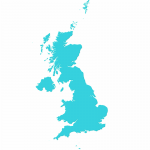








I don’t understand why altnets build in areas which are miles apart, in this case Scotland and Cheshire. Do they just throw darts at a map or is it so they can visit their Auntie Joan in Scotland and claim mileage? The dominoes are falling.