Amazon Leo Launch 1Gbps Satellite Broadband Beta for Enterprise Customers UPDATE
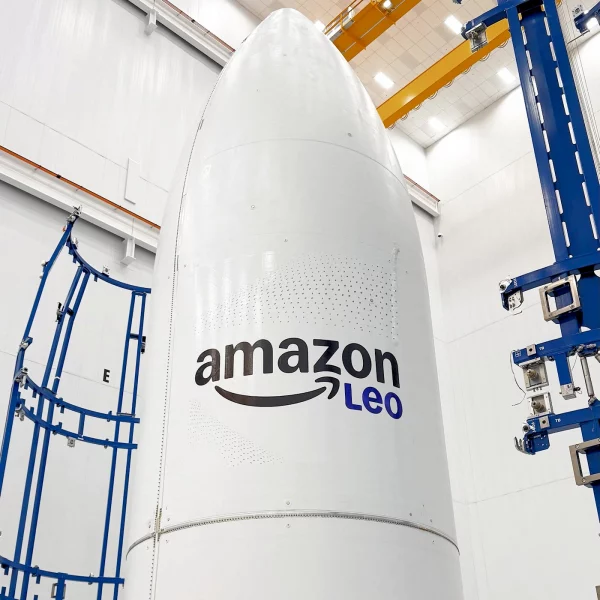
Amazon Leo (formerly Project Kuiper) has today announced that they’ve opened up their new constellation of ultrafast broadband satellites in Low Earth Orbit (LEO) to early testing by selected enterprise customers. The move is being supported by the launch of their new Leo Ultra terminal, which offers download speeds “up to” 1Gbps (400Mbps uploads).
The company currently has approval to deploy and operate their own constellation of 3,236 LEO satellites as part of Project Kuiper Amazon Leo (altitudes of between 590km to 630km). A total of over 150 satellites have already been placed into orbit via six successful rocket launches, which includes two of their initial prototypes – Kuipersat-1 and Kuipersat-2. But many more are due to follow over the next few years.
The full commercial launch of this service, which will ultimately sell products direct to consumers, businesses and the public sector via a selection of different terminals, isn’t expected until sometime in 2026 (they need to launch more satellites first to reach a basic level of global coverage and network capacity). But before then they’ve today carried out their promise to launch an “enterprise preview” (beta test) of the service with “select business customers“.
Advertisement
The preview will allow their early enterprise customers (JetBlue, Hunt Energy Company etc.) to “begin testing the network using production hardware and software“, while also giving the Amazon Leo teams “an opportunity to collect more customer feedback and tailor solutions for specific industries ahead of a broader rollout“.
Some of the company’s enterprise-grade features including network management tools, advanced encryption across the network, and 24/7 priority customer support. The service is designed to support critical business applications including real-time data processing, remote operations management, and secure communications for teams working in field locations.
The enterprise solution also connects directly to Amazon Web Services (AWS), as well as other cloud and on-premise networks, allowing customers to securely move data from remote assets to private networks without touching the public internet.
Amazon Leo’s Two Primary Private Networking Solutions
Direct to AWS
With Direct to AWS (D2A), AWS customers can connect directly to their cloud workloads using an AWS Transit Gateway or AWS Direct Connect Gateway through a point-and-click interface on the Amazon Leo web console, simplifying network management and lowering latency.
Private Network Interconnect
Enterprises and telecommunications providers can also establish private network interconnects (PNI) at major colocation facilities to connect remote locations directly to their data center or core network, enabling Private Networking in days rather than the weeks or months typically required to deploy traditional private circuits.
In addition, Amazon are supporting this with the launch of their new 1Gbps capable Leo Ultra terminal, which appears to share the same core performance specs as the Pro terminal that was previously announced, albeit with a sleeker design. Confusingly, Amazon Leo then states that it will be shipping units of both “Leo Pro and Leo Ultra” to select companies as part of this new enterprise preview.
Advertisement
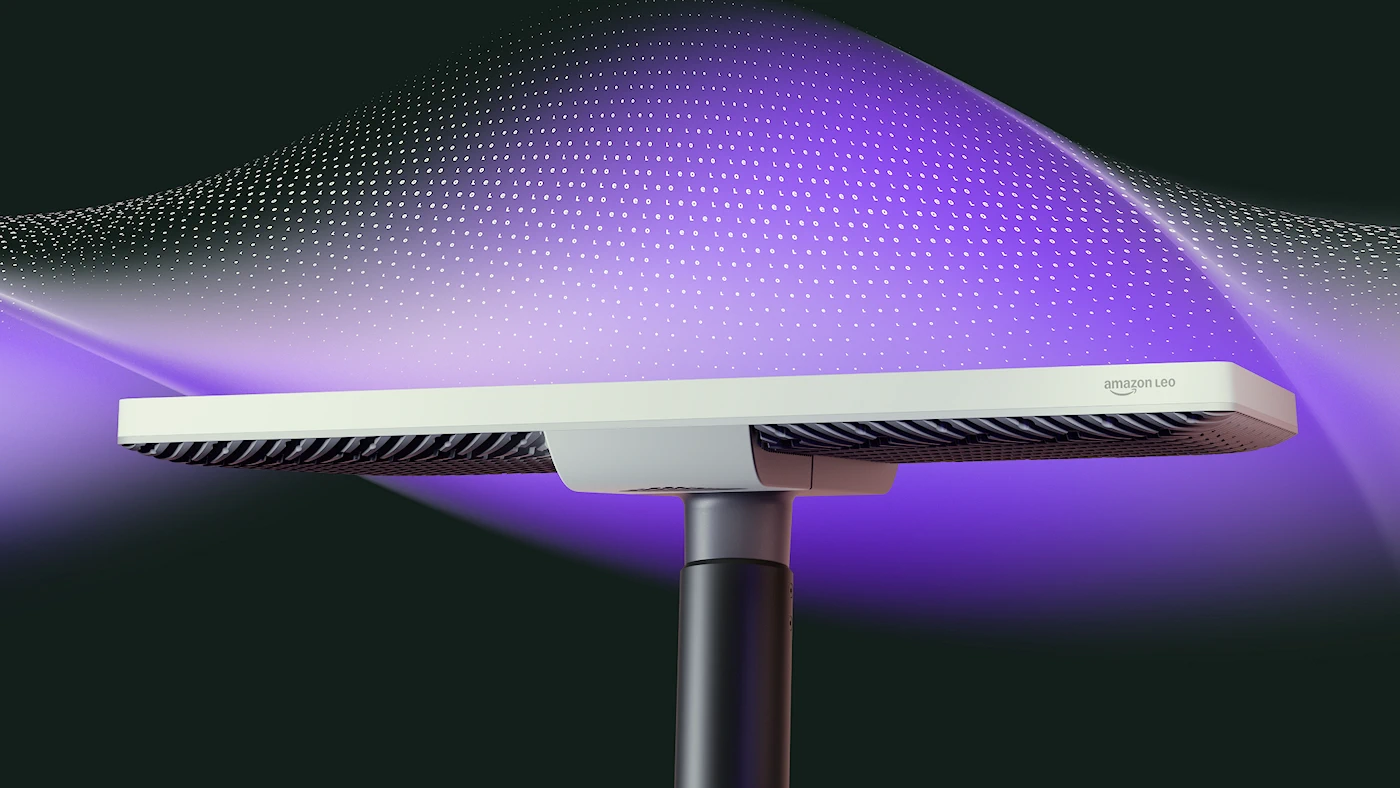
The announcement also includes a video of the new terminal, which pitches the kit as the “world’s fastest satellite antenna” (difficult to substantiate as “antenna” is quite a broad definition), albeit still too early for any details on the price of their Enterprise solution and hardware.
UPDATE 25th Nov 2025 @ 6:30am
When Amazon rebranded Project Kuiper to ‘Leo’, it seems they also renamed their terminal hardware. So, the new kit is now named as follows – Nano (residential and roaming), Pro (residential and business) and Ultra (high demand enterprise, telecoms and governments etc.). This explains why we were initially confused about the differences between Pro and Ultra (Ultra used to be known as Pro, while Pro was known as Standard).
Advertisement
Project Kuiper Customer Terminal Specs (GEN1)
Nano
CompactPeak Download Speed: 100Mbps
Peak Upload Speed: 20Mbps
Size: 18cm x 18cm x 2.5cm
Weight: 1Kg
Data & Power Ports: Ethernet/POE
Antenna: Single Phased Array – Shared (Tx/Rx) AperturePro
StandardPeak Download Speed: 400Mbps
Peak Upload Speed: 100Mbps
Size: 28cm x 28cm x 3.3cm
Weight: 2.5Kg
Data & Power Ports: Ethernet/PoE
Antenna: Single Phased Array – Shared (Tx/Rx) ApertureUltra
ProPeak Download Speed: 1,000Mbps
Peak Upload Speed: 400Mbps
Size: 50.5cm x 77.8cm x 5cm
Weight: 17Kg
Data & Power Ports: Ethernet (data) + Ethernet (Mgt)
Antenna: Dual Phased Array – (Tx/Rx) Solution






Mark is a professional technology writer, IT consultant and computer engineer from Dorset (England), he also founded ISPreview in 1999 and enjoys analysing the latest telecoms and broadband developments. Find me on X (Twitter), Mastodon, Facebook, BlueSky, Threads.net and Linkedin.



























I hope it’s included with prime
Hopefully they extend this beta test to residential customers wouldn’t mind testing a 1Gbps satellite broadband connection!
For that they’ll use either the Compact (100Mbps) or Standard (400Mbps) terminals.
I’m guessing, if the consumer one aims to beat Musk on speed it will end up being prided accordingly. That said, if I were still looking to move onto a narrowboat (never say never) I would definitely hold off getting Starlink for now and seeing what comes of this in the new year. Hell, if the consumer version comes with 400Mbps up I may consider it for my home connection over OpenReach’s paltry upload speeds and I’d rather not go back to VM! Although considering GiffGaff (yes I know it’s on VMs network and is owned by VMO2) as from what I’ve heard their customer service isn”t quite a rage inducing as VMO2! hahaha