CommunityFibre Allegedly Discouraged from G.Network Bid Over.. Rodents?
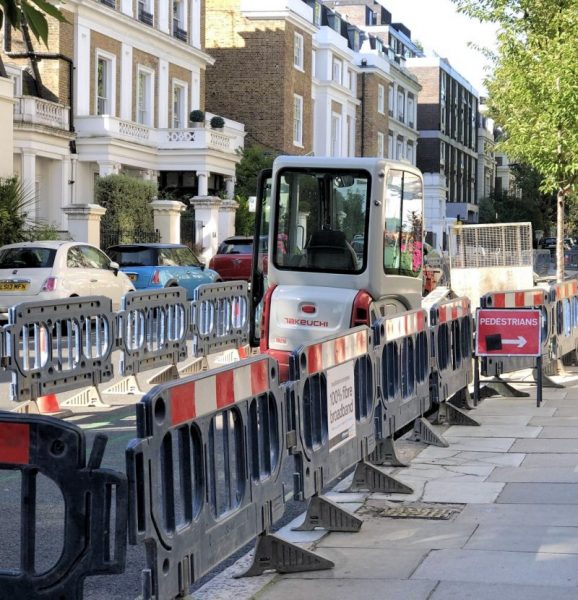
The CEO of alternative UK broadband ISP and network builder CommunityFibre, Graeme Oxby, appears to have suggested that one of the reasons they opted not to make a bid for troubled rival G.Network stemmed from fears that rodents had chewed through its fibre optic cables. But the key issue may be more related to the general cost of maintenance than rats.
Just for a little context. G.Network is currently in administration after being acquired by distressed debt specialist FitzWalter Capital earlier this month (here), but we won’t recap all that again today. Both G.Network and CommunityFibre have deployed a full fibre broadband network across London, although CF’s network is significantly larger with 1.342 million UK homes covered (inc. 185k businesses within 200 metres of their network) and they’ve already overbuilt a fair bit of GN’s fibre.
Suffice to say that the overbuild situation alone makes us sceptical of the business case for CommunityFibre potentially making a play for G.Network, although the goal could also have been more strategic (e.g. denying another rival entry to the area). Despite this, a new report on The Telegraph (paywall) appears to claim that CF ruled out bidding for GN “over fears that rats have chewed through its fibre-optic cables“, which may have attracted costly work to fix.
Advertisement
However, we suspect that the focus on rats in the newspaper’s article is more a reflection of journalistic choice, since rodents are quite a common problem for network operators to tackle and even CommunityFibre will sometimes have to deal with them.
Graeme Oxby, CommunityFibre CEO, said:
“Rodents like ducts and they like fibres which are very tasty.
…
It’s not something we’ve been particularly interested in because we think it’s got quite a lot of structural issues and would be quite an expensive fix.”
The same article does eventually highlight what may be the real issue, which is how G.Network has laid quite a few of its cables down the middle of some busy London roads, rather than under the pavements like most network operators. Suffice to say that this could make it more disruptive and thus costly to repair future damage, regardless of whether that’s been caused by rats or other things.
The added cost of upkeep could perhaps be seen by a potential suitor as having a negative impact upon the company’s asset value in any sale. But Oxby does also point to G.Network having “quite a lot of structural issues“, which makes clear that it’s not just rats he’s worried about, even though that’s where the Telegraph chose to place its focus.
Meanwhile, the Joint Administrators for G.Network said on 13th January 2026 that they’d “secured sufficient funding for the administration process, which will enable the Company to continue to trade as normal and to connect new customers. They do not anticipate that there will be any adverse impact on customers“. The Administrators are now starting to market the business for sale.
Advertisement
Finally, Oxby suggested that consolidation might not be the only option, and he believes that some alternative networks may yet survive to challenge the incumbents: “Clearly there are going to be the distressed consolidations, maybe lender-led or specialist-led, but we don’t feel that consolidation is the only answer. We set up to be successful competitors to the incumbent and introduce some competition into the market … I think that’s got lost a bit.”
G.Network’s most recent accounts reported an 85% increase in turnover to £10.2m in FY2024 and a gross profit of £7.3m (up 62%), with total assets of £453m (up from £394m). But they also suffered an operating loss for the year of £52.8m (down from £67.2m) and are estimated (Enders Analysis) to be carrying a net debt of over £300m.
CommunityFibre’s most recent accounts to the end of 2024 (here) saw revenue grow by 82.2% to £76m (2023: £41.7m), while gross profit increased by 87% to £65.9m and they reported total losses before tax fell of £118.5m (2023: £134.6m).






Mark is a professional technology writer, IT consultant and computer engineer from Dorset (England), he also founded ISPreview in 1999 and enjoys analysing the latest telecoms and broadband developments. Find me on X (Twitter), Mastodon, Facebook, BlueSky, Threads.net and Linkedin.












« Altnet Broadband ISP Gigabit IQ Starts UK Crowdfund to Raise £270,000
















There was an article in the FT this weekend “Britain’s altnets need some serious rewiring” Here:- https://www.ft.com/content/a27bee11-bad7-48b5-98f7-11525a97e58d .Unfortunately it’s behind a paywall so I wasn’t able to read it.
A trick with the FT. Google the headline then click the link from the Google search results. The pay wall will be gone.
I’ve read it. It basically says that consolidation won’t happen until struggling altnets accept that their value is less than the cost of building their network and that creditors investors need to accept some losses.
@Winston Smith, just telling us what we already know then.
micro trenched routes down the middle of roads in Central London is not attractive .
I watched them install in Judd street and was amazed how quickly it went in and how shallow it was.
I did like the cheek for dropping a g network toby box outside the old Openreach HQ
It makes no business sense to CF, since there is hardly anywhere that G.Network cover that CF don’t already.
I would hope Cityfibre might be interested, given they have no presence in London and are already experienced in operating their own ducts. It could be a major boost for them if they can take on that infrastructure at a bargain price.
Alternatively, perhaps a commercial provider like Vorboss would like it since G.Network cover quite a lot of central London. Then again, Vorboss are already expanding in that area.
To be honest – isn’t there just to many AltNets? In some parts of the country there is 2 or 3 AltNets competing with themselves as well as BT/O R and VMO2. Surely that helps nobody.
Totally agree, there are too many small alt nets and not enough regulation as to where they can and cannot operate. Each alt net should be allocated an area, (including the countryside), not covered by Openreach or any other provider. As it is now some smaller networks will eventually go bust, and Openreach will be left holding the baby.
are microducts immune from the rat problem?
Microrats!
On a high fibre diet
Good question. I was under the impression that it was the weak electromagnetic fields that attracted rats to copper cables. Be interesting to know what’s attracting them to fibre?