Creditors Allegedly Set to Take Control of Rural UK Broadband ISP Gigaclear
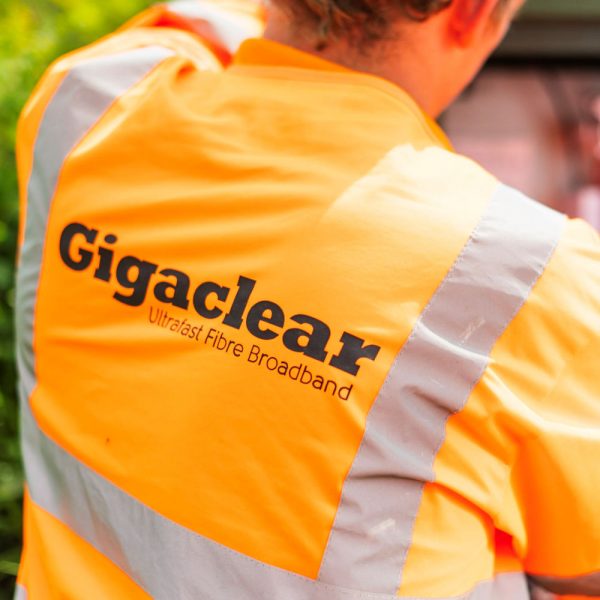
A major newspaper has claimed that creditors of the indebted Abingdon-based alternative broadband ISP Gigaclear, which has built a full fibre (FTTP) network across 612,000 premises in rural parts of England and is home to c.160,000 customers, are set to take control of the business after an attempt to sell the company failed.
The provider currently still holds an aspiration to extend their network reach to 1 million UK premises. However, like so many other alternative networks (altnets), they’ve recently also had to scale-back their network build and cut jobs, due to the pressures from high interest rates, rising build costs and a highly competitive environment (here and here). Nobody ever said deploying fibre optic cables into rural areas was easy or cheap.
Suffice to say that funding has recently become somewhat of a hot topic for Gigaclear, particularly after reports emerged in November 2025 that they had begun hunting for a buyer (here). A consortium of the provider’s existing banks then followed that report up, in December 2025, by agreeing to pump “at least” £80m of new funding into the company (here), which Gigaclear said meant it was now “fully funded to deliver its plans“.
Advertisement
As Nathan Rundle, CEO of Gigaclear, said last month: “There’s still more work to do to close the digital divide but combined with our achievement of EBITDA positivity earlier this year and strong customer growth, this funding reflects a business that is financially secure, operationally robust and focused on sustainable long-term delivery.”
However, according to a new report in the FT (paywall), the company’s creditors, including the UK taxpayer-backed National Wealth Fund (NWF), as well as banks such as NatWest and Lloyds, are now allegedly “set to take control of heavily indebted broadband provider” after Gigaclear failed to find a buyer for the business. The creditors are also said to have explored options, such as writing down their debt (this could impact taxpayers too, due to the NWF’s involvement via a £240m guarantee on the aforementioned £1.5bn debt facility).
At the time of writing, most of the parties involved are said to have declined to comment on the report, although Equitix did express disappointment that “the financial performance of the investment did not meet the targets that Gigaclear set itself”. The expectation is that the company’s creditors will assume control of Gigaclear and then attempt another sale process. None of this is expected to have an impact upon their customers, which will continue to receive the same service, although related cost-cutting can sometimes impact service and support quality in other ways.
The reported move comes shortly after another altnet broadband provider with similarly significant financial challenges, G.Network, was acquired by FitzWalter Capital for an undisclosed sum (here). Barely a week had passed before G.Network then followed that up by filing a Notice of Intention (NoI) to appoint an administrator (here).
Advertisement
As time goes on, we may well see more indebted altnets going down a similar path during 2026, particularly if they fail to find a consolidation partner via more traditional approaches. Quite a few altnets have already spent 2024 and 2025 trying to find such solutions, but only a few have done so and the longer it takes, the more painful the outcome could become, especially for investors and creditors.






Mark is a professional technology writer, IT consultant and computer engineer from Dorset (England), he also founded ISPreview in 1999 and enjoys analysing the latest telecoms and broadband developments. Find me on X (Twitter), Mastodon, Facebook, BlueSky, Threads.net and Linkedin.











« Openreach List Next 132 UK Areas for Copper to FTTP Switch – Tranche 23














Starlink offering a much cheaper service will invalidate any gains that this new admin will be able to pull off
Gigaclear offer faster speeds for less money. Even among financially sustainable companies, BT can also be cheaper / faster.
No one who can get FTTP would really need to consider Starlink, even at the lower price (with a forced £75 install fee)
£35 for 100mbps down and 10mbps up not for worth it unless you have nothing available to property even fttc gives better speeds better off with any network than starlink
Any Starlink comparison carries a hidden £15–£20 / month for the extra power consumption.
@Mike
If the power to run a Starlink connection costs between £15 – £20 per month, that works out to a power draw of between 85 to 110 Watts (assuming a tariff of 25p/kWh).
Is that correct?
Or are you just paying over the ods for your electricity?
From the horses mouth – depending on which unit you’ve got, 50W to 150W depending on load and conditions. https://starlink.com/gb/support/article/18836c7e-2d97-6153-fe67-c18427bd0558
Not sure what they mean by “idle” considering how much background data usage happens on a modern home network, but even at 20W that’s still more than the average ISP supplied router under full load.
Correcting my previous comment, it looks like Starlink don’t require an installation for that cheap plan now. They certainly did last week when it was first announced & published on here. I note their extremely competent web team have not changed the button for the UK as it says “$99 installation”
My starlink runs between 35 and 65w – 65 when flat out, 35 most of the time.
So no, it’s nowhere near £25 a month. Closer to £9.
I mean we’re getting really fussy worrying about the power use, a load of that is indoors so is reducing your heating bill by a corresponding amount?
There is one problem with Starlink, well two, the first one is Musk and the second is that switching from satellite to another can cause issues
Gen 1 Starlink is 85w – 110w. No question. Gen 2 & 3 are much more efficient.
Some of the most expensive energy costs in the world is down to horrible government policy, not really fault of your isp
Taking on an additional £5,000 of debt per paying customer doesn’t scream “sustainable business”. That’s 16 years of revenue without considering interest payments.
Philip Janssen (former BT CEO) predicted it would all end in tears for the altnets. Lets hope something resembling a third national network is the final outcome of all this. It would be bad for the country if we ended up with the same old Openreach/VMO2 duopoly at the end of this. If Gigaclear can’t make it work where they have had a virtual monopoly service to properties that are probably the most poorly served by existing technologies it begs the question who exactly can?
There’s a fundamental economic problem which the BDUK funds are intended to solve in part.
The cost of rolling out broadband to the final 10% of the country costs the same as the entire first 90%. If consumers are asked pay a price that reflects the cost of provision they won’t be able to afford it. If the price is subsidised via some kind of industry wide USO arrangement, it doubles the price of everyone else’s broadband.
It’s almost impossible to do on a purely commercial basis
Too much glass already in the ground for it all to be forgotten. The original investors will be lucky to get anything back and possibly whoever rescues them as well (think TeleWest et al becoming NTL, then finally becoming Virgin all those years ago).
The end result will be a 3rd provider. As to quite what that provider will be called, or whether or not this was the most efficient way of creating one, then your guess will be as good as mine.
Whoever who is not borrowing money from banks and not burning money on 100% electric van fleet and outsourcing actual network build. IDK if this is only my impression but most of those troubled altnet CEOs should never been appointed, at least not as CEOs.
Let’s hope good Altnets like Netomnia can remain independent and not be taken over by City Fibre, or worse still Virgin Media/O2.
“It’s almost impossible to do on a purely commercial basis”
Maybe I’m conflating BDUK with project gigabit, but that seems to be what’s happening in practice with the latter. I’ve seen areas that have subsidised Openreach FTTP being overbuilt by a proj gig subsidised altnet as they build out to reach their own subsidised properties (which, in turn, are highly likely to get *commercial* Openreach FTTP eventually as an upgrade from existing FTTC)
In short, the taxpayer seems to be helping to provide competition rather than truly serving the unserved. I’m not sure my money should be spent on that.
The end game in my opinion is planned when at least some of these alt net’s launched. The plan would have been to sell up after certain things were achieved at personal profit to the owners. Many UK companies dont survive long term.
I think even CityFibre could eventually be gobbled up.
In this case it looks combination of higher costs of debt and failure to find a buyer ended gigaclear prematurely, so not quite gone to plan.
They were given BDUK money to do North Newington near me. By the time they came to do the install Openreach had already beaten them to it with their commercial build. it makes you wonder how many other places this has happened.
No-one gets paid until a customer has a service delivered.
Lenders have simply had enough.
The main reason for this is altnets outsourcing all network build and investing in completely unnecessary things like 100% electric vans etc.
It’s not though, is it? Do you get much consulting work coming your way as a telco cost analyst? No? I wonder why.
Observations in Home village; Gigaclear came in and provided FTTP to the village ‘core’ having promised to serve the whole Parish. Use BT/OR ducts and poles with a small quantity of their own ducts. They are now supplying about 15% of the village (but that may change as they had a major outage {3 days} in the last 2 weeks).
Initially their technicians used Gigaclear liveried vans, then we saw Kelly Comm’s vans “Working on behalf of Gigaclear’ but now back to principally Gigaclear vans.
They are doing mail shots at 6 week intervals offering various connection levels (latest 200mbps for £17pm) with a defined price increase after 18 or 24 months (something like an increase to £42).
The one thing that impresses me from GC is they have one item of street furniture serving 3 villages, 1800 properties. Every thing else is underground.
That’s a funny way to show no commercial knowledge
Armchair & keyboard to your liking?
Sorry but poor contractor. They started in Ledbury Herefordshire. Any issues with broken ducts got left. I have 50plus emails fobbing me of over 3 years. And they missed quite a few areas. Poor just poor
Can’t speak on behalf of other areas but where I live, their time to go live was shockingly slow. So slow that by the time Gigaclear had put unlit fibre in the ground, Openreach swooped in, laid their spine and CBTs and had service available the following week. It took Gigaclear many months before their service went live.
Their slow reactivity and use of PIA means they’re a prime target for quick overbuild by the incumbent.
These AltNets seem to me to be on a land grab strategy, build a book of ‘addresses passed’ then sell the company at well above financial accounts asset values on the attractiveness of the potential end customers available to convert. It will work if cash flow is positive enough but if the conversion rates are weak, upshot – borrow more and more. Gigaclear came to my town, I signed up, waited expectantly, saw them dig up the road and waited, and waited, then got a letter from Gigaclear saying they would not be providing full fibre to my address. Next a blaze of Gigaclear publicity and guess what, they are heralding the start of digging up the roads in another rural town.
The altnets were on a gold rush strategy that you describe until about 3 years ago it came to a screeching halt & the idea that they were going to build and sell for a quick buck has long since disappeared over the horizon.
It is the only company that connected up the house where my partner lives, Openreach was not interested and still not. so i do hope they get a buyer.
Gigaclear are the only broadband option in my area too (other than 5Mbps SoADSL). Not even the 4G broadband that I used with a directional antenna before Gigaclear is currently available.
Hopefully some mitigation of the debt interest will be found which will allow the service to continue – apart from the debt the business looks sound.
Four years ago all the pavements in my town were dug up separately by both Swish Fibre and Gigaclear. Swish got into trouble and was bought by Cuckoo, which no longer serves where I live and it looks like Gigaclear is soon to follow. What a waste of time, money and effort all round.
Currently Swish doesn’t appear to be available anywhere. It was supposedly consolidated into All Points Fibre alongside all of Fern Trading’s other networks – that was 7 months ago and since then it has not been available to order on Cuckoo or Brillband (Fern’s retail ISPs). No explanation has been forthcoming as to why.
On the positive side, the new owners of whatever is left of the business, once they have cut the deadwood, will be able to start raising prices to more realistic levels. This should help make a future sale of the business more feasible. It would also help take some of the pricing pressure off other AltNets.
Erm, they are not that cheap when you fall off contract they know where overbuild has happened and can offer deals accordingly. Ours was £57 for 500Mbs our village is annoyingly on 2 different exchanges one end has been overbuilt by BT (just after gigaclear arrived) our end hasn’t. I Frankly want the altnets to succeed but I can’t see how investors ever thought they would get the money back unless they sat it out for decades.
Erm, they are not that cheap when you fall off contract they know where overbuild has happened and can offer deals accordingly. Ours was £57 for 500Mbs our village is annoyingly on 2 different exchanges one end has been overbuilt by BT (just after gigaclear arrived) our end hasn’t. I Frankly want the altnets to succeed but I can’t see how investors ever thought they would get the money back unless they sat it out for decades.
@Paul:
Individual cases are now largely irrelevant, but your example does show that the prices charged to customers can be raised considerably and possibly even to sustainable levels.
To correct the comment: There has been no change of ownership. The article is, however, referring to the possibility of achange of management.
I would have thought that altnets using Openreach poles, ducts and joint box’s, with goverment grants and Ofcom bending over backwards to give them an advantage. it would be easy and cheap to provide fibre network. Seems like everything has been handed to them on a plate.
You’d have thought but from my experience, using Openreach PIA has given Openreach an advantage. They know where altnets are planning to deploy before they’ve even opened a chamber. The application process for works with PIA gives Openreach a complete view of an Altnet’s deployment plan.
Openreach are effectively giving access to their ducts for the data and getting a competitive advantage in doing so.
Especially with the (admittedly low) charges for PIA forming a level of subsidy for any remedial work required (eg, duct clearance, pole replacement).
Everyone is acting like the business is finished. Gigaclear are making an operating profit with excellent customer take up. The debt is the only issue that the business has and the investors will not be getting any money back for a very long time if at all. Name me an alt net which doesn’t or hasn’t had problems.
What this really needs is government to regulate to stop overbuild, which is daft and hurts everyone.
Ultimately our telecoms infrastructure should be owned by the state as Openreach have had a monopoly for too long and have been far too complacent and left people with awful service for too long.
How do you arrive at a position of thinking Openreach have a monopoly? It’s utterly bizarre. Virgin have been able to serve the majority of British homes for two decades.
It’s fascinating how you’re proposing creating a monopoly in order to break one that only exists in your head.
They are EBITDA positive which is not the same as making a profit, it just means they are taking enough to pay the wages, the rent & the electricity bill etc. Once you take into account interest on the debt, depreciation of the assets etc they are making a loss.
State intervention is not the answer. Market forces must be allowed to determine who will survive and the prices charged to consumers.
Nobody is letting the, Fibre Network & assets, of a company like Gigaclear, that already passes, 612,000 Rural properties, with the massive amount of Public BDUK funding it has received, go to the wall. If an Alt net company isn’t prepared to take on it’s Debt. In the limit, it will be handed to an Operator of last resort, like BT. In many Rural areas where it’s Underground FTTP network predominates, BT is still operating mainly Copper. And hasn’t even started, installing FTTP on poles. It’s simple economics, Free of Debt Gigaclear is a ready made, licence to print money for them…
Openreach is the company of last resort, but if the failures become a deluge, the low revenues and high costs will impact Openreach and its current activities. BT would therefore have to be compensated in some way. Otherwise, if the directors had the interests of the business at heart, they might have to draw a line and start to decline such failed businesses.
@Far2329Light
The Secretary of State has wide powers in this area and the rules are complex to say the least.
However, an Operator/Supplier of Last Resort is not expected to take on the debts of the business that has failed.
Market forces seem to have worked quite well, in the case of retail ISPs (without their own fibre), mainly in the form of TAL (Telecom Acquisitions Ltd.) hoovering up the retail customers,
It would be (morbidly & legally) interesting to see what happens if a sizeable fibre network, servicing retail consumers, fails with nobody else willing to buy the tangible assets from the Administrator/Receiver; they could be placed into Special Administration, but I doubt that would be necessary.
I suspect that the normal process of Administration would work just fine; it would be unthinkable that the creditors would force liquidation without first selling off the fibre network and customers to (an)other provider(s).
@Not quite so Bizzie Lizzie:
It is correct that the Operator of Last Resort does not take on the debt of the failed business, but the customers of the failed provider will typically have been offered service at a discounted, unrealistic price. This is where the fall-back operator incurrs excessive costs and losses on service provision. The acquired networkinfrastructure is also unlikely to be built to Openreach standards. It might be possible to accommodate such costs if only relatively small numbers of customers are transferred, but if the numbers become too big, it will represent a significant problem for Openreach.
@Not quite so Bizzie Lizzie:
“Market forces seem to have worked quite well …”
You are correct in that the service providers benefit from a very competitive market; however, the excessive number of competitors, both in the retail service provision and network infrastructure, means that the end user prices are heavily depressed. The thinning out of the number of players in these sectors will help alleviate pricing pressures and will allow owners to raise prices to more realistic levels. Service providers may lose some customers, but such a move is essential to improve the returns on the investment.
@Not quite so Bizzie Lizzie:
“It would be (morbidly & legally) interesting …”
Yes, indeed.
The sale of some of the AltNet businesses might prove to be difficult due to complications such as the level of overlap between providers and the low number of customers. Sellers of businesses that have been through an administration process may well have to chop up businesses into packages of assets that can be tailored for specific buyers, much as in the way some branches are closed for various reasons when retail chains go into administration.
My thoughts are that the administrators might look at dividing up the customer base along the lines of customers who will have an alternative provider to switch to, and those who will not. Those that have an alternative might be sold off in packages to the competitor providers, while those that have no alternative would be retained with the core business. This, however, is dependent upon being able to cut out chunks of the network to improve the uptake numbers and to eliminate overlap. The administrators then have a set of dark-fibre assets left, which would likely be heavily discounted. TalkTalk appears to have followed a similar methodology to improve its returns.
I think approaches along these or similar lines are now what is called for. If consolidation, even after administration, had been feasible without such measures, it would have happened long before now. It will also be a problem selling low-return assets of any form into competing businesses, which are themselves having to deal with low returns on investment.
Consolidation is frequently referred to as a step towards saving the AltNets, however consolidation of itself will not save these businesses nor any derived entities without developments such as:
– sustainable business models,
– Improved productivity,
– reduction of market competition,
– higher consumer prices,
– sustainable returns on investment.
If these factors are not achieved in step with any consolidation, thenno progress will have been made.
Started off well but as openreach come in to the same areas a few years later . 24month contracts ended and people switched back to Openreach because they are given more choice of providers and tv packages with better pricing.
I’m in the South West and have been with Gigaclear nearly 3 years. Currently I’m paying £33 pcm for 300M, though they are about to put up to £36. New contracts with ISPs on Openreach network seem to be ~£28-35, but the Openreach build in our area seems to have stalled. Also Gigaclear is via pavement ducts whereas the Openreach engineer told me theirs would be replacement of overhead copper lines with fibre ones – there was me thinking we might lose some street clutter (I’m in a conservation area)!
Apart from the need to haggle on the 18-month renewal I’ve no issue with Gigaclear. Their service has been very reliable – I’ve only had one unplanned outage (for about 6h?) but they kept customers updated with texts and emails.