Wildanet Launch Symmetric Full Fibre Broadband in Cornwall and Devon UK
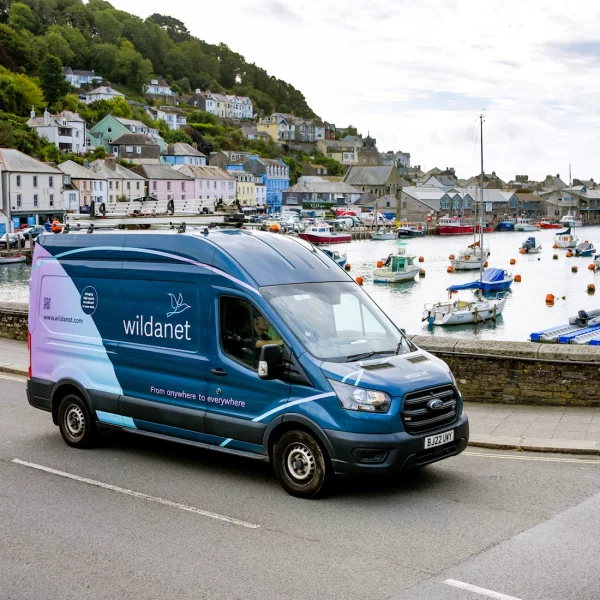
Alternative rural broadband ISP Wildanet, which is building a new 2Gbps speed full fibre (FTTP) network across rural parts of South West England (Devon and Cornwall), has today announced that they’ve upgraded their service to deliver symmetric speeds (i.e. the same speeds for both downloads and uploads).
Just to be clear. Wildanet appear to be introducing this as a premium service feature, rather than an upgrade at no extra cost like some of their rivals. For example, the provider’s 200Mbps (download) package with a 40Mbps upload speed still costs £27 per month on a 24-month minimum term with free setup and a bundled router, but if you want this at symmetric speeds then it’ll cost £31 per month (an extra +£4).
The arrival of symmetrical speeds at up to 2Gbps represents a further evolution in Wildanet’s network and has been enabled by the company’s use of more modern XGS-PON full fibre technology.
Advertisement
Simon Hughes, Wildanet CCO, said:
“Digital connectivity is now fundamental infrastructure for both communities and the economy. Cornwall and Devon have huge strengths in innovation, creativity and emerging industries but if the county is to realise its full potential it needs digital capability on a par with anywhere else in the UK. Symmetrical connectivity helps support the way people increasingly live and work, whether that’s running a business, collaborating remotely, studying online or managing a busy connected household.
The launch of Cornwall Connected highlights just how important digital infrastructure has become to Cornwall’s future. Reliable, high-capacity connectivity is essential for creating opportunity, attracting investment and supporting the next generation of innovation and growth. We’re proud to be playing our part in helping deliver that future.”
So far the provider claims their full-fibre rollout has already seen more than 50,000 connections enabled across the region, through a combination of private investment and publicly funded initiatives.






Mark is a professional technology writer, IT consultant and computer engineer from Dorset (England), he also founded ISPreview in 1999 and enjoys analysing the latest telecoms and broadband developments. Find me on X (Twitter), Mastodon, Facebook, BlueSky, Threads.net and Linkedin.












« Opensignal Q1 2026 Study Ranks UK Bottom for 5G Mobile Performance in Europe

















In the UK, we had 56K dialup and ISDN. Then came along ADSL and later ADSL2+. ADSL was known as ‘broadband’ because of the larger amount of bandwidth, at around 0.5mbps downstream, And the fact that with a splitter, the line could carry voice and data. These lines were asynchronous, with more downstream than upstream bandwidth. In the US, they had DSL, which was very similar.
So, what does the term ‘broadband’ have to do with FTTP, with speeds upto 10gbps symmetric?
Because it’s still broadband, which simply means that the technology can carry a wide-bandwidth of data transmission, usually via multiple channels. FTTP does this by light. ADSL did it using electrical signals over metal wires. Both are broadband. It’s a very catch-all kind of term that everybody is familiar with.
Asymmetric. Not asynchronous.
Broadband as a technical term works for fibre as there is usually more than a single channel deployed though the medium. No/one buying broadband as a consumer is confused by what the term means.
Be interesting to see how many people actually want this enough to pay the premium.
the first hurdle is finding people who actually live in their coverage area. My parents had WN salespeople call in, followed by their contractors doing some digging, but nothing has happened in the last 18 months or so and their checker implies that’s not changing any time soon
So it’ll be down to Openreach (“building now”) to get it done. As it should be given that Superfast Cornwall paid for FTTC to be installed so there’s fibre infrastructure that is easy to extend and gives us a proper choice of ISP.