WightFibre’s Isle of Wight FTTP broadband network hits 40 percent take-up
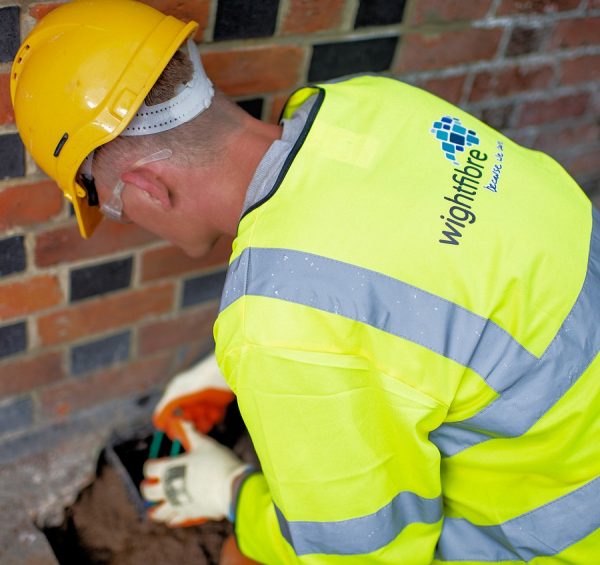
Alternative network provider WightFibre, which has built their own independent gigabit speed Full Fibre broadband (FTTP) network across the Isle of Wight (situated off the South Coast of Hampshire in England), has revealed that their new fibre network now covers 75,000 premises (91% coverage) and has exceeded 30,000 customers (40% take-up).
In case anybody has forgotten. The operator previously stated that they were expecting to have invested around £110 million by 2030 as part of their ongoing “Gigabit Island Project”, which according to today’s update “remains on track” to achieve 95% coverage by March 2028 with an ultimate goal of 97-98% coverage (previously the aim was 96% by the end of 2027).
The significant level of take-up shows that WightFibre is performing well against rival Openreach, which in recent years have also been deploying their own FTTP network across the island. WightFibre’s take-up of 40% could also be translated to reflect that the operator now holds a local market share of around 34% across the Isle of Wight.
Advertisement
The final stages of the rollout are focused on extending coverage even further and connecting harder-to-reach locations. This tends to be a slower and more expensive process due to the increasingly sparse, rugged and generally more challenging nature of such areas.
John Irvine, CEO of WightFibre, said:
“Reaching 30,000 customers and surpassing 40% penetration is a tremendous achievement for the entire WightFibre team. These figures place us amongst the best-performing altnets in the UK and demonstrate the confidence that Isle of Wight residents and businesses have in our network, our people and our service.
Most importantly, we would like to thank our customers for their loyalty and support. Every customer who has chosen WightFibre has played a part in making this success possible. We are incredibly proud to serve our Island community and grateful for the trust that so many residents and businesses place in us.”
Back in the spring WightFibre published their latest annual accounts, which showed that the company delivered revenues of £9.158m (up 27% from £7.196m in 2024), while losses hit £19.32m (2024: £18.95m) and the company had net liabilities of £75.96m (2024: £56.64m).
The provider also delivered a full year of positive adjusted EBITDA (i.e. earnings before interest, taxes, depreciation, and amortisation) of £951k (2024: -£673k), which has been helped by their revenue growth and recent cost control measures. The company is currently home to 119 employees (mostly based at their Cowes HQ).



Mark is a professional technology writer, IT consultant and computer engineer from Dorset (England), he also founded ISPreview in 1999 and enjoys analysing the latest telecoms and broadband developments. Find me on X (Twitter), Mastodon, Facebook, BlueSky, Threads.net and Linkedin.












« nPerf launches new fixed broadband and mobile speed testing tool
Advertisement
Leave a Reply
Privacy Notice: Please note that news comments are anonymous, which means that we do NOT require you to enter any real personal details to post a message and display names can be almost anything you like (provided they do not contain offensive language or impersonate a real person's legal name). By clicking to submit a post you agree to storing your entries for comment content, display name, IP and email in our database, for as long as the post remains live.
Only the submitted name and comment will be displayed in public, while the rest will be kept private (we will never share this outside of ISPreview, regardless of whether the data is real or fake). This comment system uses submitted IP, email and website address data to spot abuse and spammers. All data is transferred via an encrypted (https secure) session.
















And crucially, not been absorbed into VM. The only “cable company” that is independent now.
Each house also has its own unique fibre back to the main cabinet and doesn’t share with other houses like a GPON/XGS-PON split on a pole that is then split one or more times on the spine from source. A cabinet does not daisy chain from another – its fibre(s) back to the headend from each. It’s 1-2-1 to the cabinet from each house basically.
Incorrect.
Incorrect you say. That was the design I last saw. Wightfibre made a thing about how theirs was more fault tolerant design, so yes, cabs are linked for that purpose.
Ouch that’s 1466 cppp and 3666 per customer. Assuming 30 ARPU that’s over 10 year payback excluding the opex
Another company in trouble
In November 2017 WightFibre was acquired by Infracapital Partners as part of its £35M investment in the company, matched by private investors and the UK Government’s Digital Infrastructure Investment Fund.
In summer 2020 the company secured additional funding from ICP and NatWest to take total funding to over £90M to take total planned coverage to 78,000 premises
That’s not free money. Those investors want it back with interest. These numbers make it hard to see how that can ever happen because the gap between the cost of customer passed and installed and the revenue those customers generate is so large.
Amazing – Wightfibre have shown that with great leadership, a CEO in John who knows his numbers, a feel for the community that they can serve and a feel for the local market that great take up can be achieved. An exemplar for the industry. Well done
Indeed, superb results. A pity, therefore, that they’re still nowhere near to paying off the debt.
Could be considered one of the oldest “alt-nets” in the UK (disregarding predecessor companies rolled into VM), because of their original cable heritage and rollout (initially offering broadband via HFC) and starting their fibre transition relatively early.
I bet the Islanders are happy Wightfibre wasn’t absorbed into VM or taken over by a more passive private equity investor (their cross-water transport very much suffers from a mixture of underinvesting PE owners, near bankruptcy of one operator, and an underscale minority operator operating what it the worlds last regular all seasons passenger hovercraft).
Wightfibre is not a panacea, I know of one case where the resident reverted to Openreach when higher speed FTTC/VDSL became availabile because of reliablity issues on a longer HFC run to the nearest cabinet in a more rural area (not yet transitioned to FTTP)