Gov Look to Boost EE’s 4G Based UK Emergency Services Network via Satellite

The UK Space Agency (UKSA) has reportedly invited interested suppliers, such as Starlink, to engage on the possibility of harnessing Direct to Device (DtD) based signals from broadband satellites to help resolve coverage gaps in the Government’s massively late and over-budget 4G based Emergency Service Network (ESN); currently being delivered by EE (BT).
Just to recap. The emergency services (police, fire etc.) were supposed to have moved away from the old Motorola-owned Airwave network by now, which harnessed TETRA (Terrestrial Trunked Radio) technology. The old network is slow (dialup / ISDN like data speeds) and expensive, although it does deliver strong voice coverage (99%+ geographic reach).
The high cost and limited capabilities of Airwave are often highlighted as two of the main reasons why the previous UK government, in 2015, decided to replace it with a 4G alternative (ESN) – the first country to do so. The Home Office originally expected that emergency services could start using the ESN in September 2017, allowing Airwave to be replaced by December 2019, but the contract ended up being billions of pounds over budget and years behind schedule due to a mix of technical problems, legal (competition) disputes and development delays (here).
Advertisement
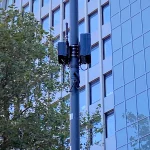
Most of the problems with the ESN stemmed from issues with its software and hardware, rather than the network side. But at the same time it’s still recognised that EE’s 4G network struggles to reach every single location within the UK, and this is potentially one area where the new generation of broadband satellites could help.
Over the past few years’ we’ve reported on various developments in the related Direct to Device (DtD) market, which often allows satellites in space to link with unmodified Smartphones on the ground for limited but useful communication (voice/text), data and general roaming / coverage improvements (here).
The most mature of these is Starlink’s (SpaceX) Direct to Cell (DtC) service, which has already been adopted by O2 in the UK (O2 Satellite will launch in early 2026). But Vodafone has separately teamed-up with AST Space Mobile to deliver a similar solution and BT (EE) are working with Starlink on a rural broadband solution (here), albeit not yet DtC. On top of that, Amazon’s Leo project is also set to deliver mobile connectivity in the near future.
Suffice to say that it would make perfect sense for the government to be exploring how satellite based mobile connectivity could also be used to help complement the ESN and potentially fill in any coverage gaps, which is exactly what the Telegraph (paywall) reports is now being explored by the UKSA.
Advertisement
We use the word complement above, rather than replace, because at the end of 2024 EE secured a 7-year extension – worth £1.29bn – to their 4G based ESN network contract until 2032 (here); this includes the option of a 1-year extension to that. We think it would also be unlikely for the UK government to place the national security of ESN connectivity totally in the hands of a foreign satellite operator.
Meanwhile, the Home Office still doesn’t expect the ESN to be fully operational until 2029, and the total predicted cost of the project has already more than doubled from an original £6.2bn estimate to £14bn. The bigger question may thus be whether or not the hardware and software side of the ESN can be adapted in time to work effectively alongside satellite connectivity.






Mark is a professional technology writer, IT consultant and computer engineer from Dorset (England), he also founded ISPreview in 1999 and enjoys analysing the latest telecoms and broadband developments. Find me on X (Twitter), Mastodon, Facebook, BlueSky, Threads.net and Linkedin.











« Business ISP Exascale Launches UK Consumer Broadband Brand















Minor typo?
“ albeit not yet DtC” should read “ albeit not yet DtD”?
As BT/EE work with Starlink, then that was more a reference to their branded Direct to Cell solution than the general DtD term.
I sincerely hope the people in charge consider that putting the emergency communications out to an American platform in space is not a good idea at this moment, given it’s current political instability.
And of course, the late delivery of ESN is equally impacting SRN (shared rural network) for us ordinary rural dwellers, they are usually installed simultaneously..
The majority of delays have been planning based, unlike our peers we penalise building anything.
@drevilbob Well, when EE insist the only way they could possibly get good enough coverage of our village for ESN is by placing a mast in a location highly visible from over half the (claimed to be longest in England) village, but when it’s strongly objected to they can magically get adequate coverage from an almost invisible location next to (and no higher than) the TV relay, it’s just as well planning applications are properly scrutinised. Oh, and it’s in a National Landscape (wot used to be AONB)
And we now have village-wide excellent 4/5G EE coverage.
@drevilbob my local village of 300+ residents is an all network not-spot, planning permission for a new mast on high ground just outside the village was granted 8 years ago, OR installed the backhaul fibre within weeks, we are still waiting for the mast to be built!