Next Gen Starlink Dish Can Connect with Two LEO Broadband Satellites at Once
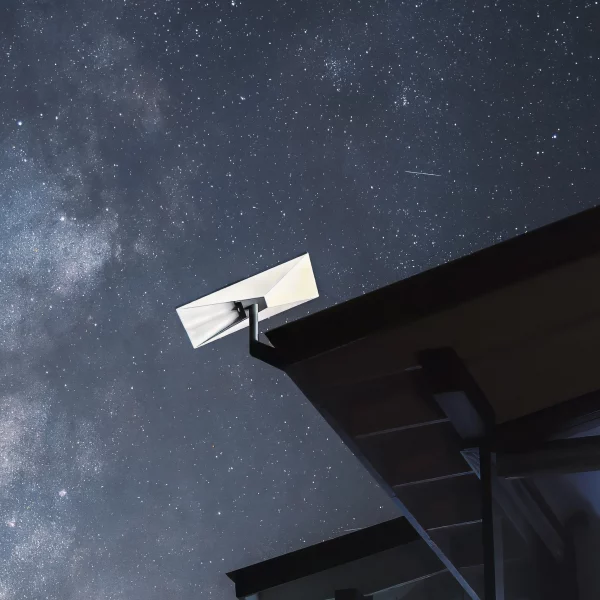
The next generation family of terminals (dishes) from Starlink (SpaceX), which operates a mega constellation of low latency and ultrafast broadband satellites in Low Earth Orbit (LEO) for the UK and the world, will feature – “for the first time” – the capability to communicate simultaneously with two satellites.
The service currently has around 10,650 satellites in Low Earth Orbit (LEO) – mostly at altitudes of between c.340-550km. Residential customers in the UK currently pay from £40 a month for the Residential 100Mbps unlimited data plan (plus £10pm for the hardware), which also promises uploads of c.15-35Mbps and low latency connectivity (c.20ms). Faster packages exist at greater cost, while more restrictive (data capped) options also exist for roaming users (e.g. £55 per month for 100GB of data).
Regular readers will know that Starlink are currently preparing to launch their next gen family of terminals to customers, two of which were recently previewed by Elon Musk (here). Currently, we know these will be more compact and portable, with some models featuring USB-C ports and battery power. But the full details remain subject to some considerable speculation.
Advertisement
The latest development today comes from international connectivity provider and authorized reseller of Starlink, Neterra, which has announced that customers in 129 territories can benefit from discounts exceeding 15% on their Starlink terminals, while 99 territories now enjoy substantial reductions ranging from 50% to 80% on selected products.
However, in-between announcing such discounts, ISPreview noted that the company also let slip some new details about Starlink’s next-gen family of terminals.
Extract from Neterra’s Pricing Update
“Looking ahead, Neterra can also share an early glimpse into Starlink’s future roadmap. By the end of 2026, Starlink is expected to introduce a new family of satellite terminals featuring improved resilience and, for the first time, the capability to communicate simultaneously with two satellites … This advancement is expected to deliver greater connection stability and improved overall performance.”
At present the dish terminals that Starlink ships to customers are typically designed to connect to one satellite at a time. The dish is, however, designed to switch between different LEO satellites in milliseconds in order to provide seamless and continuous connectivity (it can also “see” several at once in its view of the sky), which does create a brief period where it may technically seem to be communicating with two satellites at once.
The ability to maintain a continuous connection with two satellites at once would mark a significant change and one that could provide a major performance boost for customers. The catch right now is that we don’t yet know whether this capability will be limited to a specific part of Starlink’s next gen terminal family (e.g. enterprise / military terminals) or if it’ll be available across all of them (consumers, business etc.).
Advertisement
Normally we might expect that such a capability would push up the power requirements of Starlink’s kit. But SpaceX’s focus on optimising the hardware, as well as the mentions of battery power for some models, does suggest that we might not need to be too concerned. On the flip side, Starlink’s service has become significantly more expensive over the past month.






Mark is a professional technology writer, IT consultant and computer engineer from Dorset (England), he also founded ISPreview in 1999 and enjoys analysing the latest telecoms and broadband developments. Find me on X (Twitter), Mastodon, Facebook, BlueSky, Threads.net and Linkedin.









« EE UK Finally Make Pay TV with 1.6Gbps Broadband Easier to Take Online
















This along with V3 might be how the speeds are starting to creep up? I’ve seen upwards of 650Mbps now and again. So are they going to bond sat?
Mind blowing
V3 launches are a little way off. Starship needs to get to orbit first.
Have you not kept up? They have lanuched over 300 V3’s from it – even put a camera on one and did a shot of it leaving starship. It’s all on Youtube. They fire out 20 at a time
Also the reason we are seeing faster speeds once and a while (or so I am told)
No – they have launched over 300 of them – including one with a camera on
There are no Starlink V3 satellites in orbit yet and there won’t be until Starship can reach orbit and prove that it can de-orbit successfully.
So far Starship has only launched mass simulators which match the mass and shape of the V3s. They were not V3 satellites and they did not go into orbit.
All of them burnt up in the atmosphere within thirty minutes of being launched, including the one with the cameras on it.
They have yet to launch any real operational satellites from Starship, let alone “300” of them. A simple search informs one. Starship is needed for V3 satellites.
@simon I think you’re confusing V3 satellites with Direct-to-Cell capable V2 Mini Starlink satellites. There are no V3 satellites in orbit as others have said (de-orbited lumps of metal – the mass-simulators – and the two with cameras were not really V3, they were modified and stretched V2 Mini again which de-orbited with Starship as well as they were on the same sub-orbital trajectory). There are however about 300 Direct-to-Cell V2 Mini’s all launched on Falcon 9. There are also about 200 Starshield satellites, but they basically V2 Mini as well, launched on Falcon 9 and not a part of the Starlink network.
Need to start my own company that deorbits LEO internet sats.
Our “comrades” in the far east are probably all ready working on that. 🙂
Interesting how for their own LEO satellite comms, the russians opted for the standards-based 5G Non-Terrestrial Networks architecture, which allows simple 5G handsets to use it.