140 Government Funded 4G Mobile Mast Upgrades Now Live Across UK
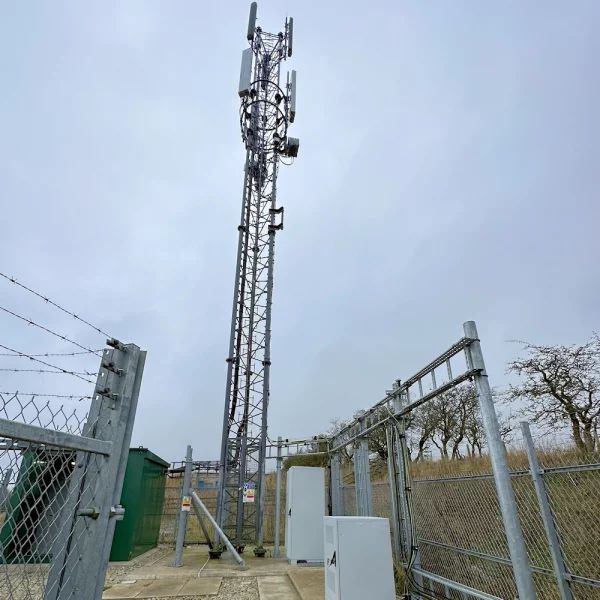
The UK Government has confirmed that a total of 140 publicly-funded rural 4G (mobile broadband) mast upgrades have now gone live across the United Kingdom (up from 100 at the end of 2025), which includes new sites in England, Wales and Scotland as part of the industry-led £1bn Shared Rural Network (SRN) project. But more are set to follow before 2027.
The SRN – originally supported by a commitment of £501m in public funding and £532m of private investment from operators – involves both the reciprocal sharing of existing masts in certain areas and the demand-led building and sharing of new masts in others between the operators.
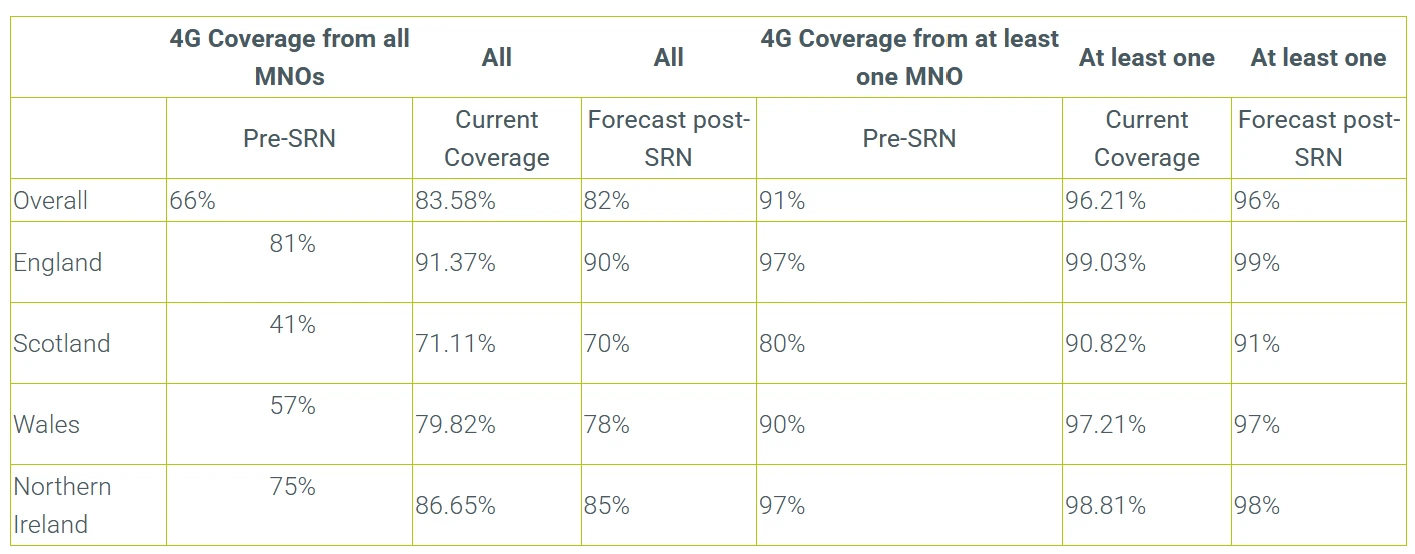
The SRN has already achieved its first target a year ahead of schedule by ensuring that 96% of the UK’s landmass can now access a 4G mobile network from at least one operator (here), although the coverage range drops to 89-90% when looking look across all operators (here). The project is now focused on tackling the second target to reduce Total Not-Spot (TNS) areas by January 2027.
Advertisement
Most of the early work on this project has involved private investment from the main mobile network operators – O2 (Virgin Media), Vodafone (VodafoneThree) and EE (BT). But over the past few years we’ve also seen government-funded mast upgrades and new site builds taking place in other parts of the country.
Regional Summary (Mobile UK)
Wales
Wales has seen a significant portion of this year’s rollout, with 11 new masts activated to bring the nation’s total to 55 government-funded SRN sites. The upgrades mean that residents and visitors to historically isolated spots — such as Nant Gwynant in Snowdonia, Capel y Ffin, and Manafon — can now access reliable 4G mobile internet regardless of their network provider.
Scotland
In the Highlands, a new TNS site has gone live at Scardroy, situated roughly 45km west of Inverness. The TNS portion of the programme explicitly targets areas that previously had no coverage from any mobile operator.
England
Across northern England, dozens of mast upgrades are being switched on to address historic blackspots. In Yorkshire, 4 new masts (bringing the regional total to 11) have gone live in locations like Halton Gill, Westerdale, and Arncliffe. Meanwhile, in the North East and Cumbria, a further 2 masts have been activated (bringing their total to 16), providing improved digital infrastructure to communities in Sharperton and Longsleddale.
With further work currently underway across multiple sites, the programme continues its rollout to narrow the digital divide between urban and rural parts of the UK.
We understand that there are around 40 new and upgraded masts that still need to be completed before the final deadline.
Current SRN 4G Geographic Coverage Progress (June 2026)
Advertisement






Mark is a professional technology writer, IT consultant and computer engineer from Dorset (England), he also founded ISPreview in 1999 and enjoys analysing the latest telecoms and broadband developments. Find me on X (Twitter), Mastodon, Facebook, BlueSky, Threads.net and Linkedin.









Advertisement
Leave a Reply
Privacy Notice: Please note that news comments are anonymous, which means that we do NOT require you to enter any real personal details to post a message and display names can be almost anything you like (provided they do not contain offensive language or impersonate a real person's legal name). By clicking to submit a post you agree to storing your entries for comment content, display name, IP and email in our database, for as long as the post remains live.
Only the submitted name and comment will be displayed in public, while the rest will be kept private (we will never share this outside of ISPreview, regardless of whether the data is real or fake). This comment system uses submitted IP, email and website address data to spot abuse and spammers. All data is transferred via an encrypted (https secure) session.















4G? The government, always ahead with the latest technology! Whenever I travel to another European country I never see 4G on my phone any more, but as soon as I land back in the UK, there it is like an old friend. It’s good that they’re filling in gaps, but is it just because government projects take so long that they’re filling them with 2009 technology?
Once the infrastructure and agreements are in place, then it becomes a lot easier to upgrade with 5G, so the ‘G’ aspect may be less relevant in the long-term.
4g is reliable, well more so than 5G., it works, do you really need super duper high speed on your phone?
If the government have not paid for 4G in these places then there would be no signal there at all, because it seem like the mobile phone network were not interested.
I hope the government is getting the money back off them.
Ad47uk, 5G in rural areas often uses the same low frequencies as 4G. Speeds are similar, reach is slightly better.
I agree that it doesn’t have to be 5G. At this point networks are still restricting access to 5G SA, 4G is actually better for everyone.
But it’s 2026, we’ve had 5G for a while… it’s not good that people like you still think 5G = fast and unreliable. You still don’t understand what 5G is.
I find it humorous that people still thing that there phone saying 5G means anything.
1. 4G is the Anchor for 5G so really the 5G is only an additional bit of bandwidth it doesn’t actually make anything other than that any better.
2. You say that other countries have all 5G, have you been to the tenby equivelent of lets say Canada, I’ll assume you it still only running 4G, I’m sure tourists coming to this country say the same about their own home networks.
3. Until 5G SA is standardised there is no need for it.
@Anon, I know what 5G is and I know it is not all about speed, but blame the network providers for making other people think it is. But they that is done with FTTP as well.
The reason I say 5G is unreliable, is because a lot of people I know that uses it in large cities have said so and even in the small city i live n, 5G is to be honest, RUBBISH, so unreliable,.
If networks want people to think differently about 5G, then they have change things, because at the moment, I will keep 5G turned off on my phone.
4G is not perfect, even after all these years, but at least it is better than 5G
It is odd, I am not fundamentally pro or anti 5G, but it reliably seems to me that on two different 5G phones now, high frequency inner city 5G seems to experience major lags. Possibly getting better over time. I do not see the same problems on 4G, 4G+, and I could reliably “solve” the problem for a while by disabling 5G
That said, we did install a 5G broadband EE box at my parents rural Welsh farm recently, 6 miles from the mast and somehow it’s hitting 100+ meg downloads consistently. So I will admit that was a surprise win (50meg with the 4G version)
It would be good if they would sort out the coverage on the Leicestershire/Northamptonshire border – never had a problem on (O2) G2. Now with a modern phone never see (well rarely) 2G; Does O2 3G still work? and 4G and 5G out side is unreliable and inside it’s rely on a Landline (which is all very well but how many callers have the time to try a second line?
Today I see a mast has been removed which may explain the worsening coverage.
And it’s not just O2 ’cause the neighbours who are users of any of the other networks have similar issues.
O2 3G has been switched off
https://www.o2.co.uk/help/international-and-network/network-and-coverage/3g-switch-off
I live, travel and work in rural North Wales. Since the SRN has started the improvements have been significant. Some of the areas cover main A roads whereby maybe there are no houses for miles so on paper the coverage % for actual population will be minimal…. but land mass is significant. Personally I have all but praise for the scheme
This could potentially be down to EMSCP coverage,