Code Powers Request to Support Virgin Media’s EV Car Cabinets UPDATE
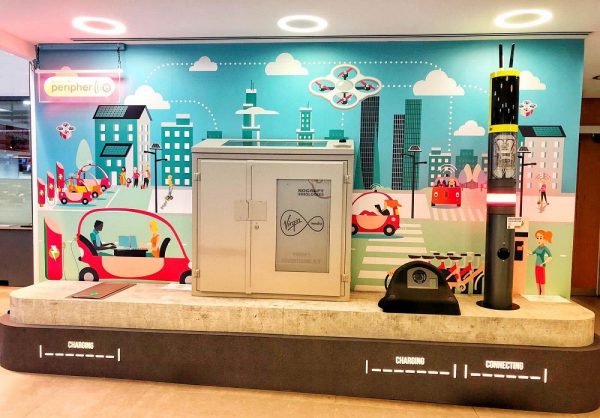
Last year saw Liberty Global and sibling broadband ISP Virgin Media announce a new plan to harness some of their existing cable ducts and street cabinets to help support the UK rollout of 1,200 new EV car charging sockets on residential streets. Today we have a small update on that project.
The exact details of how Virgin Media intend to harness some of their 40,000 powered street cabinets and 170,000km of ducts to support the new EV infrastructure remain unclear. However, we suspected that the arrangement is probably more about sharing space in existing cable ducts (note: the power supply won’t come from existing broadband cabinets as they couldn’t deliver enough), using the data connectivity from existing cables / cabinets to connect with vehicles and borrowing some of their civil engineering expertise.
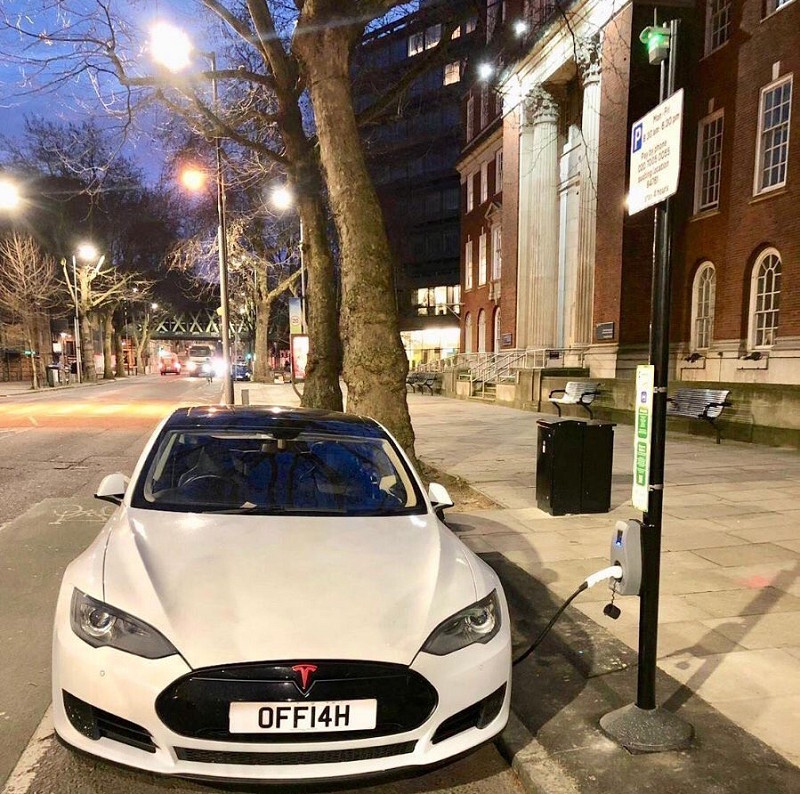
Back in November 2019 the deployment (here), which had already been trialled at six UK sites (e.g. Southwark – pictured below), was expected to take 18 months to complete, but that was before COVID-19 (Coronavirus) hit and as a result we’ve seen very little in the way of progress updates since then.
Advertisement
All of this is being done as part of a large consortium of 19 organisations. The original trial also received some public funding for the project (‘EV Charging for Public Spaces‘) from the Government’s Innovate UK (part of a plan to help reduce car emissions).
Despite this we’ve today noted that a new company – Liberty Global Europe 3 Limited (recently renamed to Griffin Charge Limited) – has just put in a request for Code Powers from Ofcom, which can help to speed-up the deployment of new networks and cut costs by reducing the number of licenses needed for street works. All of this appears to be related to Liberty’s UK EV plan.
Code Powers Statement
The Applicant plans to deploy an electric vehicle charging network to meet the need for residential on-street vehicle charging. It plans to deploy over 1,200 charging points across the country over the next 18 months.
In connection with these plans, the Applicant seeks Code powers to facilitate the deployment of a resilient, low-latency electronic communications network required to support the charging network. The proposed network may also be used to provide other electronic communications services including wireless services and smart-city internet of things (IoT) applications such as parking management, pollution monitoring and data-offload from vehicles.
The connectivity offered to charging points will leverage fixed connectivity from Virgin Media’s electronic communications network. Where appropriate, the applicant will use Openreach’s Physical Infrastructure Access (PIA) service to access BT’s duct infrastructure to minimise the disruption associated with network deployment.
The exact roll-out plan remains unclear, although we know that several local authorities are involved including the West Midlands Combined Authority as well as Councils in Oxfordshire, Liverpool, Southend on Sea, Worcestershire, Wandsworth, Croydon, Northamptonshire, Hammersmith & Fulham and Belfast. We’ve requested an update from Virgin Media and will report back if they respond.
Advertisement
Otherwise the big prize in all this could be an additional revenue stream from existing or new infrastructure, albeit perhaps not a particularly big stream.. yet. Being able to create new business out of existing or future cost models and deployments is obviously something that would interest any telecoms operator, especially when planning new network expansions. Clearly it makes enough sense for Liberty Global to do it.
UPDATE 20th May 2020
Liberty Global has now created a Joint Venture with London-based private equity firm Zouk Capital called “Liberty Charge,” which is intended to support the aforementioned deployment of EV charging points. Zouk also manages the UK government’s Charging Infrastructure Investment Fund (CIIF).



Mark is a professional technology writer, IT consultant and computer engineer from Dorset (England), he also founded ISPreview in 1999 and enjoys analysing the latest telecoms and broadband developments. Find me on X (Twitter), Mastodon, Facebook, BlueSky, Threads.net and Linkedin.











« ISP Sky Broadband UK Could Launch Ultrafast FTTP in June















Comments are closed