BT Strategy Targets “Green” Recovery from COVID-19 Crisis

Broadband and UK mobile giant BT Group has today launched two new UK initiatives, the ‘Green Tech Innovation Platform’ and the ‘UK Electric Fleets Alliance’, which they say will help to form the foundation for a climate friendly recovery from the COVID-19 crisis and help to drive the country’s “Net Zero carbon emissions.”
At present the telecoms giant already intends to become a net zero carbon emissions business by 2045 and in the last year alone their business emitted 243 Ktonnes of CO2e (18.6% reduction on the previous year). On top of that they intend to buy 100% of their electricity worldwide from renewable sources by the end of 2020, which compares with 92% today (see here for their targets).
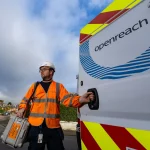
However only 23 of their vans are electric (with 46 more on order), which is despite the entire group being home to a fleet of 34,000 vehicles (28,000 used by Openreach engineers). The operator has previously said that their ambition for a wider roll-out of EVs is restricted by the country’s weak “nationwide infrastructure for charging vehicles” (as well as the limited range of such vans, but that is improving).
Advertisement
As such BT has today joined forces with The Climate Group to launch the UK Electric Fleets Alliance, which will work to lead a wider adoption of EV vehicles and general fleet de-carbonisation by developing supportive policy measures, stimulating EV supply and investing in related charging infrastructure. However no clear targets have been set for EV adoption itself.
On top of that we have the Green Tech Innovation Platform, which in simple terms will see BT work with innovative start-ups via the Plug and Play platform to trial and scale-up new technologies that could help the operator (and its public sector customers) to reach Net Zero. Several examples of initial projects are included.
Green Tech Innovation Platform Examples
• Smart Streets: Insights from environmental monitoring and traffic optimisation sensors which can be easily integrated into ‘street furniture’ like the next generation of BT Street Hub units (formerly known as InLink UK smart kiosks).
• Smart Buildings: IOT capable solutions supporting energy and water management in social housing and other public sector buildings.
• Remote Working: Uncover ways 5G can be used to support innovative products and solutions that will reduce travel, e.g. using video, augmented reality or virtual reality to carry out remote repair and diagnostics by health and other public sector workers.
BT plans to announce scale-ups chosen through the platform in the Autumn and they will have the opportunity to partner and work collaboratively with the operator and their customers. Partnerships will range from BT using its expertise to find a cheaper, faster initial route to market through to new revenue share models or even taking a stake in the business.
Philip Jansen, BT Group CEO, said:
“The economic set back and immense hardship caused by the Covid-19 pandemic are severe and could be long lasting. However, despite the temporary reprieve on carbon emissions and air quality in towns and cities during the lockdown, the global climate emergency hasn’t gone away.
As we emerge from the crisis, the recovery presents a huge opportunity for Governments, businesses and individuals to put action on climate at the heart of their efforts. We will be playing our part with a once-in-a-generation investment in the UK’s digital infrastructure: full fibre broadband to 20 million premises, as well as our continued investment in 5G mobile.
We will also be backing new green technologies through our Green Tech Innovation Platform. BT is stepping up on climate action and we want to encourage and help others to do the same.”
It’s worth noting that BT has, for the first time, also included progress on carbon reduction and on digital skills training in the calculation of bonuses for eligible employees. As part of the Company’s new remuneration policy set to be introduced this year, these two components will make up 10% of the Group’s bonus calculation.
Advertisement



Mark is a professional technology writer, IT consultant and computer engineer from Dorset (England), he also founded ISPreview in 1999 and enjoys analysing the latest telecoms and broadband developments. Find me on X (Twitter), Mastodon, Facebook, BlueSky, Threads.net and Linkedin.











« Progress Update for Wales Full Fibre Broadband Rollout with BT














Comments are closed