Truespeed Adopt ADTRAN for 10Gbps UK Broadband ISP Network
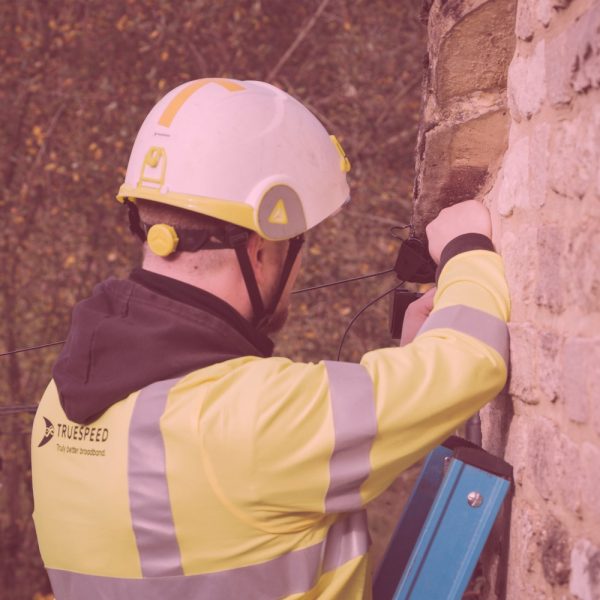
Broadband ISP Truespeed, which is building a gigabit-capable Fibre-to-the-Premises (FTTP) network across rural parts of South West England and beyond, has today announced that they’re adopting ADTRAN’s XGS-PON hardware to power their ongoing deployments. The technology is capable of delivering symmetric speeds up to 10Gbps.
The provider, which has so far covered 40,000 rural premises (homes and business) and in 2021 set an “ambitious target to reach 500,000 properties within the next five years” (i.e. by the end of 2026), is currently being funded by an investment of £175m from Aviva. But they have recently taken a hit with the loss of a state aid supported contract in Devon and Somerset (here).
At this point it’s probably fair to say that ADTRAN‘s full fibre kit remains quite a popular choice in the UK and so it’s no surprise to see another operator adopting it. Truespeed said they’re now deploying the new technology, following a successful trial. Indeed, the first customers in Peasedown St John are already using it.
Advertisement
The provider claims that adoption of ADTRAN’s XGS-PON solution will also enable them to build and connect customers to their network at a “significantly faster rate … In conjunction with maximising network growth, it better guarantees timescales between customer sign up and connection, reduces the number of above ground cabinets, enables greater future network expansion and significantly improves network build efficiencies,” said the operator.
James Lowther, Truespeed CEO, said:
“Utilising XGS-PON is a huge step forward for Truespeed as we continue on our mission to improve connectivity throughout the South West. We’re rolling out our network faster than ever before, and this step-change in technology will enable us to deliver our substantial growth plans in the most time and cost effective manner whilst providing the best possible customer service.”
Ronan Kelly, Adtran EMEA CTO, added:
“The vision demonstrated by the Truespeed team is refreshing. Not only have they recognised the technology benefits that the Adtran XGS-PON solution brings. From the beginning they have had a very clear vision of the environmental benefits that this technology can deliver to their business, and how it can accelerate their deployment schedule by concentrating more customers across fewer equipment locations. Insights that many others would do well to pay attention to.”
Admittedly, this doesn’t mean that residential users will suddenly be able to take a 10Gbps package, but Truespeed does now have the ability to expand toward that once the costs and market desire exist to do so. In the meantime, residential customers will continue to pay from £40 per month for a symmetric speed 150Mbps package on an 18-month contract term (currently discounted to £20), which rises to £70 for their top 900Mbps tier (now discounted to £44). The service also includes a free phone solution, installation and a restricted router.






Mark is a professional technology writer, IT consultant and computer engineer from Dorset (England), he also founded ISPreview in 1999 and enjoys analysing the latest telecoms and broadband developments. Find me on X (Twitter), Mastodon, Facebook, BlueSky, Threads.net and Linkedin.












« Starlink Cuts UK Ultrafast LEO Satellite Home Broadband Prices

















Future proofing in these types of infrastructure project is the smart play, however, it seems to me that if future needs call for 10Gps speeds cant they just light up another fibre strand of the multicore fibre link and/or bond that strand of fibre to double speeds/capacity or multiplex the (multi-strand fibre) signals and reconstruct/deplex at either end of the head ends where the ADTRAN Kit sits?
Simplistic solution as with fibre its light signals (obviously) being refracted and not a electronic signal as in copper so their is diffrances but interms of future needs, one would assume that during this initial build they would be installing multiple multi-core fibre optics in the ground for exactly this reason of increased future demands for either higher speeds or greater capacity of their network.
Providers deploy multiple fibres between nodes for this reason.
For capacity upgrades there’s generally 2 options:
1) Reduce the number of of customers per splitter
2) Overlay with higher speed PON over the same fibre (e.g. XGSPON over GPON today, or 25G PON over XGSPON in the future).
Anon is 50% there
1) you don’t want to reduce no. of customers per splitter, you want to maximise it and in turn your initial investment.
So the more people per XGSPON port/card is more beneficial.
2) overlay with higher speed PON is achievable however overlaying GPON with XGS requires much more resource to re-splice and re-pull cable, purely due to the difference in network topology.
No need to resplice and repull cables adding XGSPON as an overlay to GPON. Both use the same topology. Only thing that might change is the XGSPON port serving 2 GPON PONs, so a combiner/splitter at the exchange/cabinet/whichever next to the OLT.
Think both Openreach and CityFibre already made provisions for this with a spare port on their co-existence elements, so just need a 2:1 splitter to deliver XGSPON to 2 legacy PONs and as a capacity upgrade can decombine to reduce the XGSPON segment from 64 to 32 in the future.
I’m assuming Openreach will join CityFibre and others in running 64 premises passed segments on XGSPON there. Makes sense to do so.