Broadband AltNet Grain Cuts Some UK Jobs as Part of Regional Refocus

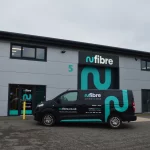
Network builder and broadband ISP Grain (Grain Connect), which has been gradually deploying a new gigabit-capable Fibre-to-the-Premises (FTTP) network across parts of the UK, has confirmed to ISPreview that they’ve had to make a small number of further redundancies as part of adopting a more regional build focus.
In case anybody has forgotten, Grain first cut c. 20 roles across the country in October 2023 (here) and, at the same time, announced a “temporary” reduction in their network expansion “while we raise further capital to accelerate in 2024.” The provider is believed to be feeling some of the same strains as many other operators, such as from rising build costs, competition and high interest rates that make it difficult to raise fresh investment.
Grain has so far unveiled full fibre builds for over 50 locations (plus sizeable number of new build housing developments), which includes a lot of small-to-modest sized patches of various urban areas like Leicester, Liverpool, Accrington, Grimsby, Cleethorpes, Scarborough, Carlisle, Barrow-in-Furness, Hartlepool, Newport, Sunderland, Blackburn and so forth.
Advertisement
However, the operator has now confirmed that a second small wave of redundancies has occurred, which Grain says is a reflection of their new regionally focused structure.
Richard Cameron, Grain’s CEO, told ISPreview:
“We are still completing our phase 1 build out and are in advanced discussions on our next fundraising and expect to start our phase 2 build shortly.
We will be focussing on three regions for our expansion: North East & Yorkshire, North West and Midlands. To align with this regional structure, it has been necessary to make some changes to the organisational structure. Unfortunately, a small number of our colleagues have been impacted by the alignment to this regional focus.
We are seeing continued strong demand from customers for our products and now have 200,000 homes ready for service, with 27,000 of these added so far in 2024. We have over 26,000 customers and continue to expand our market share.
We have added 1.5% market share for each month the homes have been live, which puts us at the top end of industry benchmarks. Our operating costs per customer are much lower than the market average and we are on track to be EBITDA positive within the next year.”
The figures given above (e.g. 200,000 homes RFS) mark a good improvement on the 150,000 (RFS) recorded on 27th Oct 2023 and customer growth appears to be going in the right direction too. But much will clearly depend upon their current fundraising, and hopefully that will be confirmed in the not too distant future.
Customers of the new service, once live, normally pay from just £19.99 per month for a symmetric 150Mbps package on a 12-month term, which goes up to just £25.99 for their top 900Mbps plan (take note that out-of-contract prices are £5 higher than this). All of these packages come with unlimited usage, free installation and a router. The ISP also has a social tariff for those on benefits.






Mark is a professional technology writer, IT consultant and computer engineer from Dorset (England), he also founded ISPreview in 1999 and enjoys analysing the latest telecoms and broadband developments. Find me on X (Twitter), Mastodon, Facebook, BlueSky, Threads.net and Linkedin.









« Government Extend UK Gigabit Broadband Voucher Scheme to 2028
Zen Internet Prep UK Launch of 1.2Gbps and 1.8Gbps Broadband »













I’m really torn if I’ll renew my contract, the 3 day response time on support ticket means when you call all you can do is log an issue
On Monday they had an outage 2am to 10am in my region
The price and no price increases are bonus.
I can now get CF though.
So you’re getting what you pay for then? Or do you want champagne service with a cider price?
“In case anybody has forgotten, Grain first cut c. 20 roles across the country in October 2023 (here) and, at the same time, announced a “temporary” reduction in their network expansion “while we raise further capital to accelerate in 2024.” ”
Either that or get consolidated. Hopefully the great consolidation will move up a gear now. They seem to have built around CityFibre with only a small amount of overbuild.
How will Grain be consolidated? Their network besides tons of overbuild, is just small random patches which are hard to sell because there’s no continuity. Anyone has any ideas?
exactly the predicament for many altnets when they inevitably fail. I guess somebody out there will buy up most assets for a huge discount and the rest of it if unsold should be removed to help reduce the amount of wires overhead etc that in some areas are beginning to look like spaghetti junctions
@Ryan
I really doubt that the liquidators will pay for the removal of any equipment/plant/fibre which cannot be sold. Their job is only to get the best value for the creditors and that would be the opposite of their legal mandate.
So just like in the 2000’s when the wireless home phone network went bust(who’s name escapes me currently which is bad as I was their customer at the time), the stuff that cannot be sold will be left in situ. To rot or until the Government(i.e. the taxpayers) pays for its removal.
@occasionally factual
Or in the case of PIA by Openreach which will no doubt pass the cost on to their customers.
The failed network was Ionica. The service was doomed to fail as the hardware was only suitable for ISDN speeds at the very most, that would have been fine for the 1990’s but by the early 2000’s customers would have left in their droves had it lasted that long. That wasn’t actually why they failed.
At the time of their network build, Vodafone and Cellnet were sending engineers around the country to build their networks and test coverage capabilities. Ionica did the same, however there was one crucial problem, they used much higher frequencies requiring line of sight. They followed the same testing pattern as the then-new mobile networks in the winter without thinking about the frequencies being used.
It all worked fine for plenty of people at first, then as spring came along and the trees blossomed, the foliage blocked a heck of a lot of their microwave network. Calls dropped out or couldn’t connect at all, retention went through the floor, then the destined failure followed.
barely did 20 roads in my town while Virgin did the whole down and more, useless altnet.
They seemed to take a bizarre network build strategy at least for Grimsby and Cleethorpes areas, overbuilding Openreach FTTC and Virgin Media but ignoring surrounding conurbations which could only get ADSL so there’s a missed opportunity; they also (at least in their early days I don’t know if this has changed) used CG-NAT and locked their routers down so even WiFi passwords couldn’t be changed by users. These seemed very naive approaches to me.
Locking down routers is a pain the backside. I (like I suspect most contributors to this site) use a customised IP configuration and SSID / Password WIFI setup and its a lot easier to make a new router match the settings of the previous one than to re-pair everything to a new routers settings. Thankfully although the BT SH2 is not the most customisable router out there you can at least change these.
Let me guess: they built to streets of terraced houses, either actual or close to 2 up, 2 down and very narrow?
@XGS
And looking at the coverage map a it’s overbuilding with Openreach, VMO2 and some of it with MS3 as well!
@xgs yes exactly right!
Is it not worth having then? I’m turned on by the subscription fees as it’s half my virgin gig1 cost. Fttp had me going too.
Grain were only building in large terraced street areas more homes passed per Metre of dig, and using Openreach dark fibre to feed the cabinets, they have had a tough time waiting for further investment and don’t expect any news on this for at least 3 months.