UK Homes with Out of Range Energy Smart Meters Get Reprieve from 2G Switch Off
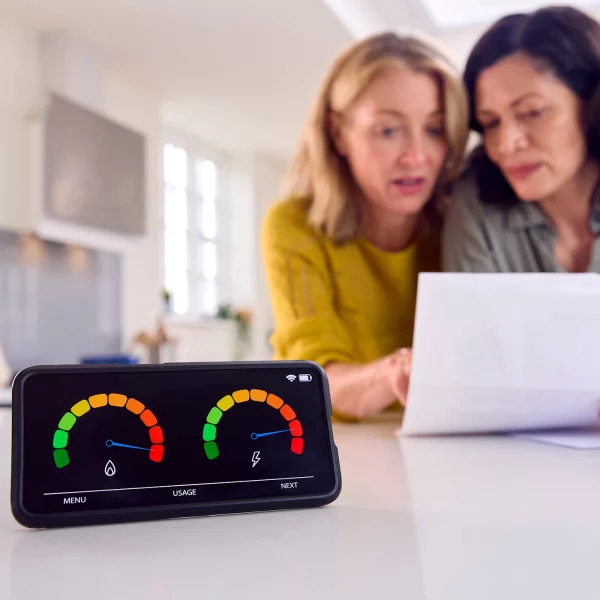
Some 46,000 consumers have been given extra time to resolve connectivity problems with their Energy Smart Meters, which were previously at risk of losing 2G based mobile data connectivity to the Data Communications Company‘s (DCC) wide area network on 1st January 2026. But Ofgem has now extended the service coverage until 1st June 2026.
Just to recap. The ongoing efforts to switch off older 2G and 3G based mobile networks across the UK will ultimately cause problems for Smart Meters installed across the rest of England and Wales, which utilise the same technology via O2 (Scotland and the North of England use a different Long-Range Radio [LRR] wireless system from Arqiva). Due to this, Vodafone has already been contracted to help upgrade millions of meters to a new 4G connection (here and here).
The DCC has already started to deploy the new 4G Communication Hubs (CH / modems) to upgrade existing Smart Meters (requires a quick engineer’s visit) and recently reported having connected their 100,000th unit to the Smart Meter Wide Area Network (SMWAN). But there is one area that this programme has been struggling to tackle.
Advertisement
At present some Smart Energy Code (SEC) parties have installed and are operating CHs “outside their permitted regions“, where Communication Service Providers (CSPs) are “not contractually obliged to provide service“. This issue has become more significant due to an increase in 2G based Out of Region (OOR) CHs being installed in the North region (i.e. where LRR is normally used instead of 2G).
As one such user, Mark, recently explained to ISPreview: “I was notified by my energy supplier two weeks ago that my working smart meter would go dumb on the 31/12/2025 unless the comms hub was changed urgently for a 4G model. I’m on a smart tariff which controls my electric heating, so this was going to be a serious issue if this stopped working in the middle of winter. I have been battling with Octopus since then and have been unable to get an appointment – due to my rural location,” explained Mark.
Mark lives in a rural part of Northumberland (England) and last year had a 2G/3G capable CH fitted to his Smart Meter because the existing LLR network signal was unreliable; the CH has been working fine since then. But as above, Mark needed to get a 4G CH fitted because OOR CHs were due to lose their service connectivity on 1st January 2026.
However, it appears as if those in the same situation as Mark have been given a temporary reprieve, since Ofgem has been working to establish formal agreements to ensure continued service provision for such users (document).
Advertisement
Ofgem Statement
Without such agreements in place, connectivity to the SMWAN for affected OOR CHs is scheduled to be removed on 1 January 2026. This would impact around 46,000 consumers at current levels, including over 16,000 consumers on prepayment and more than 21,000 on the Priority Services Register (PSR), with an estimated 9,000 affected on both prepayment and the PSR. The loss of connectivity could prevent prepayment consumers from topping up their devices remotely, posing a risk of disconnection, particularly during the winter period.
The solution … establishes a formal mechanism to maintain connectivity for CHs operating outside their permitted regions … The new charging mechanism introduced by this modification will charge suppliers for the OOR CHs where they are in that supplier’s portfolio. These charges will apply until the service ends on 1 June 2026. The modification also includes a maximum charge of £500 per OOR CH.
However, if the removal of OOR CH replacements moves at pace and the costs per remaining OOR CH exceeds the maximum charge then any additional cost over this will move to DCC fixed charges which are socialised across all suppliers and network providers. The overall cost of this service is £250,000 per month split across all OOR CHs. As CHs are removed the cost per CH will continue to trend upwards until it reaches the maximum explicit charge of £500 per CH.
Ofgem goes on to state how this change “will likely ensure there is sufficient time for [suppliers] to complete replacements of these CHs ahead of the 1 June 2026 deadline“. Without this modification the affected consumers would have lost connectivity (i.e. no ‘Smart’ features), “forcing suppliers to resort to manual interventions such as site visits, and meter replacements under emergency conditions to ensure consumers remain on supply.”
Meanwhile, for the rest of the UK, the DCC still seems to be working to the general 2G switch-off date of 2033 (due to this, O2 will need to maintain limited 2G connectivity for a bit longer than most), which they previously said would give them and their partners”eight years to ensure connection continuity for around 24 million smart meters – a huge challenge, but one we are confident we will achieve”.






Mark is a professional technology writer, IT consultant and computer engineer from Dorset (England), he also founded ISPreview in 1999 and enjoys analysing the latest telecoms and broadband developments. Find me on X (Twitter), Mastodon, Facebook, BlueSky, Threads.net and Linkedin.







« London ISP Community Fibre Deploy New Linksys WiFi 7 Broadband Routers















My Gas Meter is out of RF range (15 yards)from the Electricity Smart Meter.
Several years ago I was told by Octopus, the Gas Meter could never be upgraded to Smart as the signal strenght was too low to reach the Electricty Meter Box
So much for modern technology, so I am stuck with manual reading each month ?
They were talking about a booster unit that sat between the meters and worked in a similar way to a wifi mesh system but nothings been announced. Did they fit dual band meters by the way? I understood they were supposed to help in this situation.
oh a solution definitely exists for you. however getting it is very very hard as most suppliers (ecept ovo it seems) wont install it.
it’s called ALT-Han, it’s made by Landis & gyr and I have it.
there are four boosters and each one does this:
B1 = Connects to MSart electrcity meter by han and converts signal to powerline and feeds into the property.
B2 = plugs into the wall socket and converts Powerline to han and emits a han signal.
B3 = same as B2 but also emits a Long Range (LRR) signal
B4 = a battery powered device that reads HAN from gas meter and converts it to Long Range (LRR) for B3 to get it.
the tehnology exists and it works flawlessly. its just expensive so energy companies don’t like deploying it. OVO did for me because i was a true use case scenario which needed it.
Ofgem etc should be forcing suppliers to deploy this.
look on ovo’s forums I have a thread under my biohazard Psudonym with pictures so you can see what it looks like.
https://althanco.com/ – is the site you need.
Big Dave:
(a)No a Dual Band Meter was not installed
(b)Your URL : Yes that could be of great help when it arrives
I think at the time they looked at my Gas Meter, the max distance from the Elec Meter was either 10 or 12 yards
My Elec Meter is on the opposite side of the house to the Gas
2G shutdown at the end of the year? When was this announced? I know the last of the 3G (O2) is being switched off this month, but 2G is still vital for calls and texts in many rural areas, it also tends to be the only band that has battery backup at the cell sites.
I don’t think 2G is being switch off for another few years but I guess they are phasing out all these 2G/3G devices, so that they are ready.
@Guy. In this case it’s not a change by the mobile networks directly (yet), it’s a change specific to a certain group of Energy Smart Meters within that network, due to how they were deployed.
Why can’t they just connect to the users WiFi?
Would be very simple
Until the user changes their WiFi security code..
They may soon be able to do so according to this article from the 24th October:- https://www.ispreview.co.uk/index.php/2025/10/energy-smart-meters-may-soon-link-via-uk-home-broadband-connectivity.html
The problem with that is then it is the responsibility of the consumer to make sure the data gets to where it should be getting to. I know there is something about doing it, but I don’t know if it will happen, still if it did it would take the responsibility from crapita
So, just like people without smart meters who have to phone in ir use an app to give their meter readings then?
Would you want a third party tunnelling through your (or your ISP’s) router and WiFi? We have too many problems with tech savvy hackers, cookie monsters and scammers to want to let other unaccountable third parties free reign to your home.
They should connect Smart Meters
to an Ethernet Cable or via WiFi
like the person above stated
They should not rely on the Mobile Network
What happens if there is a fault
with the Mobile Network or the Cell Tower
has a problem?
The number of people who seem to think their Internet going down or their smart meter losing connection will result in heating and hot water being lost still astounds me. It’s like they forget these systems can operate independently of Internet and smart meters.
Ours are getting replaced next week I guess we will be on the 2g/3g as in England. Hopefully the new ones will be more reliable. Gas has always been intermittent despite being 2 feet from electric. Tried getting fixed and weren’t interested. Electric died now and they are installing new meters within 2 weeks. I think WiFi as a backup would be a good idea. Maybe an esp32 taking info from the secure side and retransmitting. I small webserver on the esp could enable the pairing with home WiFi and allow changes if code changes. I guess the daily mail brigade would hate the idea.
There is another problem that the smart meter industry is not admitting.
The extreme difficulty in getting a 3 phase smart meter installed (where there is a desire to keep all 3 phases in use; especially if the meter is to support export i.e. solar energy).
There just are not enough sufficiently qualified installers, nor is there a scheme that allows other authorised electricians to do the install and inform the suppliers/REC with before and after pictures.
Many 3 phase installs will also have an “out of range” problem (WAN and local bridging gas/electric for dual fuel)
And a commercial style, simpler AMR retrofit (old school, no clever tariffs but does support export readings) also seems to be unobtanium.
Getting back to the topic of communication between the meters and the DCC WAN, if 2G/3G meters were installed by suppliers because the LRR network was inadequate (e.g. coverage, resilience), why isn’t it Arqiva paying the additional costs to maintain OOR CHs and convert those to 4G?
I too, like Mark, fall in the Northern area for Smart Metering but, due to geography, cannot connect to the Arqiva LRR WAN. Eventually Octopus relented an fitted an out-of-area cellular SKU2 comms hub with a T2 aerial so I could utilise a smart tariff and solar export. Even then I had to cut the aerial lead (naughty, naughty) and extend it to place the aerial in the loft in order to pick up the VMO2 2G/3G signal.
The notification from Octopus about installing a 4G comms hub by 31/12/2025 caused me some consterntion. A Vodafone 4G signal is available in the loft alongside the 2G/3G signal but not lower down in my house where the meter cupboard is so an extended aerial would still be required. An internet search revealed scant information on the Toshiba 4G LTE Dual-Band comms hub but it appears not to have an external aerial port. An email was despatched to Octopus customer services who replied that my questions had been passed on to one of their technical people – still waiting a response.
Good to hear we have a 6 month stay of execution on the VMO2 2G service but there are no local plans to improve the 4G signal to the point where it would be available at my meter cupboard.
So the big question is will there be a 4G comms hub with an external aerial port in the next 6 months? I won’t hold my breath.
My Electric Meter has two identities
(a)WNC UBC-TN6
and
(b)KAIFA