Openreach Testing Relaxed Rules for UK Exchange Closure Pilot
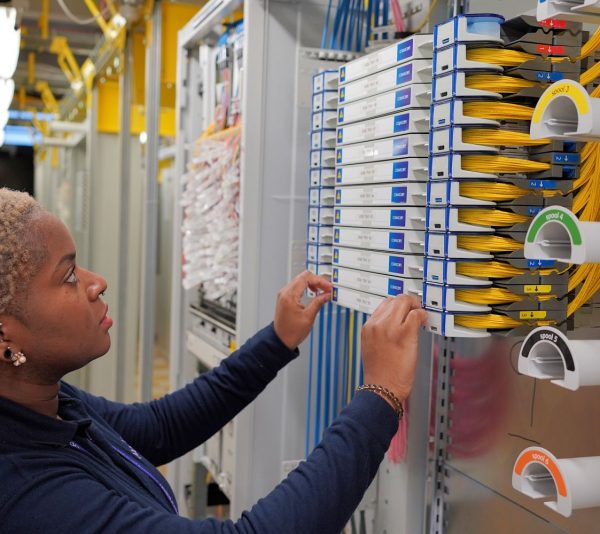
Network operator Openreach (BT) are testing a relaxation of their FTTP broadband Priority Exchange Stop Sell rules and Copper line re-arrangement in the Kenton Road Exchange area. This is one of the three exchanges taking part in their initial pilot project to test approaches, before eventually closing c.4,600 of their legacy exchanges from 2030 onwards.
At present Openreach operates around 5,600 UK exchanges, but only c. 1,000 of those are used to provide nationwide coverage of modern “fibre broadband” based services (FTTC, FTTP etc.) – the Openreach Handover Points (OHPs). However, the rollout of full fibre (FTTP), combined with the retirement of copper lines and legacy services (ADSL, WLR etc.), will make it economically unviable to support both the old and new exchanges.
The operator thus has a long-term plan for closing the other 4,600 exchanges – known as the Exchange Exit Programme, which starts with their initial pilot of 3 exchanges (ongoing at Deddington, Ballyclare and Kenton Road) and then extends to an initial closure of 105 “priority exchanges” by 2030, with the rest gradually following over later years.
Advertisement
The highly complex process to close an exchange and migrate customers typically takes around 4-7 years (depending upon the complexity of each exchange) – starting with a Stop Sell of old products and eventually ending with everything being switched off (Openreach and ISPs then remove their physical equipment over the following few months).
What’s happening in Kenton Road?
The Kenton Road exchange in Greater London (Boroughs of Harrow and Brent) serves around 9,500 premises and is currently due to reach the final product switch-off stage on 30th November 2025 (existing equipment will then be removed / decommissioned by 31st May 2026). At present broadband and phone providers are thus still busy migrating customers across from copper to all-IP (internet protocol) based services.
However, Openreach has decided to tweak their approach to the Kenton Road exchange in order to better understand how other measures might assist in the conversations with customers, which could help in migrating lines before the November deadline.
At present ISPs on the exchange can only move customers to FTTP broadband lines where they’re available on the network. But Openreach are introducing a temporary change that will give ISPs the option to migrate customers to their SOGEA lines as well (i.e. standalone FTTC broadband on copper lines).
Advertisement
The above approach is considered to be an easier sell to end customers, as they won’t normally need an engineer’s appointment (depending on what kit they already have at home). But Openreach’s system will only allow these SOGEA orders between 1st August and 3rd November 2025, which should then be fulfilled by mid-November – just before the official switch-off date for the exchange.
Finally, for copper re-arrangement, Openreach are looking to understand more about which lines cannot move to a more modern all-IP product or even be ceased by the end of November (a very small number of lines). One key use case could be telecare dependent non-reponsive customers with telecare kit that’s incompatible with products from Openreach’s all-IP portfolio.
The operator will look at these on a case-by-case basis and may consider re-arranging their copper lines to connect them to the nearby Kingsbury Exchange instead. The pilot is thus trying to consider the level of demand and viability of this approach (such re-arrangements can be complex and costly).
The purpose of any trial and pilot is to test and understand things like this, so it’s good to see Openreach testing how they’ll handle the most difficult cases, which will invariably only crop up toward the end of an exchange closure. All of this will help to inform their approach for the first big batch of 105 closures, which is due to follow the initial pilot.
Advertisement






Mark is a professional technology writer, IT consultant and computer engineer from Dorset (England), he also founded ISPreview in 1999 and enjoys analysing the latest telecoms and broadband developments. Find me on X (Twitter), Mastodon, Facebook, BlueSky, Threads.net and Linkedin.






















I think SOGEA should have been an option, where capacity exists to facilitate such transfers, from the outset. It would be interesting to hear why this was not the case.
Because it’s still utilising old technology in an exchange and it’s using the unreliable copper d-side. Which ultimately Openreach want to turn off as costs a fortune to maintain.
Likely because OR would much prefer to transfer customers directly to FTTP. Both to avoid a two stage process and reduce the chance of losing them to competitors’ FTTP.
@Bobdylan:
Thanks. That is correct as far as it goes, but is it not the case that the street cabinet uplink for VDSL services over SOGEA is parented on the OHPs rather than the local exchange copper network?
@Winston Smith:
Yes, I agree that is probably the case, but Openreach has been clear from the beginning in its proposals that not all customers will be migrated to FTTP connections prior to the shutdown of the local exchanges. Instead the there will still be customers who will get there services from the cabinet over FTTC.
Am I missing something? If SOGEA (broadband over copper from the cabinet to the customer) is not an option, then closure of the exchange would mean FTTC customers losing their service.
@Optimist:
No.
The exchange only provides the POTS service. SOGEA is a product with a technical component implemented, as I understand it, in the cabinet service configuration.
As of September last year, the target number of OHPs has been reduced to 959.
Do you have the link to the list of OHPs that will stay? Can’t seem to find it
Thanks
@Lee:
Certainly.
Exchange Exit Programme
https://www.openreach.co.uk/cpportal/products/the-all-ip-programme/exchange-exit-programme
– Go to the bottom of the page,
– Select the drop-down labelled “Exchange Exit List”
– Download the latest issue (Issue 27)
– Select the “Enduring exchanges to be kept” tab.
In the latest workbook (issue 127), it is interesting to note that although Kingston is on the list of 108 exchanges to be decommissioned by 2030, it (Tavener’s House – the newest of the three buildings) also appears on the list of OHPs that will be retained.
Does anyone know the details of what will be happening at Kingston?
OK, ignore this. There is an explanatory note on the 108 Exit table entry.
There is a note in the Kingston entry on the 108 exit list which explains what is happening.
Cool you found a note…care to enlighten everyone else as to what it actually says?
AW:
I do not know the copyright implications, so I will not copy/paste here, but the gist is that Kingston will not be used for broadband services (they will be hosted from New Malden), but the exchange will be retained for leased lines.
The workbook is available at the link, and the procedure given in my reply above.
What does ‘Child of Cabinet SHE’ mean?
Facts,
‘Child of Cabinet SHE’ = Child of cabinet subtended headend. Exchange rehomed to an OLT in a cabinet that is then connected back to an OLT in an OHP / Openreach Handover Point.
Looking at the top one the FTTC/P on there is currently going back to STWEYMH and is being moved to cabinet STWEYMH1 so I imagine a new cabinet is getting installed probably outside or near the current exchange that’ll provide what they need. Replacing a building with a cabinet.
The RL2S ones the acronym means Remote Layer 2 Switch. There are only 18 of them and they look like initially they’ll be taking child exchanges and collecting them together for delivery to an OHP however given those exchanges aren’t lasting at some point they’ll be replaced by cabinets or rerouted direct to OHPs depending on fibre count. The L2S concept is only really a thing for FTTC so as that gets replaced by FTTP these may well be made redundant by that upgrade.
I’ve no idea why you keep saying “Openreach” operate exchanges in your articles. Ok it’s the same company but the exchanges and most of the equipment inside them is operated by the parent company BT. Literally just a small part of it is Openreach kit, and you know this because you’ve been in exchanges.
Openreach owns the switch-off plan.
BT Group, as parent of Openreach, ultimately own the plant and equipment.
Openreach run the WLR kit. Openreach manage the power and cooling. Openreach manage the physical cabling, racks and distribution frames. Openreach manage the OLTs. Openreach manage the switches and Ethernet gear. The rest of BT Group buy access to these from Openreach despite that they have ultimate ownership as parent company. This is not an unusual arrangement especially in regulated environments.
Having a separate business unit to manage all this was kinda the entire point of Openreach being formed. There is a very small section of BT Group that work across the board including Openreach, it’s largely silo’d.
If you’re saying that isn’t the case and know that BT Group are routinely managing things that are supposed to be Openreach competencies in the regulatory framework then Ofcom would like a chat.
I’m intrigued by this SOGEA migration option. FTTC has never been available to me (distance from cabinet) even though it ought to beat ADSL’s handful of megs by a small margin. And the FTTP build near to me (so far) has stopped… exactly at the point where they stop offering VDSL.
Unless Openreach pulls FTTP out of a magician’s gigabit hat for my difficult locality, the only product post 2027 would be SO-ADSL until the exchange closes (or the DSLAM makes magic smoke, if sooner).
But migrating to a (yes, quite poor) SOGEA from a cabinet with dwindling lines in use would at least be a stop-gap option. Such a migration would clear an obstacle for exchange closures, and Openreach could sweat the last of its cabinet equipment for a few more years. By then, almost all rural customers on long lines with no fibre would be all-IP, so they’ve already done the difficult bit and many wouldn’t really notice the change.
Unless your exchange is one of the 100+ that have been given notice of closure, then it’s not going close before 2030, and openreach will still be building fttp then.
You’re right, RealWitcher, and by 2030+ I hope that fttp will eventually make it all the way here.
Though, more immediately, the number of CPs who will sell me SO-ADSL over sotap *right now* is surprisingly small. (A&A, Aquiss, Spitfire, plus a few pricey business-focussed outfits.)
Once my wlr3 adsl runs off-contract, I expect to have very little choice and the prices could get… interesting.
But if VDSL of any sort were available, at any vaguely workable speed, there would be a lot more choice of suppliers all happy to sell me some SOGEA.
I know I’m clutching at straws, and the situation is fairly likely to change by 2027. But this Openreach experiment might be interesting to a few people like me in this niche.