Amazon Leo Set to Miss Out Broadband Coverage for Northern Scotland
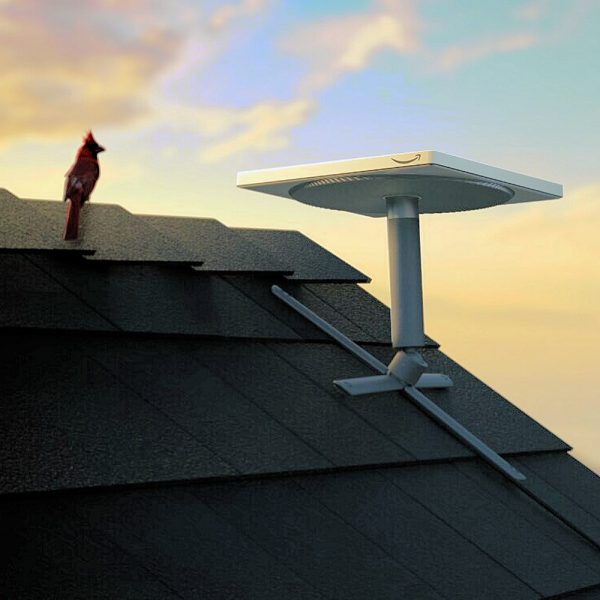
The commercial launch of Amazon Leo (formerly Project Kuiper), which is due to start going live during 2026 (it’s currently in beta, albeit initially only for enterprise customers), will initially exclude northern Scotland from the coverage of its new mega constellation of ultrafast broadband satellites in Low Earth Orbit (LEO). And it might be a while before that changes.
The company currently has approval to deploy and operate their own initial constellation of 3,236 LEO satellites (altitudes of between 590km to 630km). A total of over 150 satellites have already been placed into orbit via six successful rocket launches, which includes two of their initial prototypes – Kuipersat-1 and Kuipersat-2. But many more are due to follow over the next few years.
The full commercial launch of this service, which will ultimately sell products direct to consumers, businesses and the public sector via a selection of different terminals, is expected to take place slowly during 2026. The company is understood to need just over 500 satellites to deliver a good enough level of basic global coverage to reach this point.
Advertisement
Package speeds are expected to target c.100Mbps (20Mbps upload) for roaming users, before rising to 400Mbps (100Mbps upload) for homes and business users, then topping out at 1Gbps (400Mbps) for enterprises and government (latency times should also be similar to Starlink’s). But details on pricing have yet to be disclosed and will face stiff competition from Starlink’s massive network.
However, while the United Kingdom will be one of the first countries to go live with the new broadband service, it’s been noted that none of Leo’s initial constellation will reach fully across northern Scotland (Highlands and Islands). One of the company’s rocket partners, United Launch Alliance (ULA), recently confirmed this by stating that Amazon’s “first-generation system will provide coverage 56 degrees north and south of the equator. Amazon plans to expand coverage over time to reach nearly any location on Earth” (X).
The 56th parallel north line effectively cuts off a sizeable chunk of Northern Europe, which in the UK would pass near cities like Edinburgh and Falkirk in Scotland (i.e. above that area and into the Scottish Highlands and northern Islands you may not be able to receive any service from Amazon Leo). This is similar to the early days of Starlink, which also excluded the polar regions until later.
At this stage it’s unclear how long it will be until Amazon Leo covers the whole of the UK, but there is some suggestion that northern Scotland might have to wait until they get around to launching a second generation (GEN2) of satellites in a few years’ time (i.e. going beyond the first c.3,000 satellites).
Advertisement






Mark is a professional technology writer, IT consultant and computer engineer from Dorset (England), he also founded ISPreview in 1999 and enjoys analysing the latest telecoms and broadband developments. Find me on X (Twitter), Mastodon, Facebook, BlueSky, Threads.net and Linkedin.












« UK ISP iDNET Expands Full Fibre Broadband Coverage via ITS Technology















Countries not country’s
Can just imagine “sassenachs” being used as a derogatory term when some in the north of Scotland hear this disappointing news, even they though they are an American firm. 🙂