Ofcom Tell Internet Connect TV Platforms to Make UK PSB Content More Prominent

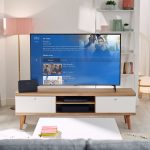
The UK telecoms and media regulator, Ofcom, has today launched a new consultation that sets out their plan to introduce a new code for designated connected TV platforms (e.g. Freely, Android TV, Roku OS, Sky Stream, Virgin Media Horizon etc.), which will require them to ensure that content and services (e.g. iPlayer) from Public Service Broadcasters’ (PSBs) are made “prominent” on their services.
The proposed changes reflect the latest phase of Ofcom’s work in implementing the new Media Act 2024, which introduced a new regime to make public service content easier to discover and watch on the connected TV platforms that people increasingly use for choosing and accessing TV programmes.
“For the first time, the most-used connected TV platforms in the UK must make sure BBC iPlayer and any other PSB players designated by Ofcom, along with their public service content, are available and prominent,” said Ofcom’s latest consultation. Connected TV platforms that fall within the scope of this must also take steps to incorporate accessibility features to help disabled users.
Advertisement
The regulator has already revealed the 15 connected TV platforms that have been designated as subject to the new requirements (details), which largely reflects platforms with at least 700,000 active users. The list also includes the new broadband-based live TV streaming platform, Freely, which is supported by most of the major UK TV broadcasters (BBC, ITV etc.) and is an evolution – not (yet) a replacement – for the existing Freeview service (inc. Freeview Play and Freesat).
The latest consultation goes beyond this by focusing on the regulatory duties (Code of Practice) that will apply to designated connected TV platforms and PSBs, which explains how providers of designated connected TV platforms can meet their new prominence and accessibility duties.
Ofcom’s Proposed Code of Practice
➤ Giving an appropriate level of prominence to PSB players, their public service content and any public service channels included in the players.
We are proposing a range of actions for providers to take with regard to the user interface that people see and navigate on connected TV platforms. These include that: designated PSB player apps should be immediately visible and generally appear within the first nine tiles on app menus; when public service content is most relevant to a user search, it should be the most prominent result; and public service content should be clearly attributed to the relevant PSB player.
➤ Making their services accessible to disabled people – particularly those with sight or hearing conditions.
Our proposed recommended actions include: providing a voice guidance function, or similar, as an alternative to visual information; ensuring users can enlarge text and images through a ‘magnification’ or ‘zoom’ function; and making sure accessible content is labelled as such, for example indicating where a programme has subtitles.
Crucially, the Code itself is “not mandatory” for platform providers, but they will be treated as compliant with their prominence and accessibility duties if they adopt the recommended actions it sets out. “Providers may choose to take alternative actions that they consider satisfy these duties, but where they do, they will not automatically be treated as compliant. Should Ofcom have concerns about those actions, we may choose to investigate,” said the regulator.
The consultation will remain open for feedback until 25th March 2026 and Ofcom then intends to issue a statement and the final Code + Guidance “later this year“. But such a major change, once finalised, will take time to fully implement, and so the regulator has proposed to give providers 12 months to bring themselves into compliance with the new regime. But this figure is still subject to potential change.
Advertisement
The issues that Ofcom are touching on above naturally flow into the wider and often-divisive debate over the future of TV distribution in general (here), such as the question of at which point it may become necessary to start switching off the old terrestrial signals in favour of a broadband-only delivery model. Not to mention future funding and the TV licence fee, which is always a “fun” topic and still the subject of much debate.
The PSBs currently support a transition to IPTV in the 2030s as it is becoming increasingly challenging “to bear double costs from running multiple distribution platforms”. However, without intervention, by 2040, some 5% of homes (1.5 million) are currently forecast to still be relying on digital terrestrial television via the airwaves. Ofcom is of the view that the time for debating such issues is fast running out, and the time for decisions is now upon us.






Mark is a professional technology writer, IT consultant and computer engineer from Dorset (England), he also founded ISPreview in 1999 and enjoys analysing the latest telecoms and broadband developments. Find me on X (Twitter), Mastodon, Facebook, BlueSky, Threads.net and Linkedin.











« UK ISP Glide Upgrade Broadband for Student Homes at the University of Exeter

















this headline is UNREADABLE due to you capitalising every word!
are you aware of how news sites work? have a look at BBC or Sky News or CNN or something
Most news sites including the BBC and Sky do not use this capitalisation style anymore. That said I don’t find it unreadable and the style used here is what I was taught at school but times and expectations do change.
The question is why? The BBC is completely irrelevant in this day and age, and those of us who don’t buy their ridiculous TV licence cannot watch the iPlayer anyway. Seems the government is trying to prop up a failing business model, having the BBC iPlayer feature prominently on streaming platforms isn’t going to entice me or millions of others to buy a licence.
You are in the minority. A lot of people still value the BBC and other PSB, even if they want some accountability. Commercial streamers don’t do current affairs and other PSB programming. More people use the BBC per week than all the streamers added together.
Not for long, YouTube was in close second place to the BBC last summer, then factor in Netflix, Prime, Disney, Pluto etc.
The BBC and Co are a dying model:
https://www.bbc.co.uk/news/articles/c4gzvee78eqo
Precisely. Who would trust the BBC or the ‘government, after what they have done to us over the last six years? I think the number of people not buying a licence is a lot higher than the number publicly quoted. We have had letters recently from Crapita, ‘suggesting’ we have been watching things we ‘shouldn’t’. Oh what a mess BBC. Get rid of the licence and make your way in the world like the others have to.
I agree im guessing their losing their viewer base to Sky ETC
to Fanny , I don’t think they are a “minority” i think that boomers think this.
it’s been proven that year on year their viewers are declining. I don’t quite agree they are irrelavent like Danny says but if you’re suggesting the young people (by which i mean under 50) are getting their news from BBC and watching BBC crap, then you are sadly living in a bubble and mistaken. This isn’t my opinion by the way, their own statistics show it. There’s a reason why it’s known as “legacy media” to most people who didn’t grow up eating gruel for their childhood. How about taking a look at the facts, even those published by auntie beeb herself before telling people how it is
BBC content is still the most popular mass media consumed in the UK, their market share has shrunk because there is more choice available these days not because of any looming irrelevance.
Public Service Broadcasters are essential to all properly functioning democracies as they prevent the media landscape being completely taken over by billionaires and malign foreign interests.
YouTube also isn’t a direct competitor, it’s a platform – the BBC and Channel4 are present on it.
Fanny is either a daytime drinker or a labour voter, the great thing about android is I can load my own launcher so never have to see any BBC shite. So ofcom can stick that up their ass
Ofcom = Orwellian Flipping COMmunists
With the up most respect this is about as orwelian as the Big Brother channel 4 produce.
They aren’t saying its “only” UK PSB content but rather that it sit on the front page and whilst I dont necessarily agree with it its not really that different to YouTube trying to force GBNews down my gullet every time I logon.
Also, its not communism, nothing in this government comes close to communism, and especially not ofcom
How about making sure the PSBs make their apps available without device restrictions?
On my Shield I can’t (officially at least) watch the iplayer and channel 4.
—
User choice
Nothing in this recommendation A1 should prevent users from deciding the order of
internet programme services included as apps (including the designated internet
programme service apps) in each app menu.
—
So sounds like they will come pre-installed at the top but we can move them out of the way. Not as bad as I expected, tbh. The guidance is silent on whether we will be allowed to uninstall them though – what is not prohibited is allowed?
Google (Android TV) has given direct links to certain PSB apps for a while now, in front of everything else. Even if not downloaded, a link still persists on the home screen. We all know who the PSBs are so how about OFCOM ensure these services can be removed or at least reorganised, too?
Interesting Ofcom stuff. I still think that Freely app should be universally available on all fire sticks and smart tv software rather than intentionally only pre install it on new smart tv models to force customers to buy a new telly for an app.
The BBC side of things is not getting much better with recent scandals increasing people reluctant on licence fees and most that are still paying is only because they are scared of going to prison.
Yeah fear and Sky Sports is saving the BBC from bankruptcy. If I didn’t have a Sky Sports subscription I sure would not have a TV licence.
If Ofcom believes that BBC iPlayer being “buried” is a detriment to the UK public, then a manufacturer “burying” an assistive listening toggle (like #Auracast) three menus deep is equally a failure of their duty under the Equality Act 2010.
Ofcom is now mandating that PSB apps are visible in the first 9 tiles—why is your most important hearing accessibility feature [Auracast] still hidden in the 12th sub-menu of the System settings?”
Does anyone under 40 watch bbc anymore?