Amazon Leo to Power Satellite Services for iPhone and Apple Watch with Globalstar
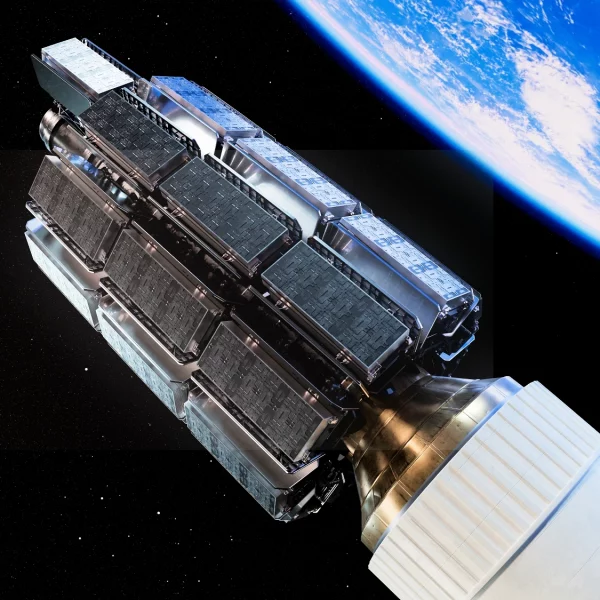
The Amazon Leo (formerly Project Kuiper) service, which is slowly building a new mega constellation of ultrafast broadband satellites in Low Earth Orbit (LEO) for the UK and globally, has announced an agreement to power satellite services for iPhone and Apple Watches, including Emergency SOS via satellite.
The agreement forms part of their wider deal to acquire Globalstar’s satellites, radio frequency spectrum, and operational expertise, which will in turn support their long-held plans for adding Direct-to-Device (D2D) services to future generations of its LEO satellite network (i.e. this means the ability to connect using cellular bands with regular 4G and 5G Smartphones on the ground). Globalstar already powers satellite connectivity on Apple’s products and that will now only get better.
Globalstar is already a major mobile satellite services (MSS) operator, a key player in non-geostationary orbit (NGSO) satellites and D2D technology, and a provider of critical and emergency communications to customers around the world. The deal should provide Amazon Leo with a fast-track to delivering “continuous connectivity for consumer, enterprise, and government customers around the world—whether they’re living or working in remote areas or simply moving in and out of traditional cellular networks“.
Advertisement
Globalstar’s existing satellite fleet and its new satellites with expanded capabilities will operate alongside the Amazon Leo broadband system and Amazon’s planned D2D satellite system. Beginning in 2028, Amazon Leo said they will deploy their “own next-generation D2D satellite system, allowing Amazon to deliver more advanced voice, data, and messaging services to mobile phones and other cellular devices“.
Panos Panay, Senior VP of Devices & Services at Amazon, said:
“There are billions of customers out there living, travelling, and operating in places beyond the reach of existing networks, and we started Amazon Leo to help bridge that divide. By combining Globalstar’s proven expertise and strong foundation with Amazon’s customer-obsession and innovation, customers can expect faster, more reliable service in more places—keeping them connected to the people and things that matter most.
We’re excited to support Apple users through the Leo D2D system, and look forward to working with mobile network partners to help extend coverage to every corner of the planet.”
Amazon will naturally face plenty of more established competition from Starlink’s (SpaceX) network, which is already doing D2D commercially and has secured a lot of partners. But Amazon said their Leo D2D system will offer “substantially higher spectrum use and efficiency than legacy direct-to-cell systems, which translates into faster speeds and better performance for customers“. It will also integrate seamlessly with Amazon’s first- and second-generation Leo systems to form a unified network that combines fixed and mobile satellite services to support a wide range of customers and use cases.
The new Amazon Leo broadband service is currently still in its commercial beta phase and will start to launch properly through 2026. The service currently has approval to deploy and operate their own initial constellation of 3,236 LEO broadband satellites (altitudes of between 590km to 630km). A total of c.238 Kuiper satellites have already been placed into orbit (they need at least 500 for basic global coverage) and many more are due to follow.






Mark is a professional technology writer, IT consultant and computer engineer from Dorset (England), he also founded ISPreview in 1999 and enjoys analysing the latest telecoms and broadband developments. Find me on X (Twitter), Mastodon, Facebook, BlueSky, Threads.net and Linkedin.









« SNP 2026 Manifesto Dangles Possible Subsea Fibre Cable to Shetland Islands

















Not sure I understand why Apple are doing this. Do they plan to cut the mobile networks out?
Did you not read the article? Apple already uses Globalstar to allow SOS messaging when the user is *out of terrestrial network range.*
This is complimentary to existing networks.
https://support.apple.com/en-gb/101573
There speaks someone who has not driven past a no Cellular Service for the next 230km sign on a road!
Driving on some remote roads where there is no terrestrial service having access to the Apple Satellite services was comforting (iMessage, Breakdown and SOS in that location). We were also walking from locations on that route.
I did test the iMessage service there and in the UK I’ve run the SOS test to see how it works, there are plenty of places with no coverage even in the UK. The service is quite slow/basic so hopefully the wider link to Amazon Leo will bring better services.