Study Claims UK Price Hikes Increased Broadband ISP Switching by 24 Percent

A new Opinium study, which was commissioned by Uswitch.com and questioned a nationally representative sample of 2,000 UK adults in early April 2026, has claimed that Awful April’s mid-contract price rises triggered record levels of broadband switching (average households were said to be facing a £216 annual increase).
Just to clarify that 24% figure (i.e. a year-on-year increase to March), the study appears to be saying that it reflects one in five broadband customers who either moved to a new provider ahead of the price rise or intend to do so in the next three months. The catch is that this is based on a fairly small consumer survey and opinions, which don’t always match up with reality.
The One Touch Switching Company (TOTSCo), which is the industry-led company responsible for delivering Ofcom’s process – One Touch Switching (OTS) – for quicker and easier UK switching (migration) between home broadband and phone providers, does thankfully enable us to see how many actual switches have taken place (here).
Advertisement
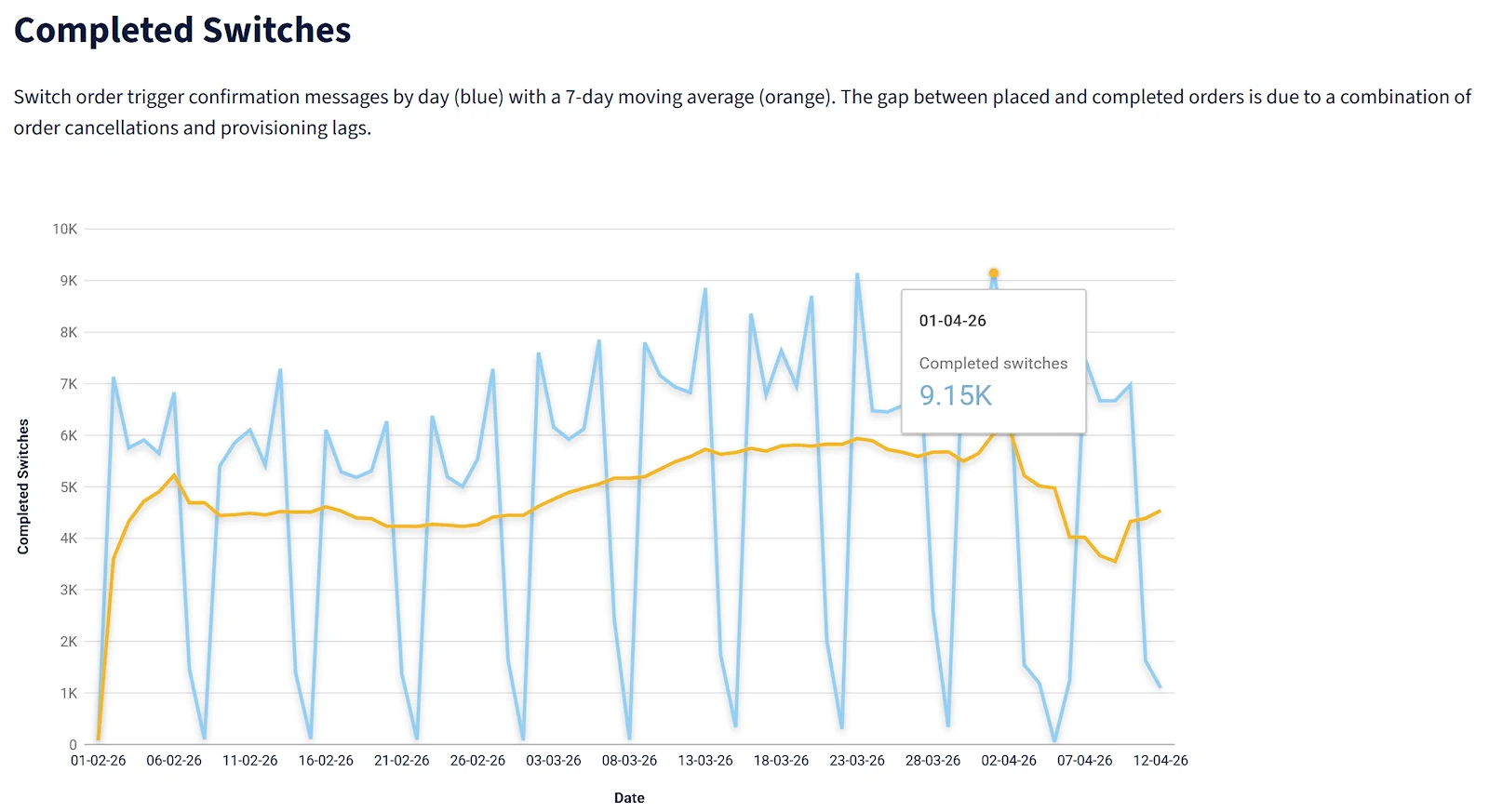
A quick look at TOTSCo’s latest data from February to mid-April 2026 shows there has been an increase in completed broadband switching activity over the same period (i.e. when many consumers will have received notifications about their annual price hikes and acted upon those), although the activity dipped down again during the normally slow Easter Holiday period.
Otherwise, Uswitch’s survey goes on to state that affordability has become a deciding factor for many households, with 24% choosing their current broadband ISP specifically to secure the lowest monthly cost available (we think price has always been one of the key deciding factors, so that’s nothing new). Meanwhile, 39% of broadband bill payers said they were aware of the rising costs, but did not have a plan to act.
Consumer who are hit by mid-contract hikes like this could alternatively try haggling for a lower price when the notification drops (Retentions – Tips for Cutting Your Broadband Bill). Meanwhile, those on benefits (Universal Credit etc.) also have the option of taking a cheaper Social Tariff – see our Quick Guide to UK Social Tariffs.
Advertisement
However, it’s worth remembering that broadband, phone and TV providers are NOT immune to cost increases. Providers, much like consumers, are also suffering under the burden of rising supplier (e.g. wholesale) and lease costs, high inflation, high energy prices, the cost of adding all sorts of new services (e.g. FTTP) and catering for new laws / regulations etc. But haggling or switching remain the best ways to reduce such impacts.






Mark is a professional technology writer, IT consultant and computer engineer from Dorset (England), he also founded ISPreview in 1999 and enjoys analysing the latest telecoms and broadband developments. Find me on X (Twitter), Mastodon, Facebook, BlueSky, Threads.net and Linkedin.












« Full Fibre UK Broadband Networks Face Sharp Fibre Tax Hike on Network Bills














Can’t be a problem surely, Ofcom will be fully looking after consumers and ensuring holistic national broadband implementation and cost efficiency and preventing duplication for us all?
Even better one day they might even recognise email as a communication service and take that on board, after al its only been aroung for 30+ years.