New 500Tbps EXA Meridian subsea fibre cable to be built between UK and USA
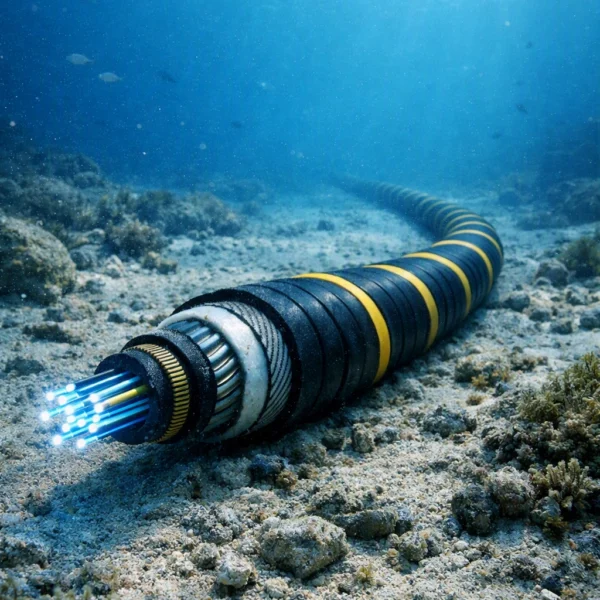
London-registered network operator EXA Infrastructure has this morning announced their plan to build a new 6,552km long transatlantic subsea fibre optic cable between New Jersey (USA) and Brean (UK), which will be called EXA Meridian and is claimed to be the “first transatlantic cable built by a single operator in a decade“.
The new cable, which is currently scheduled to be ready for service in Q4 2029, has been designed to support 24 fibre pairs and is capable of delivering over 500Tbps (Terabits per second) of “scalable, long-term capacity for Hyperscalers, Neoclouds, financial institutions, government and research organisations“.
EXA Meridian is intended to help feed the growing demand for traffic being generated by AI, cloud, and distributed data centre architectures. In this field the largest capacity buyers are increasingly procuring spectrum and complete fibre pairs, rather than individual wavelengths, and the cable has thus been purpose-built to take advantage of this market shift.
Advertisement
Unlike a standalone subsea cable, the new one will connect directly into EXA Infrastructure’s existing owned network. A new cable landing station in Brean will then connect the system through diverse terrestrial routes to Slough and EXA Infrastructure’s pan-European backbone – offering greater choice over routes, resilience, and geographic diversity.
Jim Fagan, CEO at EXA Infrastructure, told ISPreview:
“Demand across the Atlantic is changing quickly. The largest customers are increasingly planning in spectrum and fibre pairs, and the capacity they will need towards the end of the decade has to be built now. With a Ready For Service (RFS) date set for 2029, EXA Meridian will be the only cable with sufficient capacity to satisfy these large-scale demands.
We have consistently committed to investing to meet strong demand. That means understanding where the market is going, securing the capital to act early and having the experience to execute when the opportunity arrives.
By integrating EXA Meridian directly into infrastructure that we own and operate across Europe, we can give customers greater route choice, resilience and accountability. It demonstrates the discipline behind our investment strategy and our confidence in continuing to build as commercial demand requires.”
Overall, this will be the ninth transatlantic cable in EXA Infrastructure’s portfolio. The project has already secured commitments from significant anchor customers, including leading Neocloud and Hyperscale players, and has reached agreements with tier-one suppliers. The exact details of how much it will cost to build remain unclear, but the deployment already appears to have “strong commercial backing“.
In terms of build progress, the project has just reached Contract in Force (CIF) with subsea telecommunications specialist Xtera. The agreement follows extensive planning and early engagement with the supply chain. Xtera will act as a key supplier to the project, which is being led and delivered by EXA Infrastructure. Sadly, we don’t have a map of the cable’s route yet and none could be provided.






Mark is a professional technology writer, IT consultant and computer engineer from Dorset (England), he also founded ISPreview in 1999 and enjoys analysing the latest telecoms and broadband developments. Find me on X (Twitter), Mastodon, Facebook, BlueSky, Threads.net and Linkedin.











« Broadband ISP TalkTalk confirms UK customer community forum is gone
Advertisement
Leave a Reply
Privacy Notice: Please note that news comments are anonymous, which means that we do NOT require you to enter any real personal details to post a message and display names can be almost anything you like (provided they do not contain offensive language or impersonate a real person's legal name). By clicking to submit a post you agree to storing your entries for comment content, display name, IP and email in our database, for as long as the post remains live.
Only the submitted name and comment will be displayed in public, while the rest will be kept private (we will never share this outside of ISPreview, regardless of whether the data is real or fake). This comment system uses submitted IP, email and website address data to spot abuse and spammers. All data is transferred via an encrypted (https secure) session.
















This flies in the face of Sovereign Cloud demand that involves divesting US located services for locations under sovereign national control.
Op AIPAC Fury has shown the current administration has no regard to their impact on global markets so are far from a reliable partner. Further their over-reach beyond US territory suggests that sovereign cloud is more, not less, relevant to business resilience and cost control.
Data protection requirements suggest that data residence in the EU is feasible and reliable where UK sovereign cloud suppliers are not able to scale and compete since GDPR applies throughout UK and EU already.
Perhaps more bandwidth to mainland Europe would be a better choice to match the sovereign and trusted cloud demand.
Either way, modern under sea cables must be able to monitor, report, and withstand the malicious acts of aggressors. Fibre has great advantages in keeping data secure, and monitoring the under sea environment.
The cynic in me thinks this will increase our dependence on the USA. Why host in the UK when you have a massive pipe to the USA? With advancements in compression and the proliferation of content delivery networks, there does not seem to be as much of a requirement for large inter-continental pipes any more.