2nd Queen’s Speech Echoes Gigabit Broadband and Internet Plans
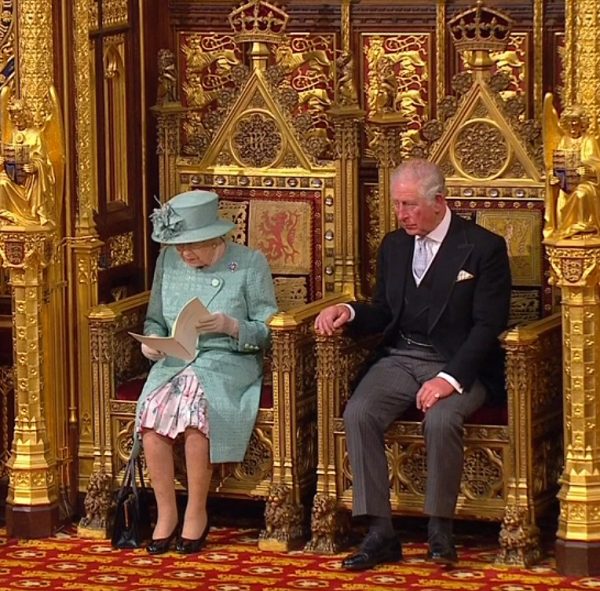
The Queen has today, for the second time since October, carried out the annual State Opening of Parliament, which repeated roughly the same list of Government policy plans as her prior visit. Once again this included planned legislation to support the UK roll-out of Gigabit broadband and internet safety related regulation.
As usual the speech itself is historically more of a ceremonial affair, which often only serves to feed the media with a tiny sliver of new information on forthcoming Government policy and precious little else in the way of detail. On the other hand you do sometimes get a few surprises and as usual we keep an eye out for anything to do with broadband or telecoms.
The fact that we already ran through all of this two months earlier, with largely the same party of government, means that the prospect for surprises this time around is even more diminished than usual. In that same vein we’ve opted to skip the usual recap (check out our prior article instead) and jump right to covering any broadband, mobile or internet related points from today’s event.
Advertisement
The Queen said:
“To support business, my government will increase tax credits for research and development, establish a National Skills Fund, and bring forward changes to business rates. New laws will accelerate the delivery of gigabit capable broadband [Telecommunications Infrastructure (Leasehold Property) Bill, Telecommunications (Connectivity) Bill]. To ensure people can depend on the transport network, measures will be developed to provide for minimum levels of service during transport strikes.
…
My Ministers will develop legislation to improve internet safety for all [Online Harms Bill].”
The speech was followed by the release of more detail, which we’ve pasted below. As before the Government has once again chosen not to state the specific 2025 target for making “gigabit-capable” broadband available to every UK home, which last time forced the Culture Secretary, Nicky Morgan MP, to confirm that this was still the goal (here).
Due to the above we find it surprising that the Government has continued to replace 2025 with the vague “as soon as possible” language below. Aside from that not much has changed since the last speech.
Broadband legislation
“New laws will accelerate the delivery of gigabit capable broadband.”
The purpose of the legislation is to:
● Support the roll out of gigabit-capable broadband across the UK to achieve nationwide coverage as soon as possible so people can reap the huge benefits of the fastest, most secure and resilient internet connections.
● Make it easier for telecoms companies to install broadband infrastructure in blocks of flats.
● Ensure that all new homes are built with reliable and fast internet speeds. The main benefits of the legislation would be:
● Faster speeds (one gigabit, i.e. 1,000 megabits per second) boosting productivity, driving innovation in our public services and giving people the fast connectivity they need to reap the benefits of the digital revolution.
● Increasing download speeds with a gigabit-capable network, which are more than 30 times the speed of superfast broadband and will allow you to download a High Definition film in fewer than 45 seconds.
● Faster and more reliable internet connections for people living in flats. New measures will also ensure that all new homes are built with the fastest connectivity available, increasing certainty for businesses investing in gigabit speed networks.
The main elements of the legislation are:
● Creating a cheaper and faster light-touch tribunal process for telecoms companies to obtain interim code rights (or access rights) for a period of up to 18 months. This will mean that they can install broadband connections where the landlord has failed to respond to repeated requests for access.
● Amending legislation so that all new build homes are required to have the infrastructure to support gigabit-capable connections.
● Requiring developers to work with broadband companies to install gigabit-capable connections in virtually all new build homes, up to a cost cap.
Territorial extent and application
● Telecommunications policy is a reserved matter. The Bill’s provisions would extend and apply to the whole of the UK, with the exception of legislative proposals relating to housing, which are devolved to Scotland, Wales and Northern Ireland.
Other measures
● To ensure that no part of the country is left without next-generation broadband, the Government has recently pledged £5 billion to support the rollout of gigabit-capable broadband in the hardest to reach 20 per cent of the country.
● In the two years to 2021 the Government have already committed £650 million to stimulate the market to deploy gigabit-capable connections in urban and rural areas through:
○ The £400 million Digital Infrastructure Investment Fund.
○ The £200 million Local Full Fibre Networks Programme which funds locally-led full fibre projects.
○ The £200 million Rural Gigabit Connectivity Programme which will deploy gigabit capable broadband to local hubs in rural areas, starting with primary schools.
○ The £67 million Gigabit Broadband Voucher Scheme.● To further support the commercial environment for investment, the Government laid its Statement of Strategic Priorities for Ofcom in Parliament, formally confirming the regulation needed to maximise the deployment of gigabit-capable broadband.
● The Government has committed to spend £1.8 billion to bring superfast broadband to over 96 per cent of the country, with thousands of homes and businesses connected each week.
● Not all areas of the country have decent broadband. To tackle this the Government has introduced the Universal Service Obligation of 10 megabits per second. This is due to come into force in March next year and will give every home and business the legal right to request a decent connection up to a Reasonable Cost Threshold of £3,400 per premise.
Key facts
● One in seven people in the UK live in flats or apartments and it is estimated there are 450,000 blocks of flats in the UK.
● 40 per cent of operators’ requests seeking access from a landlord receive no response.
● It is estimated that operators will be able to connect an extra 3,000 properties a year as a result of the Leasehold Property Bill.
● 22 per cent of new build developments in 2019 have been built without a gigabit-capable connection.
● Around 40,000 new homes were built in 2019 without full fibre.
● A gigabit-capable network connection is one that is capable of achieving 1,000 megabits per second, i.e. 1 gigabits per second, download speeds.
Once again Queen also said her “ministers will develop legislation to improve internet safety for all,” which reflects their existing proposals under the April 2019 Online Harms White Paper. As we said earlier, none of the above is particularly new but it does confirm the direction of travel and the key details will hopefully emerge once the new National Infrastructure Strategy (NIS) is published in the coming weeks or months.
We should add that the new Online Harms Bill will also reintroduce the porn block (age verification) system, which has been heavily criticised over concerns about privacy and effectiveness (here).
Advertisement
Online Harms
“My ministers will develop legislation to improve internet safety for all.”
● Britain is leading the world in developing a comprehensive regulatory regime to keep people safe online, protect children and other vulnerable users and ensure that there are no safe spaces for terrorists online.
● The April 2019 Online Harms White Paper set out the Government’s plan for world-leading legislation to make the UK the safest place in the world to be online. The Government will continue work to develop this legislation, alongside ensuring that the UK remains one of the best places in the world for technology companies to operate.
● The proposals, as set out in the White Paper were:
○ A new duty of care on companies towards their users, with an independent regulator to oversee this framework.
○ The Government want to keep people safe online, but we want to do this in a proportionate way, ensuring that freedom of expression is upheld and promoted online, and that the value of a free and independent press is preserved.
○ The Government is seeking to do this by ensuring that companies have the right processes and systems in place to fulfil their obligations, rather than penalising them for individual instances of unacceptable content.
Next steps:
● The public consultation on this has closed and the Government is analysing the responses and considering the issues raised. The Government is working closely with a variety of stakeholders, including technology companies and civil society groups, to understand their views.
● The Government will prepare legislation to implement the final policy in response to the consultation.
● Ahead of this legislation, the Government will publish interim codes of practice on tackling the use of the internet by terrorists and those engaged in child sexual abuse and exploitation. This will ensure companies take action now to tackle content that threatens our national security and the physical safety of children.
● The Government will publish a media literacy strategy to empower users to stay safe online.
● The Government will help start-ups and businesses to embed safety from the earliest stages of developing or updating their products and services, by publishing a Safety by Design framework.
● The Government will carry out a review of the Gambling Act, with a particular focus on tackling issues around online loot boxes and credit card misuse.
Key facts
● There is a growing threat presented from online Child Sexual Exploitation and Abuse. In 2018, there were over 18.4 million referrals of child sexual abuse material by US tech companies to the National Center for Missing and Exploited Children. Of those, there were 113,948 UK related referrals, up from 82,109 in 2017.
● Terrorists also continue to use online services to spread their vile propaganda and mobilise support. All five terrorist attacks in the UK during 2017 had an online element. There is majority support among adult internet users for increased regulation of social media (70 per cent), video sharing (64 per cent) and Instant Messaging services (61 per cent).
● What the Government has done so far:
○ The joint DCMS-Home Office Online Harms White Paper was published in April 2019. The Government also published the Social Media Code of Practice, setting out the actions that social media platforms should take to prevent bullying, insulting, intimidating and humiliating behaviours on their sites.
○ In November 2018 the Government established a new UK Council for Internet Safety. This expanded the scope of the UK Council for Child Internet Safety, and was guided by the Government’s Internet Safety Strategy.
○ The UK has been championing international action on online safety. The Prime Minister used his speech at the United Nations General Assembly to champion the UK’s work on online safety.






Mark is a professional technology writer, IT consultant and computer engineer from Dorset (England), he also founded ISPreview in 1999 and enjoys analysing the latest telecoms and broadband developments. Find me on X (Twitter), Mastodon, Facebook, BlueSky, Threads.net and Linkedin.













« Cityfibre Confirm Local Full Fibre Rollout Plan for Portsmouth UK

















Comments are closed