Vodafone UK Take Flak on Shetland for Missed or Incorrect Broadband Compensation
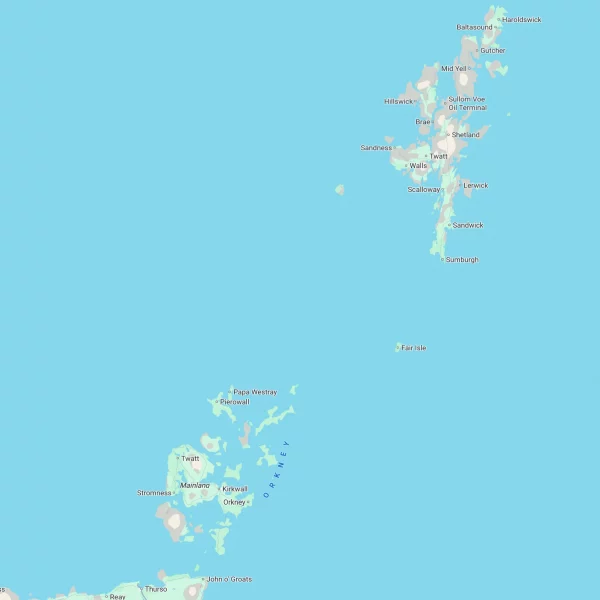
Internet and mobile provider Vodafone have been criticised for allegedly failing to correctly compensate some of their customers on Shetland, which is a remote UK subarctic archipelago that resides north of the Scottish mainland. The issue follows from a major subsea fibre break (here) that recently caused a protracted disruption to services during October 2025.
The service disruption did not impact all of the service providers on Shetland in the same way as others, such as Shetland Telecom and BT, which were able to harness an alternative subsea cable. But some, such as Vodafone, lacked the same level of resilience and thus their customers had to endure several weeks of disruption to connectivity.
Customers of the provider’s fixed broadband service should, however, have been able to harness Ofcom’s system of Automatic Compensation. The scheme, which is supported by most of the major ISPs, requires providers to automatically compensate customers (cash or bill credits – within 30 days of the outage) for internet and phone connectivity mishaps (e.g. a total loss of service that last longer than 2 working days) and other delivery delays.
Advertisement
However, a new report on Shetland News reveals that some of Vodafone’s customers have had to argue over incorrect compensation amounts, while others have been told that they will have to manually contact the provider to request it first.
A spokesperson for Vodafone said:
“I can confirm customers in the Shetland area will need to call 191 to discuss compensation for outages.”
In fairness, when it comes to compensation for service loss (i.e. one stemming directly from your ISP’s realm), then Ofcom does state that consumers would normally have to report the fault to their provider first (this is generally always a good thing to do, even if just for evidential reasons). But outages that last longer than two working days are different.
“If your broadband or landline service stops working, you will simply have to report the fault to your provider. If the service is not fixed after two full working days, you would not need to ask for compensation or contact your provider again, as your provider has systems in place that mean you will start receiving compensation automatically if the repair takes too long,” says Ofcom. Indeed, in the case of the disruption to Vodafone’s service on Shetland, there was clearly a serious fault impacting their network, so that cannot be in any dispute.
The best advice for those impacted and still awaiting compensation is to file a complaint with Vodafone, which clearly sets out (dates) the period of disruption. After that you should also lodge a complaint with Ofcom to make them aware that compensation has not been paid several months after the incident. We recommend doing all of this in writing, while keeping it short, polite, and highlighting the impacts it had.
Advertisement
James Waring, VodafoneThree’s government affairs manager, said last month that the company had already been able to offer Shetland customers “the compensation they are entitled to …. [and] also made gestures of goodwill on top of that.” Clearly some of their customers on Shetland would appear to disagree with that statement.






Mark is a professional technology writer, IT consultant and computer engineer from Dorset (England), he also founded ISPreview in 1999 and enjoys analysing the latest telecoms and broadband developments. Find me on X (Twitter), Mastodon, Facebook, BlueSky, Threads.net and Linkedin.












« Virgin Media UK Reveals Broadband Network Insights for Christmas
















Or just take their custom to a company that has the risk better covered.
I’m surprised that starlink is not popular in the area