The Curious Case of Openreach’s Vanishing UK FTTP Broadband Coverage UPDATE
Independent data analysis has recently revealed a curious trend where patches of Openreach’s full fibre (FTTP) broadband network, often within urban areas and usually but not always associated to installs that require a more complex stage 2 process, suddenly vanish (i.e. no longer available to order). The issue is estimated to be impacting 0.3% of UK premises.
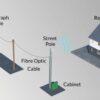
Regular readers will know that there are already various reasons why areas that have already gone live with FTTP may suddenly, albeit temporarily, cease to be available. For example, availability can be impacted if the local distribution nodes (e.g. Connectorised Block Terminals / CBT) run out of spare ports or nearby telecoms poles have no space for new cables. This often causes a delay in availability until engineers can deploy a solution, albeit usually only for a very small area (e.g. one side of a street or a handful of homes).
However, the cases we’re looking at today concern a different issue or set of issues, which can often impact a wider area (e.g. several streets or postcodes). The problem, which was picked up by Andrew Ferguson over at Thinkbroadband (here, here, here and here), concerns areas where Openreach have deployed FTTP, but then latter identify additional complexities after somebody places an order.
Advertisement
Often these will be areas that have already been designated as falling under a stage 2 (KCI2) installation process. Just for context, a stage 1 process tends to reflect a normal property that is expected to be installed within a single engineering visit, while stage 2 usually reflects those that are expected to be more complex (i.e. may require additional external engineering work before a connection can be made to the inside of the property).
During stage 2 installs, engineers may also come across various often unexpected issues, such as cable ducts that are blocked or don’t exist (e.g. the cable may be directly buried in the ground). Properties marked as stage 2 are usually considered to be covered if Openreach have built their FTTP network to the area, but that last little hop into homes can still throw up problems. In some cases this has been causing Openreach to remove some sizeable patches of coverage from areas where the service was previously marked as “available” (RFS).
A Spokesperson for Openreach told ISPreview:
“We’ve temporarily paused new Full Fibre orders at a small number of previously enabled premises as we don’t want customers there to face long delays when they order. These particular locations have proved more complex to connect than a typical order, so we’re taking a closer look at the reasons for that to make sure we can give people the right service experience from day one.
Existing customers and inflight orders aren’t affected, and we’ve already made some paused locations available again. We want to do the same with the remainder and we’ll continue reviewing those as quickly as possible.”
Openreach are certainly not the only network operator to run into this sort of problem, although until recently it wasn’t really possible to get a feel for how much of an impact it was having. However, Andrew’s recent mapping efforts have changed that, which has increasingly identified areas across the UK where the operator’s FTTP coverage figures have been going backwards. Andrew said: “We’ve had plenty of networks where everything says yes and they’ll actually take peoples money to then find out a street has been removed from footprint.”
For example, over in Plymouth (Devon) it was identified that this issue had recently resulted in full fibre coverage dropping from a peak of 80.21% to 79.15% (a reduction of c.1,300 premises), which has created islands of vanishing availability within the city. But nationally, Thinkbroadband estimates that it may only impact around 0.3% of UK premises, although it’s not clear how long it usually takes for operators to resolve such issues and Andrew is still working to fully map the impacted areas.
Advertisement
Suffice to say, full fibre coverage is turning out to be a bit more dynamic than we originally expected, although the above challenges should perhaps be considered par for the course on any network that’s still in the process of building.
UPDATE 6th Feb 2026 @ 11:30am
Thinkbroadband has continued to analyse the impact of this and have no revised their estimates: “We originally thought that the UK wide impact of this FTTP pausing was going to be around 0.2 to 0.3% of premises, but we are revising that estimate to a higher figure of 0.4 to 0.5% of premises i.e. potentially 150,000 properties.”
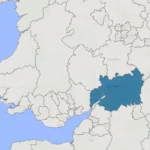
The change comes after they examined the same issue in Stevenage. At the start of 2026 Openreach’s full fibre coverage in the Stevenage council area was 62.66% and as of Friday 6th February 2026 it has dropped to 52.61% – a full ten point reduction in coverage for just one area. The UK estimate may of course change again as more locations are examined.
Advertisement






Mark is a professional technology writer, IT consultant and computer engineer from Dorset (England), he also founded ISPreview in 1999 and enjoys analysing the latest telecoms and broadband developments. Find me on X (Twitter), Mastodon, Facebook, BlueSky, Threads.net and Linkedin.
























Literally had this issue says Stage 1 but then Complex l2C
There are so many places with coils of fibre on poles and CTB’s installed years ago that never got connected. Also missed premises where neighbours can order but some addresses can’t. Openreach are a mess but I doubt the problem is limited to Openreach, Trooli for example have a massive problem with incomplete network builds.
We’ve had issues where OR are still accepting fttp orders (and we can only place orders for fttp) but then they’re auto-cancelling with no explanation. If only their left hand was keeping up with the right…
We had that exact problem. Our entire suburb went live and I ordered, but nothing happened. I had been waiting for FTTP for years, as we were stuck on a VM connection with regular faults and a frankly insane out-of-contract price, so I didn’t take that lying down.
It took four months and a complaint to OpenReach to get them moving, and it turned out that it was due to a collapsed duct in the middle of road. After the complaint, we were connected within 2 weeks.
In the end, we got the maximum compensation for the delay. If there were other cases like us, as the article suggests, that must have gotten expensive for them.
Don’t forget a duct under road is about 10% openreach….90% PTW, permits, highways, councils, estimates, a55/planning etc so hardly openreach and 8 to 16 weeks for a major road closure isn’t bad at all tbh
Mine was on 2 stages visit but funny is BTw checker say 1 stage. First visit was Openreach to lay fibre fed from the pole to my house at the top of the roof to bottom Customer Splice Point (CSP). Then wait for another week for 2nd visit MJ Quinns to install ONT and activated it.
Similar story here. Was all set to order FTTP from Aquiss in order to move from VM. Checker had said up to 900Mbps was available but when I came to place the order was met with only FTTC being available and Openreach website saying that they have no plans to build to my property. Checking the properties either side of me they can order full FTTP (other odd houses in the street are in the same position as me). Landed up recontacting with VM to get anything above 20Mbps!
I had a similar issue when ordering Virgin Media when it became available, the property was built in 1977 and has direct buried copper to provide a FTTC connection but houses on the same straight are provided by poles. VM had no idea what to do, and took me 5 months for them to get a toby box installed outside the property and another month for it to go live.
My question is, what is OR plan b for these properties – keep them on copper, hope they buy Starlink? Isn’t in their own interest to get these properties on a full fibre connection in order to decommission the copper connection.
No. It’s in their interest to build to as many premises as possible as quickly as possible. It’s not in their interest to stop or slow down to focus on more complex jobs or fix fiddly bits that they can potentially come back to later.
Had very similar in Outer London, whole street had existing cables direct in ground. Openreach FTTP went live for the entire street, two stage install and several houses ordered which led to ducts being dug from the main road as far as the house that ordered FTTP. Each time a house further away ordered FTTP, the ducts would be extended further down the street. After about 25% of the houses had FTTP, FTTP orders became no longer possible for the whole street including the houses where the ducts now passed in front of. One email to Zen to question this and a few days later they confirmed Openreach had looked into it and FTTP became available for the street again.
OR came round today to fix my line, which was actually fixed in Dec when the main line was spliced correctly. House was connected to dead fibre on Oct 15th.
Street went no order in Dec, still is, OR just cannot handle it when it gets out of order.
No fibre where I live and there appears to be little chance there ever will be but within a mile large new housing estates are fully up and running. So dead slow copper wire and zero chance of getting more that 3mb download. Thought we were in the 21st Century
You’re entitled to request a decent broadband connection under the USO if you don’t have access to at least 10Mbps download/1Mbps upload and your property isn’t included in any fibre plans within the next 12 months. Perhaps consider satellite broadband or 4G/5G MiFi if possible for the time being.
You can see your options and more info here:
https://www.bt.com/broadband/USO
https://www.ofcom.org.uk/phones-and-broadband/access-to-decent-broadband/broadband-uso-need-to-know
We didn’t even get told about this switch off within Openreach. I had to do alot of chasing to find out why so many premises suddenly couldn’t order FTTP. It’s mostly houses that are fed by direct in ground armoured cable with no new duct in place. Once the civil teams have caught up with the workstack, hopefully theses prems can get turned back on. It’s frustrating for us too, knowing how much time and effort we’ve spent getting the network in place to then have the prems switched off with no notification.
Half of the street i live in had ffbb but I can’t seem to get an explanation of why the remaining 10 houses can’t get it.
Probs be the feeds…likely overhead poles and the latter not being supplied yet…a decent provider will have you an answer within about 48 hours if nothing else or actually get you an order placed if it’s (as so often is) just the database that wants updates for the street/property
Our cul de sac surveyed 8 months ago still no access to full fibre on post code search
Cityfibre are the same, claim that my building is connected and available to order but after 1 year of being strung along it turns out the duct was blocked and nobody is willing to do the work to clear it. So false advertising, open reach just perpetually say “we’re coming!”. In the meantime, were left on borderline unusable speeds and higher prices that FTTP. Infuriating.
It could be that BT had a homes passed target and rolled the FTTP out knowing that they may not be able to connect all the premises along the way however they had targets to meet and hit their KPIs by reporting on “premises passed”
Gas blockers on UG leadins were a real issue in some areas, sadly OR didn’t keep records of where gas blockers were installed so its a lottery, even in a row of terraced houses you can have 9 of the 10 clear but then a sealed duct on a random one.
Results in failed installs and delays without any way of knowing in advance.
Just one of many engineering complexities when it comes to telecoms.
For about a year the fibre checker for EASTK exchange has said “We’ll be building in this area in the next year”, so I was excited to see engineers surveying the other day. Accept now the status has reverted to “We’re planning to build in this area”. Not impressed, it’s like they found out it wasn’t as simple and just delayed it.
We were told that we’d be able to order FTTP end of last January – here we are a year on and no sign of any fibre infrastructure – status still shows in build for our postcode – can’t see any sign of any build occuring on our exchange. We are at least on a 27 Mb/s FTTC but frustrating to pay more for less speed a situation that needs addressing by OfCom. How about pay per Mb/s available.
Should have had full fibre fitted by open reach on 28th January but needed ducting but they cut off my WiFi and landlines within 24 hours now I have got to wait 7 weeks for them to come and fit the ducting No WiFi or landlines for 7 weeks
Not sure what’s going on for me, I’ve already got Openreach FTTP installed, but the BTW checker and various ISP checkers (which will presumably be using the same API behind the scenes?) are all showing that I’m not able to get FTTP! Not sure why Openreach would be saying my address isn’t able to get something that it already has up and running?
OR Was in PL7 2FZ area Oct 2024 over a 2 month period fixing a fault on the already laid underground equipment, March 2025 FTTP available to order, by Oct 2025 FTTP disappeared from every isp site, no explanation and haven’t seen OR in 14 months, csn only get VM or scrappy FTTC,FTTP checker says building in the area but god knows where.