Openreach Warn 500K UK Business Lines Haven’t Switched Away from Legacy Phones
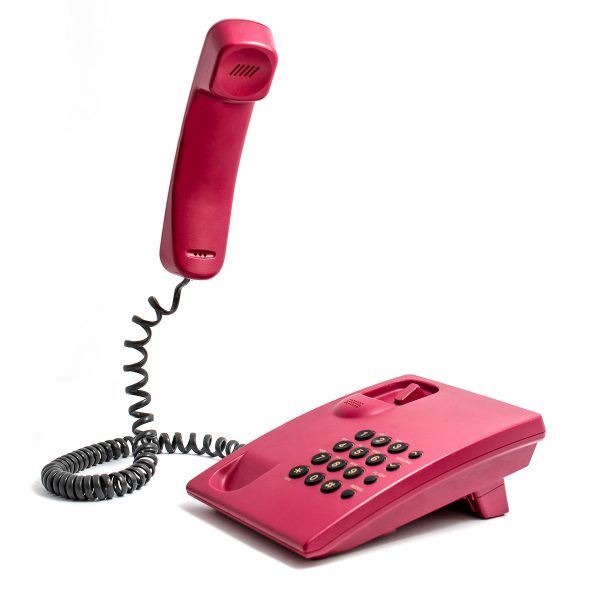
National operator Openreach (BT) has today warned that “more than half a million business lines” still haven’t migrated away from the old Public Switched Telephone Network (PSTN) to new IP-based digital phone (VoIP etc.) alternatives, which with only 12-months to go until the service is switched-off risks firms being exposed to price hikes, as well as “failing equipment and eventual loss of service“.
Just to recap. The legacy phone switch-off was last year delayed to 31st January 2027 in order to give broadband ISPs, phone, telecare providers, councils and consumers more time to adapt (details). The main focus of this was the 1.8 million UK people who use vital home telecare systems (e.g. elderly, disabled – vulnerable users), which aren’t always compatible with digital phone services because telecare providers were slow to adapt.
However, there are currently still roughly 2.8 million lines on the old PSTN network that need to migrate, with more than half a million of those serving business premises. Openreach states that legacy line prices are set to double by October 2026 (details) and businesses thus risk failing equipment and eventual loss of service if they don’t make the switch. “For businesses still relying on copper networks, this isn’t just a technical upgrade, it’s a looming budget and operational crisis,” said the operator (note: only the PSTN phone service is being removed – copper lines still exist and can also handle digital IP-based voice / broadband).
Advertisement
While many Communication Providers (CPs) have already migrated much of their customer base, a number of “smaller or specialist providers have been slower to act“. Openreach warns that businesses remaining with these providers face unique risks tied to equipment failure. Beyond phones, critical hardware including fire alarms, burglar alarms and payment terminals, will need to be migrated: the latest data reveals more than 12k lift lines and around 500 lines serving CCTV networks need to be upgraded too.
James Lilley, Director of All-IP at Openreach, said:
“There’s no time left to stall. We’ve spent the last year ensuring telecare customers can be migrated safely through our ‘Prove Telecare’ service, removing the final barrier to the switch-off. Now, the reality is simple. The PSTN analogue network is obsolete, becoming harder to maintain and significantly more expensive to run. We are passing those costs on to providers who continue to sell legacy products. If your business is still on this copper service, you will start to pay a premium for a service that will be switched off in 12 months. Most major Communications Providers moved their customers to digital long ago. If your provider hasn’t contacted you, you need to ask why.”
Openreach say they’ve “made clear” that all technical barriers to migration – including protections for vulnerable telecare users – have now been “resolved“. Consequently, says the operator, “the deadline is locked“, and the focus has thus shifted to the urgent withdrawal of legacy copper products. So don’t expect another delay at the 11th hour, Openreach aren’t currently planning for one.
The industry-led shift is being driven by a combination of factors, such as the looming retirement of copper lines in favour of full fibre (FTTP), as well as future exchange closures and the declining reliability of the old phone network (Ofcom states that fault rates have increased substantially in recent years). Not to mention that it is not economically feasible to maintain both the old and new networks side-by-side long term.
The government and ISPs have already introduced various measures to protect consumers, particularly vulnerable users. But businesses won’t benefit from this and need to ensure that their own systems are up-to-date ahead of time. The best way to start this process is by contacting your current provider to discuss the issue. The operator has also setup an information page for businesses looking to make the transition – here.
Advertisement






Mark is a professional technology writer, IT consultant and computer engineer from Dorset (England), he also founded ISPreview in 1999 and enjoys analysing the latest telecoms and broadband developments. Find me on X (Twitter), Mastodon, Facebook, BlueSky, Threads.net and Linkedin.










« Ookla 2026 Study Finds Starlink UK Broadband Speeds Poor vs Europe

















No excuses now. Everyone has had more than enough time to adapt. It will have been at least 10 years at the end of Jan ’27 & no way should Openreach delay this again, it will just encourage even more foot dragging.
Agreed. The can-kickers have finally run out of road
Completely agree. The only way some people will switch is when they are disconnected. Too much laziness among some people.
Completely agreed, they’ve all had enough warnings to stop using legacy technology and clearly those companies who are still on such technology are not giving a toss to move with the times. If they refuse to co-operate or keep whining like babies to the regulator/the government, they should be forced to face the consequences and be cut off, so they can realise that this is real, not just some fantasy they can repeatedly use as a stick to force Openreach to “kick the can down the road”.
If the businesses still on legacy PSTN technology don’t want to invest in themselves to move onto modern secure technology, Openreach should just say “we don’t want to do business with you, bye”. Same should, at this point, apply to any residential customer with an ISP that isn’t trying to move them over to SOGEA/FTTP. Enough is enough.
As long as I’m not in one of their lifts when it breaks down, more fool them
“For businesses still relying on copper networks”
Copper is litterally all we can get here in a major city. We’re desperate for fibre but Openreach are the ones failing to provide it.
It was poorly phrased. You can get VOIP over FTTC or ADSL.
Not the best terminology to use. They should explain that the phone lines are shutting down, not the broadband regardless of the technology used.
You’re unfortunately misinformed because of previous ISP behaviour. You do NOT need full fibre FTTP to move off legacy technology and you should NOT be waiting for full fibre to arrive to ensure you get off the legacy PSTN.
Part-fibre services, where you receive a broadband connection and a traditional landline is handled by VOIP (either from your provider through the phone port on their router, or from a third party), are there for anyone who doesn’t have access to FTTP. Many properties have access to FTTP, even in cities as that infrastructure was built a long time ago. You should be checking with your ISP and seeing if you can move to SOGEA (aka VDSL, part-fibre services), and taking action now.
This is bad wording.
The copper networks are not going anywhere. Only the analogue phone service is going. Your copper lines can still be used for broadband and for digital voice.
I suspect many of those 500,000 business phone lines are ones that they never got around to cancelling – like old forgotten fax lines.
Quote “ We’re desperate for fibre but Openreach are the ones failing to provide it.”
If you don’t have fibre, which isn’t needed for the PSTN switch off but that’s another story, then *all* of the network operators are failing to provide it to you. There may be a good reason of course, such as an unhelpful landlord or an obstructive highways authority.
If no Full Fibre available, just the copper line are available, then there is no reason why many businessess and home users remain on copper line as it will be down on Openreach responsible to ensure it switch over to full fibre.
Hello Max,
This is not about the transition from copper to fibre, it’s about the transition form WLR3/analogue-voice/PSTN/ISDN/FTTC etc. to VoIP over SOGEA/SOADSL/SOGFast/FTTP.
Fibre is nice, but it’s not required for VoIP.
Hope you’re enjoying your new FTTP service?
All the best.
I’ve been retired for a while now, but we still get calls, from former small business customers, looking for advice about migrating PABX system lines to VoIP and for a VoIP equivalent to Centrex.
The BT Local Business franchise, that covers my area, is still a thing and hasn’t been re-absorbed back into BT yet.
That particular BTLB franchise is, in my opinion, a complete clown-show-horror-story, as I hear are several others.
They’ve had numerous allegations of mis-selling levelled against them.
Our former clients tell us that this has engendered a generalised climate of mistrust, which has in turn led to inertia, since they no longer trust any consultants/suppliers, believing that they are going to get ripped-off, whomever they choose.
One said to me, on the 5th of Jan, “I don’t know where to turn, if I can’t trust BT Business, who can I trust?”.
I have some sympathy, since these folks are mostly technically illiterate and would have defaulted to BT Business, at least they would have done, before BTLB was inflicted upon them.
I fear that this is going remain a problem, since I doubt BTOR are geared-up for an extra 500K SOTAP circuits, on top of those required for the true “edge-cases”.
Despite being happily retired, I still seem to have a morbid interest in what things will look like, at this time next year.
I should add:
Quite a few are confused between the two concurrent transitions.
i.e Confusing the Copper to Fibre transition with that of WLR3/analogue/ISDN2e to VoIP.
Another former customer said to me, “I got a letter, saying that my phone line would be cut off, at the end of the year, So I phoned up to order a fibre-optic line, only to be told that it’s not available yet. So I can’t switch to digital!”.
It doesn’t help that the general news media (i.e. Not you Mark!), are conflating the two, as if they were one and the same thing.
2.8 million lines possibly still active on a network that was originally to have been shut down by now is staggering. This is likely to hit the headlines if users start getting demands for the increased charges, getting cut-off or if pressure isapplied to BT to postpone the deadline.
Trouble is if Openreach back down now they might as well forget about the whole thing (until the existing equipment expires). People have had more than enough notice.
I think it would be time for the BT Group to play hard ball no matter how hysterical the newspapers might get over it. Technical solutions exist (BT has PDPL and now Openreach has EVAC) and they should be able to charge accordingly.
If BT were still a total monopoly then the government would be right to push them around, but in the era of rampant competition it is already grossly unfair that they have already had to maintain decrepit infrastructure for longer than they’d like. 2 years additional warning was enough.
BT still has monopoly power despite the nascent competition. Although I do agree they should not have to maintain outdated tech just because a few people are dragging their feet. I suspect there’ll be quite a few pikachu faces when the price doubles.
there is no area in whicb BT is still an actual monopoly. Even the tiniest exchanges have some sort of LLU presence for an alternative analogue voice service, and anyone who can get FTTC or FTTP has more or less the same choice of ISP regardless of where they live.
That is why the regulatory term is “significant market power”.
I wouldn’t use the term “nascent” – BT’s biggest competitors have been around for decades and have millions of customers each. The cable industry built its own parallel PSTN (ie not exchange based VoIP as the LLU industry did) and Virgin faces the same challenge in closing it.
@Big Dave:
BT Directors certainly need to stop rolling over for Ofcom. I think there are indications that the foreign owners are growing increasingly frustrated with the unbalanced regulatory regime and the failure of the directors to stand up to Ofcom. That is why I think Ofcom will increasingly come under pressure, via the FO, to cut back the controls on BT.
@ Ivor:
Yes, I agree. BT has reached the point where it needs its directors to be more aggressive in acting in the group’s interests rather than being cosy with Ofcom.
@ john_r:
BT has NO monopoly.
BT, like every other business competing in the sector, is under severe pressure from a dysfunctional market because there are too many zombie businesses that are yet to fail, which are suppressing revenues due to reckless price discounting aimed at building market share, regardless of building sustainable businesses.
@john_r:
You will have toenlighten me; what are “pikachu faces”?
I think there is a bit of a misunderstanding here, gentlemen.
Openreach have been very keen to push for the change to FTTP at the same time as the switch to digital phones services, as it saves them work. This is led to people thinking the two things are inseparable. They are not. Digital phone services will run quite happily over copper-based broadband.
I’ve been doing just that for last two years, until Full Fibre became available in September.
I think most commentators here are aware of that.
The problem is that with the limited resources available to the network providers, they will find it increasingly difficult to maintain continuity of service to existing end users as the deadline approaches.
On the domestic side, who wants Openreach digging up a fair sized garden to bury 14mm sub duct, and then enter a property with sticky soil laden boots in a room with a beige carpet to install a ONT, in weather like most of the UK is experiencing at the moment, not many i would suggest. In the words of the Beatles song “Here Comes The Sun” – hopefully sooner than later! 🙂
they might not have to. Any speed of SOGEA line is available in areas not yet under FTTP stop sell. Existing FTTC lines can be moved to 40Mbit SOGEA in stop sell areas.
So someone who is adamant about not having their garden dug up quite yet could still be moved to “Digital Voice”.
Lines that don’t have an associated broadband service can be moved to the exchange-based PDPL (BT retail and wholesale) or now to EVAC (for Openreach CPs other than BT, though the LLU operators that do their own thing for voice aren’t affected by WLR closure anyway)
The problem with a move from (Openreach FTTC Broadband + analogue landline number) to (SoGEA + VoIP) is that the process is completely broken! The only way to do this is to port your number to a VoIP supplier, which automatically cancels the Broadband service, and then contract for SoGEA as a new install, with the normal minimum OR leadtime and praying that the SoGEA service arrives over the original copper pair (no easy way to either obtain or re-specify the ALID / BBEU for the pair). Apparently Openreach will only allow a single order outstanding on a line, with no way to combine the two requests into a single order. You can do it the other way round – move to SoGEA and then reclaim the landline number within 30 days – but either route involves loss of service on either Broadband or Phone. No wonder many businesses / homes are either frozen in the headlights or giving up their landline number, disastrous for small businesses / sole traders who rely on it for new work.
Openreach has processes to handle this. It isn’t a problem when the ISP themselves is doing it. BT consumer PSTN + FTTC to BT consumer SOGEA + DV is easy (literally seamless if the customer is using a Smart Hub 2 or newer, aside from remembering to plug your phone into the back of the router).
BT business prefers to install a new SOGEA or FTTP line and then port the number over to their VoIP service in a way that renumbers the PSTN line and keeps its associated FTTC alive until the customer says all is well and both can be ceased.
I would expect the major ISPs and very knowledgable firms like A&A to have no problem handling it. If you are trying to DIY it (eg to move to a third party VoIP provider) then it is not surprising that there is trouble.
@ AnotherPhil:
The Openreach process is not broken. They are successfully migrating PSTN customers to DigitalVoice.
I do, and the OR subby who did the installation was on time, tidy and generally very helpful.
Having suffered eight years of substandard broadband due to mishandling by the council the engineer could have made as much mess as they liked.
I think Openreach are right but also masking some of their own internal problems which DEFINITLEY still exist. Data integrity issues, ie address keys which have never been properly updated as postcodes change are a nightmare. If ORDIs have a 80% success rate but the remaining 20% with the manual team (say 300) take 2 months on average to fix because only 50% of your emails and escalations are responded to. Then we may run out of road before Jan 27.
CPs have had close to ten years to sort this out. I might have sympathy for people who are using an analogue line still and are oblivious to the switch-off date, and they should seek compensation from their provider for any resulting loss of service.
Maybe an automatic announcement on every WLR line when they make an outgoing call to advise the service will cease jan 2027 will prompt users into action
That does not help for lines that are not used by humans. Also, Openreach does not have a relationship with the end user.
Cut them off, stop charging them for the service you are no longer providing, and see how many complain.
That would lead leagal cases over breach of contract.
I wonder what Plusnet are going to do with customers that currently have PSTN lines seeing as they are not going to have a VOIP product? I do know of one customer like this and they haven’t had any communication from them as far as I know.
“Proactive” migrations to BT/EE.
Apart from a few sticky threads on the Plusnet forum & also in the customer member centre I haven’t seen any communication from Plusnet about PSTN switch off.
How many customers with Plusnet phone lines never visit the forum or sign in to there member centre? They will miss the information about the switch off.
Plusnet not having a VOIP product & also Openreach incompetence is why I’ll shortly be an ex Plusnet & Openreach customer.
I did have a look at my exclusive pricing discounts for moving to EE broadband including digital voice & it was laughable expensive.
I guessed as much.
Had an automated email from Plusnet on Friday as my current contract is coming to an end.
It offered an option to renew my current FTTC & phone line contract for another 12 months.
Seems even the ISP owned by the BT group wants to kick the can down the road.
I would bet the issue for a load is that these are largely broadband only lines where the line and broadband are different CPs, we had a load where the broadband had been provided over what was the fax line originally in the days of ADSL and the broadband CPs was different to the voice one – the migration to SOGEA can’t be done proactively as the broadband CP have no visibility to if the WLR side actually has any active use; for those newer sites where the broadband CP provide the dedicated WLR3 copper bearer as well they just moved them to SOGEA knowing there was no voice usage.
Whilst many businesses have been laggard about this, there is a simple piece of advice they really should take: if FTTP is available and you haven’t taken it, you’re making this harder than it needs to be. FTTP decouples broadband from voice completely — get that done first, then port the number to VoIP in your own time as it avoids 90% of the PSTN migration pain. If FTTP isn’t available, order SoGEA now so broadband continues on your existing line, and migrate the phone number to VoIP separately.
Can I warn openreach that they havent wired my street for fibre yet
As in the comments above it’s the analogue telephone service that is shutting down. The copper broadband will carry on working as before and for many people it will be simply a matter of plugging their phones into the telephone socket on their broadband router.
The biggest hurdle to VOIP is the fact that telephone extensions stop working with VOIP and BT have no solution available to make them work from the hub (What happened to the VRI Faceplates?) Voice Re-Injection that plugs the master socket extension port into the hub?
Business VOIP supports multiple extensions so is not a probvlem
One problem with that VRI proposal is that it assumed you had the “new” type NTE5C, so anyone with an old socket would need to get it swapped out (and who would pay for that?).
It is a shame it wasn’t available as an option anyway. I’ve seen cables on eBay and elsewhere that don’t isolate the outside line like the VRI faceplate does, which surely won’t end well for the customer.
BT provides “digital phone adaptors” (looks a lot like those homeplug ethernet adaptors) for users who need to actually plug something in at some distance from the router. Their router has a built in DECT base station that these adaptors (or the digital voice handsets BT also sells) can talk to.
Residential rather than business, but had this email from Zen a few days ago, which conflates PSTN and Copper as other comments here have confirmed isn’t the case.
[Zen is FTTC. BT is home phone provider]
===
Helpful information about the upcoming PSTN switch off
Hi there,
We’re getting in touch with some helpful information about an upcoming change to the PSTN (Public Switched Telephone Network), and what it means for your services. Openreach will be switching off the PSTN by January 2027. This means traditional copper phone lines will no longer be supported, and services that rely on them will need to move to a digital alternative.
What does this mean for you?
To keep your services working, your broadband will need to run on a connection that doesn’t rely on a copper phone line, such as Full Fibre. At the same time, any phone service currently delivered over a copper line will also need to move to a digital voice service.
What should you do next?
You have a few options to make sure you’re ready for the switch off:
• You can check whether you’re able to upgrade your broadband to Full Fibre.
• You can speak to your current phone provider to confirm how your voice service will be supported after the PSTN switch off.
• If you choose, you can also move your phone service to Zen and use Digital Voice, which delivers calls over your broadband connection.
How to get started
To check your broadband upgrade options with Zen, or to talk through what the PSTN switch off means for you, you can call our team on 01706____ or by logging in to MyAccount
===
Not only does this muddle two things to try and push an upgrade to FTTP, but it also means I’m having to recontract new as an “upgrade”, which will also result in a loss of my Price For Life package, and I really don’t want to give that old fixed price feature up… really want something more proactive from Zen (and BT who appear happy to string out the landline monthly charge for as long as they can realising they will probably lose me as a customer when the time finally comes to end the PSTN – when I’ve spoken with them even a few months ago it’s just “we’ll be in touch at the time”) to offer a genuinely free upgrade of my existing package rather than just trying to sell an upgrade to an all new contracted service.
I don’t think BT is worried about losing you. Most users bundle phone and broadband together – you are an outlier. You’re probably already paying more than you really needed to as a BT landline is going to cost more than Zen’s VoIP.
They have no product that allows you to keep things as they are. The stopgap “PDPL” product is restricted to voice-only lines, so theoretically you could have been moved to this if you moved the Zen broadband to FTTP, but you don’t want to do that either.
I assume that some point this year you’ll get an ultimatum from Zen, BT or both. I guess your complaint is more with Zen, as BT doesn’t know or care about the pricing promise you may have with another company. Maybe you could try complaining to Mr Tang and asking why you couldn’t take an FTTP upgrade at the same speed and price as you pay now?
@Ivor, I’d “happily” move my FTTC to FTTP with Zen, if I could keep my existing price/fixed price for life deal. The “upgrade” options Zen are offering me are 20Mbps faster download (same upload) as I’ve got for £6/month more and an all new 18 month contract. I’d be better off going to another provider (even signing up for the Trooli based offering via Zen, running in parallel for a month and scrapping both FTTC and BT lanline – strangely Zen doesn’t list the Trooli option as an upgrade path for me, despite showing it if I check not logged in)
I’ll give them a call at some point, and you’re right, BT probably aren’t fussed about losing me, but at the same time there genuinely seems no reason for them to push things along as doing so will lose them the monthly revenue (and as you’ve suggested, save me a fair amount – which admittedly is worth doing)
What I *really* want to understand is what happens if I simply “do nothing” and run down the clock? Does my BT phone service just die end of Jan 2027, and broadband (Zen FTTC) carry on, and maybe I port across my number within 30 days to a Voip service. Or does my FTTC also suddenly cease to work when the phone part does, or is BT going to suddenly offer me some voice service “when the time comes” as they seem to be hinting at to me when I’ve asked but giving no idea if they actually will – it’s the unknown that makes it “easier” for me to do nothing and just see what happens, but, at the same time it’s vital I don’t find I’m without broadband.
Can’t you just terminate the BT landline service. You then have 30 Days to move the number to a third party VOIP supplier such as Andrews & Arnold. If you have seperate contracts it shouldn’t affect your Zen contract FTTC contract.
If the landline phone service is ceased, by either yourself or BT then this triggers a cease of the associated FTTC service (in Openreach’s world, anyway). I don’t know how Zen would respond to that – they might argue that this was your decision and you’ll be moved to standard pricing and terms.
BT can’t offer an alternative voice service. Their mainstream “digital voice” service is tied to BT/EE broadband. PDPL (exchange based VoIP – seamless migration from PSTN) is only available on lines that don’t carry a broadband service. That is an artificial restriction imposed by Ofcom and Openreach and it doesn’t seem like it is going to change.
Zen’s FAQ says that if they need to make changes to the service, then the price for life will be retained. So if you feel like taking the risk then sit tight and see what they come forward with later in the year. Or escalate to Zen’s chairman and ask what the options are.
@Big Dave – I don’t know for certain, and that’s one of my worries. I’d read elsewhere that people ceasing their BT landline caused their broadband from another provider to also cease, but it may be old (or wrong, or just unlucky) info. I sort of wish the deadline was this month, and it was just being forced to happen rather than constantly kicked back and back like it has been.
The SMPF product you use right now isn’t going to exist. Your Internet will be moved to SOGEA, your voice service will cease.
@Polish Poler
Is this procedure, for SMPF circuits, publicly documented?
I would appreciate a web-address, so that I can show it to people.
If an SMPF circuit is forcibly migrated, from WLR3+GEA-FTTC to SOGEA, or WLR3+ADSL to SOADSL/SOGEA, does one still get 28 days to recover the ceased Directory Number?
Again, if so, is this publicly documented?
T.I.A.
Liz
@Polish Poler
“Your Internet will be moved to SOGEA, your voice service will cease”
While I’m not suggesting you are wrong, at all, as I believe that’s what will likely happen (or FTTC to FTTP), neither Zen has said I’ll be moving to SOGEA, nor has BT suggested by voice service will cease. BT seem to be “stringing me along” that they’ll be making a change to my voice at some point because of lines changing and will be in touch, but it’s said that on the corner of the bill for well over a year or two now, and when I’ve asked them it’s “we’ll be in touch when the time comes” with no detail available for me as to what will happen.
The NHS, prison service and councils still have loads of ISDN lines. They do not have the money to upgrade them and we don’t want to pay more taxes to pay for it. I am not sure what the solution is.
The only solution is convert them to some sort of IP based technology. It really shouldn’t be expensive.
Someones got to pay somewhere along the line. The existing exchange equipment is on borrowed time & it simply is not viable to refurb the exchanges alongside the cost of the FTTP roll out.
It should be possible to convert ISDN2e circuits, to SOGEA or SODSL, fairly easily.
I suppose the prohibitive cost is down to the cost of labour for replacing ISDN TAs with routers and the concomitant network re-configuration.
If national/local government is still relying on ISDN30 circuits, then this would be a significant headache.
@Jim
When you say “ISDN lines”, do you mean ISDN2e BRI circuits, or ISDN30 PRI circuits, or both?
I know of a few small businesses, with Basic Rate lines, who have yet to update; it would be interesting to know if the public sector was still using any ISDN30 Primary Rate lines this late in the game.
Thanks,
Liz
The problem for businesses using ISDN30 is that its not just the loss of the ISDN, its that they are often running an end of life PBX that isn’t SIP ready. PBX’s are typically very reliable so businesses continue to use them way the end of their life. So they need to migrate to a brand new solution, perhaps cloud, maybe with Teams. Whatever they do, its probably going to be bigger than replacing one of more ISDN30’s.
That is unlucky because the ISDN Lines
are also closing down,
so they will be without a Service come Jan 2027
Openreach is planning major price hikes to force business users off old copper networks
to force businesses to upgrade ahead of the deadline, prices for legacy business lines are set to rise sharply three times this year, starting with a 20% increase from April and then two 40% price hikes in July and October.
The first sentence implies that businesses in vast swathes of the country where fibre is unavailable will be deprived of all fixed line connections so will either have to switch to wireless services such as Starlink or shut up shop altogether.
I suspect that Openreach means that instead of a distant exchange alerting subscribers of incoming calls and providing a dialling tone when the receiver is lifted, these functions will be carried out by a hub or router at the customer’s premises via an internet connection.
If so why don’t they say so rather than confusing non-technical customers by wittering on about the switchover to fibre and an alphabet soup of acronyms like PSTN, SOGEA, WLR, SOTAP etc.?