Creditors Allegedly Set to Take Control of Rural UK Broadband ISP Gigaclear
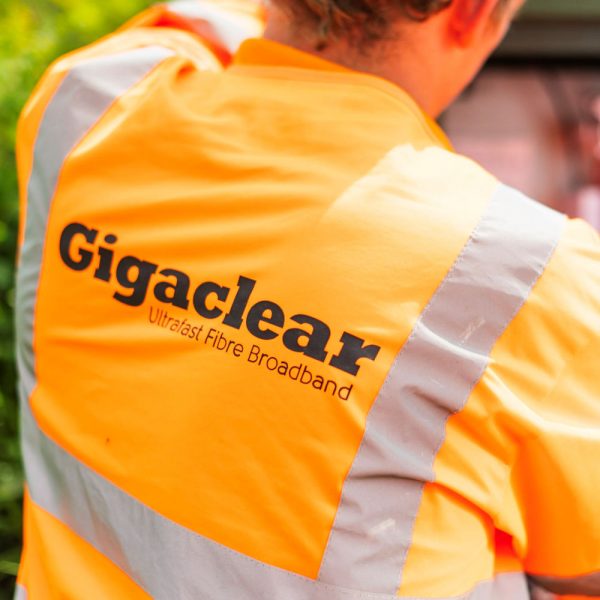
A major newspaper has claimed that creditors of the indebted Abingdon-based alternative broadband ISP Gigaclear, which has built a full fibre (FTTP) network across 612,000 premises in rural parts of England and is home to c.160,000 customers, are set to take control of the business after an attempt to sell the company failed.
The provider currently still holds an aspiration to extend their network reach to 1 million UK premises. However, like so many other alternative networks (altnets), they’ve recently also had to scale-back their network build and cut jobs, due to the pressures from high interest rates, rising build costs and a highly competitive environment (here and here). Nobody ever said deploying fibre optic cables into rural areas was easy or cheap.
Suffice to say that funding has recently become somewhat of a hot topic for Gigaclear, particularly after reports emerged in November 2025 that they had begun hunting for a buyer (here). A consortium of the provider’s existing banks then followed that report up, in December 2025, by agreeing to pump “at least” £80m of new funding into the company (here), which Gigaclear said meant it was now “fully funded to deliver its plans“.
Advertisement
As Nathan Rundle, CEO of Gigaclear, said last month: “There’s still more work to do to close the digital divide but combined with our achievement of EBITDA positivity earlier this year and strong customer growth, this funding reflects a business that is financially secure, operationally robust and focused on sustainable long-term delivery.”
However, according to a new report in the FT (paywall), the company’s creditors, including the UK taxpayer-backed National Wealth Fund (NWF), as well as banks such as NatWest and Lloyds, are now allegedly “set to take control of heavily indebted broadband provider” after Gigaclear failed to find a buyer for the business. The creditors are also said to have explored options, such as writing down their debt (this could impact taxpayers too, due to the NWF’s involvement via a £240m guarantee on the aforementioned £1.5bn debt facility).
At the time of writing, most of the parties involved are said to have declined to comment on the report, although Equitix did express disappointment that “the financial performance of the investment did not meet the targets that Gigaclear set itself”. The expectation is that the company’s creditors will assume control of Gigaclear and then attempt another sale process. None of this is expected to have an impact upon their customers, which will continue to receive the same service, although related cost-cutting can sometimes impact service and support quality in other ways.
The reported move comes shortly after another altnet broadband provider with similarly significant financial challenges, G.Network, was acquired by FitzWalter Capital for an undisclosed sum (here). Barely a week had passed before G.Network then followed that up by filing a Notice of Intention (NoI) to appoint an administrator (here).
Advertisement
As time goes on, we may well see more indebted altnets going down a similar path during 2026, particularly if they fail to find a consolidation partner via more traditional approaches. Quite a few altnets have already spent 2024 and 2025 trying to find such solutions, but only a few have done so and the longer it takes, the more painful the outcome could become, especially for investors and creditors.






Mark is a professional technology writer, IT consultant and computer engineer from Dorset (England), he also founded ISPreview in 1999 and enjoys analysing the latest telecoms and broadband developments. Find me on X (Twitter), Mastodon, Facebook, BlueSky, Threads.net and Linkedin.











« Openreach List Next 132 UK Areas for Copper to FTTP Switch – Tranche 23
Advertisement
Leave a Reply
Privacy Notice: Please note that news comments are anonymous, which means that we do NOT require you to enter any real personal details to post a message and display names can be almost anything you like (provided they do not contain offensive language or impersonate a real person's legal name). By clicking to submit a post you agree to storing your entries for comment content, display name, IP and email in our database, for as long as the post remains live.
Only the submitted name and comment will be displayed in public, while the rest will be kept private (we will never share this outside of ISPreview, regardless of whether the data is real or fake). This comment system uses submitted IP, email and website address data to spot abuse and spammers. All data is transferred via an encrypted (https secure) session.














Starlink offering a much cheaper service will invalidate any gains that this new admin will be able to pull off
Gigaclear offer faster speeds for less money. Even among financially sustainable companies, BT can also be cheaper / faster.
No one who can get FTTP would really need to consider Starlink, even at the lower price (with a forced £75 install fee)
£35 for 100mbps down and 10mbps up not for worth it unless you have nothing available to property even fttc gives better speeds better off with any network than starlink
Any Starlink comparison carries a hidden £15–£20 / month for the extra power consumption.
Taking on an additional £5,000 of debt per paying customer doesn’t scream “sustainable business”. That’s 16 years of revenue without considering interest payments.
Philip Janssen (former BT CEO) predicted it would all end in tears for the altnets. Lets hope something resembling a third national network is the final outcome of all this. It would be bad for the country if we ended up with the same old Openreach/VMO2 duopoly at the end of this. If Gigaclear can’t make it work where they have had a virtual monopoly service to properties that are probably the most poorly served by existing technologies it begs the question who exactly can?
There’s a fundamental economic problem which the BDUK funds are intended to solve in part.
The cost of rolling out broadband to the final 10% of the country costs the same as the entire first 90%. If consumers are asked pay a price that reflects the cost of provision they won’t be able to afford it. If the price is subsidised via some kind of industry wide USO arrangement, it doubles the price of everyone else’s broadband.
It’s almost impossible to do on a purely commercial basis
Too much glass already in the ground for it all to be forgotten. The original investors will be lucky to get anything back and possibly whoever rescues them as well (think TeleWest et al becoming NTL, then finally becoming Virgin all those years ago).
The end result will be a 3rd provider. As to quite what that provider will be called, or whether or not this was the most efficient way of creating one, then your guess will be as good as mine.
Whoever who is not borrowing money from banks and not burning money on 100% electric van fleet and outsourcing actual network build. IDK if this is only my impression but most of those troubled altnet CEOs should never been appointed, at least not as CEOs.
They were given BDUK money to do North Newington near me. By the time they came to do the install Openreach had already beaten them to it with their commercial build. it makes you wonder how many other places this has happened.
Lenders have simply had enough.
The main reason for this is altnets outsourcing all network build and investing in completely unnecessary things like 100% electric vans etc.