Ofcom Give Virgin Media O2 UK Green Light for Mobile Calls via Satellite
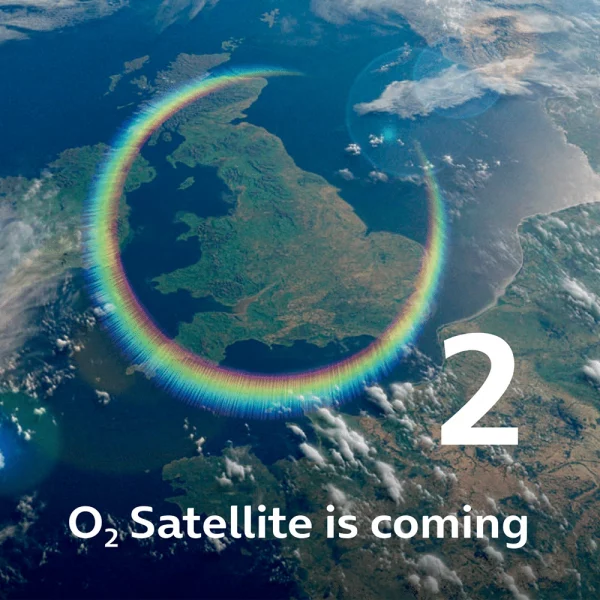
The UK telecoms regulator, Ofcom, has today approved a request by the parent of mobile operator O2 (Virgin Media) to vary its spectrum licence to allow for the launch of their imminent O2 Satellite service, which will harness Starlink’s satellites in Low Earth Orbit (LEO) to connect with standard smartphones in the UK.
Just to recap. A good number of Starlink’s satellites support Direct to Cell (DtC) technology, which enables them to deliver “robust” global coverage of their new 4G mobile roaming service and supply it directly to unmodified Smartphones on the ground. This service is currently less about performance (currently capacity constrained) and more about ensuring customers can stay connected, for basic tasks, even in remote areas of weak terrestrial mobile signal.
However, in order to work, DtC requires Starlink to do deals with a local mobile operator, which is where O2 comes in as the new service will use a portion of O2’s licensed mobile spectrum. Ofcom officially approved mobile and satellite operators to harness their airwaves (mobile spectrum bands) to support similar Direct to Device (D2D) services during December 2025 (here) and today’s announcement represents the “first licence variation of its kind to be approved” by the regulator.
Advertisement
The new O2 Satellite service will initially deliver basic messaging and data (broadband) services to 4G mobile “not spots” across the UK, with further improvements and applications to follow in the future across a range of handsets. App support will grow over time, with a focus on targeting support for the most asked-for applications at launch, primarily messaging, maps and location services.
Ofcom Statement
This is the first licence variation of its kind to be approved by Ofcom. We have also made the final regulations to support the rollout of new services powered by ‘direct to device’ (D2D) technology.
D2D services involve satellites in space beaming down signals to smartphones on earth, enabling people to stay connected in coverage ‘not-spots’ – including in hard-to-reach rural areas and mountainous regions.
Having received and approved the first licence variation request from VMO2 under the new authorisation framework, we have now inserted the frequencies on which the company is allowed to provide D2D services and formally made the regulations that allow existing handsets to use the service.
These regulations are intended to come into effect on 25 February 2026.
At present, we still don’t know how much O2 will charge for their new satellite calling and data service (or add-on), although it’s initially expected to launch with limited landmass coverage of the UK (rising to more than 95% within 12 months of launch). The coverage is set to increase even further when Starlink’s next-generation DtC satellites are deployed, alongside further enhancements in performance, application use and an expansion of use cases. Officially the service is still planned to go live during “early 2026“.






Mark is a professional technology writer, IT consultant and computer engineer from Dorset (England), he also founded ISPreview in 1999 and enjoys analysing the latest telecoms and broadband developments. Find me on X (Twitter), Mastodon, Facebook, BlueSky, Threads.net and Linkedin.













« Broadband ISP Zen Internet Discounts CityFibre’s UK FTTP Packages UPDATE
















DtC is huge considering our the ‘Not Spot’ state of play. I do wonder how seamless the switch between ‘Regular Network’ and DtC will be, if it’s slow and awkward then it doesn’t interest me all that much.
I wonder if Standalone DtC will be an option in the next couple of years, if it is then that’s something I’d be all over.
I can see it coming.
In the USA they have mobiles which have Starlink built in.
Seamless switchover really depends if Inter-PLMN handover is implemented. Most devices these days are constantly RRC connected so Idle Mode reselection doesn’t feature so much. Looking at the Starlink cell setup, I suspect the trigger for reselection will be Inactive RRC and/or PRACH failure to the terrestrial O2 network. We operate a not-spot MNO so this is very similar to how devices onboard to us, however the one exception is that we are not in the reselection list of O2 so Starlink will take priority.
Am looking forward to seeing how our numbers change once this is active. There should be a marked drop-off of O2 devices on the wavemobile network. Time will tell, but right now across all UK networks we’re seeing around 1.8 million new devices a year.
Inter-PLMN being ‘Public Land Mobile Network’, well with this being Satellite.
Does that now make it Inter-PSMN?
Or if O2 are having a laugh is that Inter-PMSL (haha)
Will subscribers to other networks be able to use this for emergency calls?
This is a big deal as most reasonably modern phones like my 4G Samsung Galaxy A52 should work for basics like SMS, low-bandwidth data and calls. This is because my phone has 4G LTE, Band 20 (800 MHz), Band 3 (1800 MHz), Band 1 (2100 MHz) and Band 28 (700 MHz) – the same bands that D2D systems (like Starlink + O2) are planning to reuse for satellite fallback.
And let’s bear in mind a group of people who could benefit the most: those with Telecare who are in areas without reliable broadband or mobile. The “Next Gen” of Telecare devices (expected later in 2026/2027) will likely include D2D-capable SIMs, so a personal alarm could work even if the house loses power and the phone lines are down. And Openreach won’t face the unpleasant prospect of keeping an exchange running because it’s too expensive to migrate a handful of users to fibre.
“less about performance” means O2 customers will not see any difference.
Is there a link somewhere to the license variation, and which bands are to be used for this?
In the UK it’s the bottom 5MHz of band 3 (1800MHz).
It’s 5 MHz of paired spectrum around 1800MHz / Band 3
Something as simple as an O₂ app where the user could make and receive calls and texts and setup call forwarding via any Internet connection would be a massive benefit to users.
Something as simple as WiFi calling working over *any* IP bearer could give you that. But it doesn’t.
That already exists, WiFi calling works both over WiFi as well as a second data connection if you have that.
Does this explain the O2 service degradation in South Leicestershire? Forcing us to use (expensive) satellite connectivity. In the last 18months the 2G& 4G service has definitely worsened, noticed not just by me but neighbours as well.
It would be nice to see OneWeb start to step into this space as we really should be using homegrown solutions not a service that could be switched off if the person that owns it has a tantrum.