Broadband boss says Openreach and BT’s SFI fault fixing charge should not exist
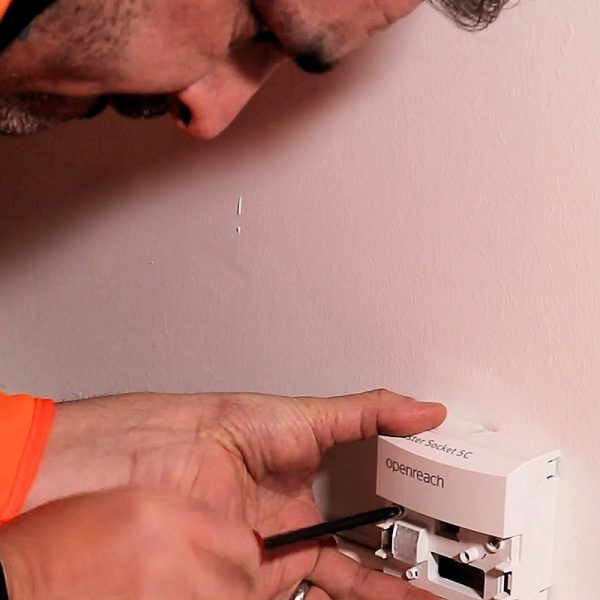
The boss of UK broadband ISP Andrews & Arnold (AAISP), Adrian Kennard, has tabled an interesting argument for why the charges still being levelled against them by BT Wholesale and Openreach for Special Faults Investigations (SFI) on hybrid fibre SOGEA (FTTC) and full fibre (FTTP) lines should “not exist any more“.
The SFI service is a chargeable engineering visit that is usually requested by your broadband provider when you report a persistent broadband or line issue, but where standard remote tests do not automatically detect a clear fault. Such issues were much more common on older copper line based broadband and phone services, which could be caused by all sorts of unusual faults (external electrical interference, line corrosion, problems caused by extension wiring etc.)
In theory, Openreach should be responsible for fixing any broadband faults that exist within their own realm at their own cost, which reflects most of the fixed line network that runs up to the ONT (optical modem) or NTE5 (Master) socket in your home (excluding extension wiring). But it’s not always that simple.
Advertisement
In practice, retail ISPs that harness services from the aforementioned operators often have to dispute SFI charges, due to disagreements over whether or not they’ve occurred within Openreach’s realm (often even when it’s obvious the issue is on OR’s side). Adrian’s new blog on this highlights some comical examples of the lengths A&A went to in order to get Openreach to recognise and fix problems within their own realm correctly, so as to avoid the related BTW charge.
However, in recent years the old “metallic paths” of legacy copper phone lines have gone through a significant change. So instead of buying broadband as an extra service to an analogue phone line, you today buy a data-only (broadband) line and the now digital (IP) phone service, should you even desire one, goes over the top of that. This somewhat changes part of the original premise behind the need for SFIs, albeit not completely.
Adrian Kennard said:
“Now we have the crux here – we are still getting SFI charges, and still spending time disputing them, but for almost all lines SFI should not exist. To explain, that initial bullet point has changed for most lines now – because of the UK telephone service switch over from old copper pairs to the exchange.
- Openreach sell a DATA service with handover on a fibre at the exchange, Openreach equipment in the street cabinet, and wires or fibre to the end user premises handed over as VDSL or Ethernet.
- BTW buy that DATA service, and have equipment at the exchange, backhaul, etc..
What we have here is no longer a gap – no longer is Openreach selling a metallic path and BTW using it to sell a data service. If the data service is not working it is Openreach not providing something to spec, and so Openreach should fix that as a NORMAL FAULT INVESTIGATION. There is no gap for which SFI was invented to cover. Indeed, BTW should dispute every such SFI charge before even thinking of charging us (ISP).
There are still some ADSL [copper broadband lines], but they are quickly going, so SFI could exist for those lines for now – with the same original controversy of BTW trying to charge ISPs, but this is dwindling. Somehow BT try to charge for SFI for VDSL and FTTP services even now where it logically makes zero sense.
If BTW really are separate from Openreach now, they really have no excuse for not disputing every SFI charge related to FTTC or FTTP on this basis.”
In fairness, SOGEA lines are still physically FTTC (VDSL2) broadband connections like they were before, and you still plug your router into the same NTE5 Master Socket as you did before. Suffice to say, there will be cases where problems outside of Openreach’s realm can cause that to become faulty (causing disconnections or significant drops in speed), which might in some cases justifiably attract a charge to resolve.
The case for SFI charges on FTTP lines is, however, much weaker, not least because they don’t suffer from the same issues and are not a metallic path (i.e. you should be able to test to the ONT with no ambiguity, eliminating most gaps where there is a fault outside their network). Adrian’s point about how it should be BTW disputing these charges on behalf of their ISP clients, rather than ISPs having to dispute them directly, also has merit.
Advertisement
For its part, BTW told ISPreview that the charging structure does differ between copper and fibre services, thus some engineering activity is still chargeable, depending on the nature and cause of the issue. Both Openreach and BTW largely responded to this by explaining how SFI works, which doesn’t fully answer Adrian’s complaint. Openreach also provided this explanation of their fault routes for FTTP and SOGEA lines (BTW broadly follows this but they aren’t bound by it):
Openreach Fault Routes for FTTP and SOGEA Lines
For both FTTP and SOGEA we have two fault routes the CP [broadband provider] can take, Standard Fault and Visit Assure. The route the CP takes is determined by the outcome of the initial test. In simple terms, there are two possible outcomes: Line Test not OK (LTnOK) or Line Test OK (LTOK). This initial result helps indicate whether a fault condition is present and therefore which fault route is appropriate.
LTnOK indicates the line has a fault condition present which may be within the Openreach network.
- CPs with a test indication of LTnOK should raise a standard fault (Normal). If, on completing the fault, the engineer identifies that the root cause is attributable to an Openreach network or service issue, no charge will be raised.
- If the condition was caused by EU [End-User]/CP equipment, or by damage to Openreach network equipment attributable to the EU, a charge will be raised for the fault.
- If no fault is present when the engineer visits, no charge will be raised.
LTOK indicates the line has no fault condition present at the time of the test.
- CPs with a test indication of LTOK can, if required, raise a Visit Assure fault with Openreach. This provides the option of an engineer visit even though the initial test has not identified a fault condition. If, on completing the visit, the engineer confirms that the service is operating within the technical standards and no issue is identified, a charge will be raised.
- A charge may also be raised if the engineer identifies a fault but finds that it was caused by EU/CP equipment, or by damage to Openreach network equipment attributable to the EU. In these circumstances, a VA charge will be raised for the fault.
As it stands, we’re not completely convinced that the answer to all this is for SFI to cease to exist, but there may be an argument for further reforming the way in which BTW/OR apply it. But for now, BTW still sell SFI like it is a service and leave related disputes up to their partner ISPs.



Mark is a professional technology writer, IT consultant and computer engineer from Dorset (England), he also founded ISPreview in 1999 and enjoys analysing the latest telecoms and broadband developments. Find me on X (Twitter), Mastodon, Facebook, BlueSky, Threads.net and Linkedin.










Advertisement
Leave a Reply
Privacy Notice: Please note that news comments are anonymous, which means that we do NOT require you to enter any real personal details to post a message and display names can be almost anything you like (provided they do not contain offensive language or impersonate a real person's legal name). By clicking to submit a post you agree to storing your entries for comment content, display name, IP and email in our database, for as long as the post remains live.
Only the submitted name and comment will be displayed in public, while the rest will be kept private (we will never share this outside of ISPreview, regardless of whether the data is real or fake). This comment system uses submitted IP, email and website address data to spot abuse and spammers. All data is transferred via an encrypted (https secure) session.















I’m guessing this is some arcane minutia of operating an ISP but I really didn’t understand the argument for removing the fee. Openreach’s approach seems reasonable to me? Any fault up to and including the ONT is fixed for free. If it turns out the fault is after that why shouldn’t they charge for the wasted engineer visit?
It’s more an issue of where charges are levelled for things within OR’s realm, that causes the disputes. Something harder to justify on FTTP, but it still happens. Worth reading Adrian’s full blog for the wider context.
No issue with it. We use it as a tool to help engage the customer with helping to diagnose the fault properly else they may face a charge, rarely have faults being found within our realm.
People conflate Wi-Fi as being everything including the actual Wi-Fi. Ironically it is usually the Wi-Fi signal which is the issue and not the connection in.
But what would be useful is if the tables were turned and a payment was made equal and returned when OpenReach fail to resolve a recurring fault. As the diagnostics work and admin is costly. Not to mention the upset it causes the end user. CCA cable being the main culprit which can require faults to be raised every few months. There is a lot of aluminium out there.
Would such losses for OpenReach shift priorities when it comes to rolling out fibre to aluminium and other challenging areas where faults are more common.
Adrian potentially has a lot more free time than he used to.
“what would be useful is if the tables were turned and a payment was made equal and returned when OpenReach fail”
As someone who just spend half a day waiting for Openreach to turn up without them even bothering to call, this can’t be stressed enough. Their failure cost me over £400 but the compensation offered was £35. I would rather they turn up of course, but the compensation has to be high enough to cause them pain in order that they are motivated to do what they promise.
As I understand it, the ultimate quality test is still the PQ Test, to ensure the line meets SIN 349, and a SFI charge applied when whatever caused the broadband fault was beyond the scope of these standards. So a PQ passes, but they still have broadband issues. This feels like they are moving the goalposts, unless SIN 349 has changed.
If you know the detail of SIN349 and the electrical attributes listed, it’s not much different than the electrical characteristics of a piece of wet string!
My view is there is more ISPs can do regarding the equipment they provide (not just provide off the shelf, particularly crap or too complex WIFI devices), without clear indications to the customer of what is going on e.g BT kit led colours.
In addition, where there is a network dispute there must be a way to have a mass-produced low-cost way of proving each step easier enough for a customer (or relative). A self-contained device for instance that can be plugged into an ONT (and router end) to prove the wholesale service (data throughput with each ISP providing the same test login etc. This device could then be sent out by an ISP regardless of their wholesale provider to reduce the need to require attendance and additional costs from the wholesale or backhaul supplier). Or just include it in the router functionality.
Basically, charges between providers within the network should be approved before they are actioned and the resulting resolution clearly logged to determine any cost allocation.
ISPs shouldn’t ignore that most technicians attending the customer are unlikely to blame customers unless the customer’s fault is excessive. Often, they clear many issues that are not related to the wholesale service.
The testing aspect for example is built in to Sky’s WiFi Max and Gigafast+ hub.
Every day it’ll test and log the speed and displays it for the customer (customer can also run a check themselves) and the info is logged by Sky.
But agree with you more can be done
haha!
neither should AA employ lazy people who acted bored and like they were reading off a script. It’s why i left them when I had a fault. Just felt like I was bothering them. The fault went away when Martin took over – funny that!
Yes, on their so-called ‘support’ pages, they actually state not to bother them with certain issues relating to NAT and, if you do, “don’t expect much sympathy”!
People often whinge on here about how the major ISPs insist on using their router, particularly when you’re trying to report a fault, and that ISPs like A&A offer much more freedom. Arguably that comes with the responsibility to be skilled enough to figure out when your equipment 100% isn’t at fault. So expecting people not to waste their time with NAT-related issues is very much in keeping with the idea.
When we moved to our current address, 10years ago, we could get internet but not voice. BT wanted £100 up front, before it would look at the fault which was clearly external. I’d been down that route before, in a previous house and it took months to get a refund so I said no. Everything we do is over the local ‘phone mast now, which works very well and far faster than over copper. (No fibre available here)
Out of curiosity, I checked the line a couple of months later. Surprise, surprise, the voice fault had been fixed.
Many years ago I had a recurring fault.
BT would run the test and the fault would disappear but be back within less than a month.
They wanted agreement I’d stump up money if the fault proved to be inside the house.
Turns out the fault was in the exchange. The terminals were rusted so badly it was only a matter of time before complete failure.
You would think that a recurring fault would trigger an investigation.
I wish that the company that won the rural gigabit rollout in my area would get their act together and hurry up before I retire in 2036.
Mark: para 1, I think you’re missing an ‘of’. “The boss (of) UK broadband”
So as the person who was tasked with disputing these charges, Adrian is bang on here, seeing the excuses made for a charge that included:
Animals damaging the line because Openreach refuse to place protective ducting over this to prevent it
Engineers claiming to attend but fail to provide evidence
Stolen pairs
Engineers making repairs but claiming EU at fault
None of those should be passed to the ISP and onto a customer but every month they would try it, Adrian is right
I would say not entirely as someone else doing the disputes at an ISP. SFIs have their place but the main killer is inaccurate notes and the dispute teams at openreach not accepting when we know a dcoe rebuild has been done and would be visible on their systems. It’s getting worse with the move to contractors who don’t use the QBC forms.
It might be clearer demarcation discussion for SOGEA etc. if Openreach provided a VDSL modem (linked to/ideally replacing the traditional NTE5 master), ie conceptually similar to provision of an ONT for FTTP. And then in both cases the retail provider providing a router that also performs the authentication.
Even better if the VDSL router also had ONT capability to support a later VDSL to FTTP switchover.
Openreach could have included a transitional analogue voice port in that sort of device (maybe also VoIP capability for ISPs that choose to buy bundled VoIP from Openreach).
But of course we wouldn’t add that extra layer now, since existing practice is for Retail ISP to provide a VDSL standard modem in their router.
I did deal with someone on a FTTP connection that had weird connection fault, loads of packet loss to specific web sites, looked like some sort of packet interference on Openreaches part of the network. the ISP provided us different PPPOE details. The PPPOE details worked fine on another connection via the same ISP.
We already knew open reaches line test would be fine and they’d blame the ISP, we couldn’t switch to a new open reach provider because of lack of capacity, already at full capacity, couldn’t submit a new order.
Open reach said line was ok. and couldn’t fix it.
the only fix was to switch to an Alt-net in that case Trooli.