Nicky Morgan MP Replaces Jeremy Wright as UK Culture Secretary
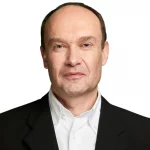
The appointment of Boris Johnson to become the new UK Prime Minister has resulted in yet another round of musical chairs at the top, which means that Jeremy Wright has now been replaced at the helm of the Department for Digital, Culture, Media & Sport (DCMS) by Nicky Morgan (MP for Loughborough).
Culture Secretary’s rarely seem to last very long and indeed Jeremy Wright only took on the position one year ago. Similarly Nicky may herself not last very long in the role if Boris’s plan for Brexit – assuming a viable one exists – results in yet more uncertainty and a continued inability to reach agreement across parliament.
Meanwhile Nicky herself will have the perhaps unenviable task of trying to figure out how achieve Boris’s pledge to have “fantastic full fibre broadband sprouting in every household” by 2025. Admittedly he hasn’t actually repeated the seemingly unachievable 2025 date again since formally taking office and this is one broadband strategy where the devil really will be in the detail.
Advertisement
At this point we’d usually look back on Jeremy Wright’s broadband and mobile centric achievements but the groundwork for most of what he oversaw was largely laid by his predecessors (i.e. Matt Hancock, Karen Bradley and Ed Vaizey). Jeremy did at least put a lot of effort into bringing mobile operators together for a potential network agreement in rural areas (still pending approval by Ofcom / Gov) and he launched the £200m Rural Gigabit Connectivity (RGC) programme to boost broadband (here).
As for Nicky, she studied law at Oxford University and then worked as a solicitor specialising in Corporate Law advising a range of private and public companies from 1994 till her election in 2010. Nicky has previously held government positions in education, equalities and the treasury. She also voted Remain in the 2016 EU referendum and has supported a campaign for better broadband in Loughborough (here).
Tim Breitmeyer, President of the (CLA) – Rural Landowners, said:
“We welcome Mrs Morgan to her new role as Secretary of State for DDCMS. We look forward to working together to improve rural connectivity and bridge the rural/urban divide.
We also believe that Mrs Morgan has the most tremendous opportunity to deliver on Boris Johnson’s promise of rural broadband for all which can unleash the currently untapped economic potential of the countryside, creating thousands of jobs in the process. But this is easier said than done, and we stand ready to help make this a reality.
At the top of her inbox will be a proposal from mobile operators on delivering a single rural network to increase 4G coverage in the countryside. We made a consistent case to her predecessor that any proposals need to be legally binding, should be robustly monitored and require operators to publish roll-out plans. The focus should be on improving coverage as soon as possible.”
At the time of writing we do not know who will replace Margot James MP in the key broadband and mobile centric role of Minister for Digital and Creative Industries.

Mark is a professional technology writer, IT consultant and computer engineer from Dorset (England), he also founded ISPreview in 1999 and enjoys analysing the latest telecoms and broadband developments. Find me on X (Twitter), Mastodon, Facebook, BlueSky, Threads.net and Linkedin.













« Virgin Media UK Rollout 1Gbps Broadband for All on Network by 2021
















Comments are closed