CityFibre Updates on Future UK 50Gbps and 100Gbps Broadband Upgrades
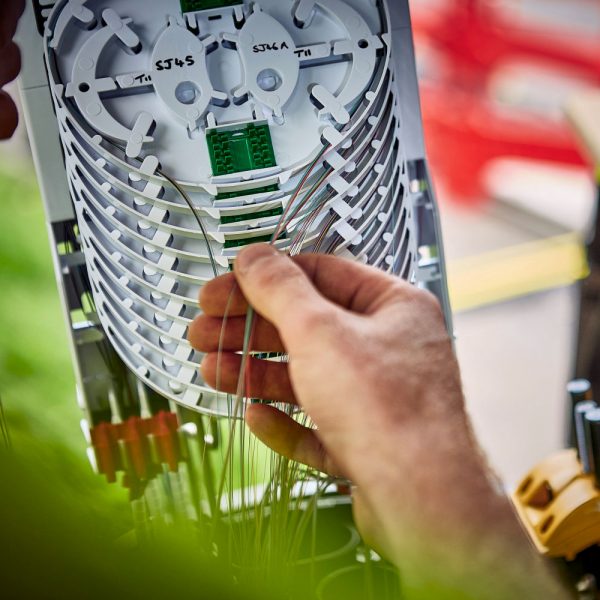
The Chief Technology Officer of major alternative network provider CityFibre, David Tomalin, has provided an update on their plans to upgrade their Fibre-to-the-Premises (FTTP) based broadband infrastructure to support 50G-PON (50Gbps Passive Optical Network) and then 100G-PON technology in the future.
At present, CityFibre’s network has only just completed its upgrade from slower GPON to XGS-PON (Symmetric 10Gbps PON) technology, which is how they were recently able to launch a 5.5Gbps speed broadband product at wholesale (here) for ISP partners like Sky Broadband to use. But they’ve also previously spoken very broadly about potentially going even faster than 10Gbps in the future – possibly up to 100Gbps (here).
Tomalin now appears to have developed a clearer plan for what network upgrades they’ll deliver over the next 10-15 years. According to what he told TelcoTitans (paywall), the plan is to adopt 50G PON as part of their “next [logical] business evolution” for the timeframe that runs until 2032 (exact timelines remain unknown). Business connections will be the first to benefit from this, followed later by residential customers during the 2030s.
Advertisement
At some point in the mid-2030s they’ll then “possibly” look to upgrade from 50G to 100G-PON, which is partly due to there being a lot of similarities in chip evolution and compatibilities between 100G and 50G. “We can definitely see there is a path to possibly move from 50 to 100 in the mid-2030s. So we’re now looking at that type of evolution,” said Tomalin.
However, it’s important to stress that the future deployment of such upgrades isn’t just about competitive bragging rights over faster speeds. The adoption of something like 50G-PON can also make managing networks and their capacity more cost-effective, particularly as the network fills up with customers.
The only UK network operator to actually deploy 50G PON technology in a live commercial network is currently Netomnia, albeit somewhat of a very limited demand-led service for business customers. But various others like Openreach (here) and ITS Technology (here) have conducted trials of the technology and the latter may go live with real deployments in 2026. CityFibre tends to use York as their city for testing such things, so that’ll be one to watch in future years.
Naturally, there will always be those who find reason to moan about the need for such upgrades (many online services still don’t really benefit from 1Gbps+ speeds). But pushing the boundaries of modern technology is part of what makes an operator exciting (marketing carries power) and as coverage matures then service performance / quality inevitably becomes part of the next competitive battleground, alongside price.
Advertisement
The catch for retail ISPs is that, in order to take advantage of such speeds, they’ll need to continue to invest in more capacity and better equipment (e.g. optical modems / ONT and routers, as well as fresh engineer visits for existing customers). All of that comes with its own costs and complexities. But in any case, CityFibre’s focus over the next few years will be on getting the most out of their 10Gbps capable XGS-PON network and ensuring ISPs are able to benefit from that.






Mark is a professional technology writer, IT consultant and computer engineer from Dorset (England), he also founded ISPreview in 1999 and enjoys analysing the latest telecoms and broadband developments. Find me on X (Twitter), Mastodon, Facebook, BlueSky, Threads.net and Linkedin.












« Government Launch 80 Free Local Digital Skills Training Schemes Across UK
















Why do they always bringing of more fastest speed? It’s getting so ridiculous now as there is no need for many home users. But, it was fine for large businesses who need it mostly.
Because 56K dial up, doesn’t cut it anymore!
Especially when 8k streaming kicks in. and Terrestrial TV is no longer a thing.
There are other advantages, even if most of their customers have 1-5Gbit then on a 50Gbit PON more people would have to be maxing out their connections before congestion is seen (assuming enough capacity upstream of the PON).
At the moment (esp with GPON) it only takes a few users with the higher tier packages to cause a slowdown for everyone on the split… in some cases as little as 2.
It’s not so much about individual users, I don’t think many residential customers would really benefit from a 50 Gigabit connection in the near future, but because PON is a shared connection it will allow more users to use more bandwidth simultaneously. So for example Openreach uses GPON which gives a 2.5 Gigabit download connection but it’s split between 30 users so if all 30 users start maxing out their connections at the same time each user will probably end up with much less than their theoretical connection speed. Higher speeds will allow more users to draw higher bandwidth simultaneously or to allow the networks to share each connection between more users.
IN the late 90’s, early 2000’s Demand exceeded bandwidth, now we are getting to the point that bandwidth upgrades are ahead of demand, agreed we don’t need those speeds NOW, but its good that we’ll have them when we do need them, rather than having to wait for the tech to catch up.
where things have improved is that the base technology into homes is easily upgradeable, we don’t have to wait like we used to e.g. Dial-up -> DSL -> VDSL -> FTTP
Because some people will eventually want uncompressed streaming. Think 80GB UHD Blu-rays. Now double that for 8K.
Why do people have zero imagination or capacity to imagine use-cases outside of their limited conceptualisation?
Currently, your online streaming services suffer from tremendous compression and still don’t compare to physical media. It’s why many people prefer to rip their own media and use services such as Plex or Jellyfin.
Some people are enthusiasts who care about the quality of their media, or the convenience of quick downloads.
You might not. That’s a you issue.
If you’re happy on 56kbps dial-up, more power to you.
The rest of us actually embrace positive progress.
“Naturally, there will always be those who find reason to moan about the need for such upgrades” and there you are
Agree, Bobby!
Everything goes now digital needs for better speed just keep growing.
Households also have more laptops, tablets, phones, gaming, streaming….
I already want 2 gigs, symmetric, what dinosaur Openreach just keep promising.
I work with audio/video and need fast uploads.
if im honest, I think the way the speeds are upgrading, is very rapid. to the point where these upgrades are happening too quick.
I mean cityfibre hasn’t even got it’s xgs-pon everywhere yet and theyre already thinking about 50gbps for retail customers….
not saying no to that upgrade but reality is 2032 is far too soon imo.
@Norman, yes you are right that everything requires people to be online these days, but not everything, in fact the majority of stuff don’t need super-duper fast speeds. Yes, you are also right about video needing faster speeds these days, because of quality and being 4K, but again, unless you have a load of people in the building streaming 4K at once, the chance of needing anything faster than even 150Mb/s is pretty slim. Audio, even Hi-res, needs very little bandwidth. This is streaming I am on about here.
There is need or want, that is the difference and then when people say, I want super-duper fast broadband, they don’t normally notice the difference, why? Because they never used what they had to its full potential.
If you are sending large files then yes faster speed is better, I notice when I send files to another Nas for backup, certainly if they are large files, how much quicker it is, but then the other person on the other side need to have the same speed or faster broadband if sending direct. If sending to a server, then it makes no difference.
But I just wonder what all of us got to do that is so important we can’t wait for a few minutes longer. I send my files overnight, most of the time, so it makes little difference.
Technology wise it is interesting and pretty amazing, considering that as a home user it is only 25 years since we got off dial up
@Benjamin – Back in June a CityFibre press release stated the rollout was over 85% complete and would be completed by the end of summer. The last update I saw earlier this month said it was complete, so the whole of CityFibre’s now has XGS-PON available and can order the faster products if their ISP supports them and the order journies needed to upgrade the ONT etc.
In the days when the car was introduced they would probably have said everyone is happy with a horse.
People who say other’s don’t need it are the ones who dont have it so they are jealous their comments prove this
We need a leap in home network technology next. 2.5Gb ethernet should really be the standard for even domestic routers, if there’s a hope of making use of some of these speeds. Gigabit is really old hat now. And of course, Wi-Fi 7 and soon Wi-Fi 8 to enable genuine Gb+ speeds over the air.
For now, 10Gb ethernet equipment remains extremely pricey and is essentially unknown outside commercial installations; hopefully it’ll start to become affordable in the 2030s.
Actually 10Gbit is starting to get established now in home networks. Two of my devices are 10gbit compatible, so i dont agree it is just for commercial use. Last week i bought a 5gbit network adapter and it was well under £40. Give it a year, once 10gbit BB is launched everyone will be able to afford the equipment. We certainly wont have to wait until the 2030s’s. I am sure some other posters to this forum will agree.
@K, Not sure why you’re buying equipment capable of up to 10Gig when in Northern lreland the best speed outside of Derry/LondonDerry with Netomnia is 1.8Gig from EE. You have previously said you come from a town of 30,000 so that rules out stroke City.
The Truth:
The equipment i bought came as 10Gbit compatible as standard. I thought i might as well be futureproof when Openreach are about to trial 3.3gbits+ in a couple of months as well. No point in buying just gigabit only if multi-gig is about to come out on Openreach. They announced this months ago. The point i was trying to make is 10gbit compatible hardware is out for home users already, and not just for commercial uses. And you can use 10gbit networking equipment for file transfers on your network even if you are on a slower internet connection.
It’s encouraging that there is a push to improve the business services – being stuck at 1Gbps if you want the enhanced care level didn’t make much sense.
FTTP 330/50 was perfect fine for 4K / 8K streaming online
You sound jealous of other’s access to this product
People who say People don’t need it are the jealous one’s who dont have it available
Yeah thats all great but high barnet which is a london town still can’t get more than 76mb♂️
Good , future proofing should happen.
As people have mentioned XGSPON is 10gb shared, who are we to say in 10 years that’s actually not a lot of bandwidth.
We are still on copper at work- a full business park only built in 2016. Theres no more room in the box. Weve attempted 3 times for City Fibre to connect us via Hosted and failed everytime. For a communications company – they are rubbish. Wrong addresses, no checks, nothing. Weve cancelled it now due to the disruption and they want to charge us. Jokers.
It would be nice if they could concentrate on a good service for their existing customers. My Internet has been down for the last 2 days with no sign of an engineer or any contact from City Fibre despite repeated phone calls.
CityFibre don’t have end customers. Much like Openreach all contact is through your ISP.