Royal Caribbean Cruise Ships Get Starlink’s Ultrafast Broadband
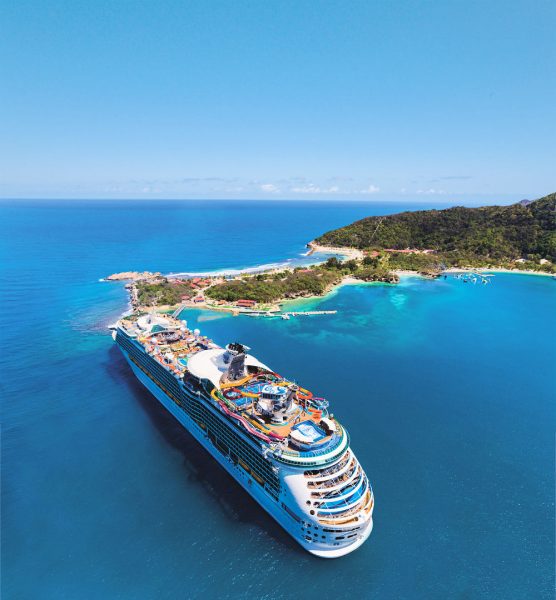
The Royal Caribbean Group, which operates luxury cruises from various ports around the world (e.g. Southampton in England), has announced that it is to become the first fleet in the cruise industry to adopt Starlink’s (SpaceX) new network of low-latency ultrafast broadband satellites in Low Earth Orbit (LEO).
Starlink’s mega constellation currently has around 2,941 LEOs (spacecraft) in orbit around the Earth and their initial plan is to deploy a total of 4,425 by 2024. Customers in the UK normally pay from £75 per month and £460 for the kit (dish, router etc.). But for that you can expect unlimited usage, fast latency times of 20-40ms, downloads of c. 50-200Mbps and uploads of c.10-20Mbps (speeds may change as the network grows).
However, so far we’ve yet to see any of the new LEO operators being adopted by cruise lines, which is an important consideration because internet connectivity on such vessels can be somewhat of a mixed bag, particularly when they’re far away from land in the open ocean. Ships in such areas tend to fall back on traditional communication satellites in a high earth orbit, where latency times can be slow and data speeds poor.
Advertisement
The good news is that Starlink, much like British-registered rival OneWeb, has made no secret of their desire to support maritime connectivity solutions (here). Happily, passengers onboard future Royal Caribbean trips look set to be among the first to benefit from this.
The cruise line is planning to deploy the faster broadband service for guests and crew fleetwide, covering all Royal Caribbean International, Celebrity Cruises and Silversea Cruises ships, along with all new vessels for each of the brands.
Jason Liberty, President and CEO of Royal Caribbean Group, said:
“Our purpose as a company is to deliver the best vacation experiences to our guests responsibly, and this new offering, which is the biggest public deployment of Starlink’s high-speed internet in the travel industry so far, demonstrates our commitment to that purpose.
This technology will provide game-changing internet connectivity onboard our ships, enhancing the cruise experience for guests and crew alike. It will improve and enable more high-bandwidth activities like video streaming as well as activities like video calls. Using Starlink is one more example of our continued focus on innovation and excellence for our guests, our crew, the communities we visit and our shareholders.”
Deployment of the Starlink technology across the fleet will begin immediately and, indeed, Starlink has already conducted a related trial onboard the Freedom of the Seas boat, which is said to have “received tremendous positive feedback from guests and crew“. The installation is slated to be completed by the end of the first quarter of 2023.
Sadly, no technical details of the network deployment itself have been revealed, but we’d expect that Starlink may need to serve such ships with significantly more capacity than their regular Maritime products (those offer downloads of up to 350Mbps). On the other hand, large ships and aircraft often make use of sophisticated caching systems, which takes a lot of the load created by popular content away from the remote network.
Advertisement






Mark is a professional technology writer, IT consultant and computer engineer from Dorset (England), he also founded ISPreview in 1999 and enjoys analysing the latest telecoms and broadband developments. Find me on X (Twitter), Mastodon, Facebook, BlueSky, Threads.net and Linkedin.












« Opensignal Show Divide in UK Rural vs Urban Mobile Broadband Speed

















Is that A&A’s RevK I can see on the top deck?
For those who don’t yet this reference: https://www.revk.uk/2018/06/this-jen-is-internet.html?m=1
I would like to see how this will work. Given the number of people a cruise ship can carry. And everyone will add every device they have to it. It’s like WiFi on flights, as soon as they say this flight has WiFi people start adding the network to their phone, ipad, laptop, etc.
Considering the size of a ship, they could have multiple starlinks, maybe 1 for ship systems and 1 per cabin class?
Whatever it’ll likely be faster than the current effort.
Not sure why many look to denigrate progress, it’s step 2, it might be crap but better than nought.
The key as mentioned in the article is the on board caching.
Also, there will be limits per connection and the cost will be reflective of this.
Compared to what cruises normally offer, I think it will be a big step up.
that will be errrr reliable
The images and explanations I’ve seen show them having 6 mounted antennas on each side of the cruise liner. e.g. https://s1.cdn.autoevolution.com/images/news/gallery/spacex-launches-starlink-maritime-for-boats-it-costs-an-arm-and-a-leg_6.jpg
12 antennas at 200-350Mbps each should be enough bandwidth for a large ship.
jayteedc