Proximity Data Centres Deploy Birmingham’s First Internet Exchange
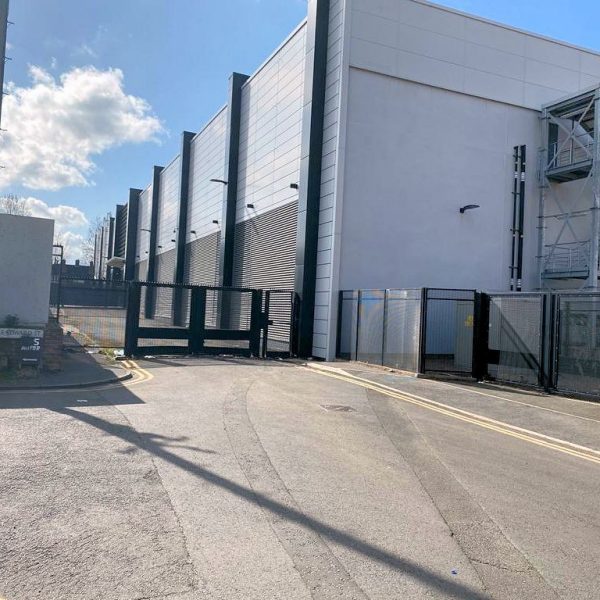
Data centre provider Proximity Data Centres has today announced the launch of the “first regional internet exchange in the heart of the West Midlands” of England – IX Birmingham, which could increase network resilience, reduce latency and long distance IP traffic for those local networks, CDNs and broadband ISPs that harness it.
The new exchange, which is located within Proximity’s Birmingham Edge 8 tier 3 data centre, claims it can boost performance by eliminating the need to route all of an operator’s data via exchanges in London and Manchester – local data stays local while other data can be accessed through traditional centralised internet exchanges.
The move forms part of Proximity’s previously announced plan to roll-out of a new network of regional internet exchanges across the United Kingdom and Europe, which would be based at each of Proximity’s regional colocation data centres and handled by their new Edge IX division.
Advertisement
The company currently has 10 such facilities strategically located to conurbations and cities in the North, North West, Midlands, Thames Valley, South West and South Wales.
John Hall, Managing Director-Colocation, Proximity Data Centres, said:
“We selected Birmingham as our first Edge IX location as the region’s digital community has remained underserved when it comes to the lowest latency solutions possible for sending or receiving data. We are looking forward to delivering similar benefits to other regions of the UK and Europe during this year and in 2024.”
Raj Mack, Birmingham City Council’s Head of Digital City, said:
“I have long pushed for the establishment of an Internet Exchange in Birmingham, recognising that it is a key component of the digital infrastructure that our businesses need to create and accelerate new products and services. The IX Birmingham will greatly enhance the capability of the City as a leading international digital city and its reputation as Digital Birmingham.”
The challenge with smaller IXs like this is usually with attracting a meaningful number of clients, many of which may already have an established presence at bigger or other nearby exchanges and thus feel less of a desire to move. At launch the new IX only has three members, including Proximity itself, while the other two are listed as Ashgoal Ltd (Connectbit) and Nuco Technologies Ltd (Host-IT). But no doubt more will follow.






Mark is a professional technology writer, IT consultant and computer engineer from Dorset (England), he also founded ISPreview in 1999 and enjoys analysing the latest telecoms and broadband developments. Find me on X (Twitter), Mastodon, Facebook, BlueSky, Threads.net and Linkedin.












« New Bill to Boost Consumer Protection on UK Broadband and Mobile

















I first saw this about 3 weeks ago on PeeringDB, probably long overdue if they can get a good few dozen network operators exchanging traffic to join
There’s no requirement for an Internet Exchange Point in Birmingham. It’s under 100 miles away from major peering points in Slough and Manchester. Don’t expect to see any significant networks connecting there.
At least it’s not wasting LINX members money this time!
Surely it makes more sense to have a presence here based on that? redundancy and capacity increase headaches can be spread out over more POPs. Also CDN/Peering can be done “more locally” again reducing capacity requirements at slough/manchester/london.
I don’t think you need as many as they’ve built, but Bristol/Cardiff/Birmingham/Manchester/London/Edinburgh at least makes sense in my head? especially when talking power and cooling requirements.
@Matt the number of carrier neutral hotels in Birmingham is….?
Even the one where this new IX is in is bloody small (63k square feet. Telehouse North – the original Telehouse building is 100k square feet). Capacity for 2000 racks which apparently is a draw for hyperscalers (may fit one in).
At this point nobody has made a successful datacenter in Birmingham for carrier handover because there is no demand. Its too close to London/Slough to make any real sense. The ‘build it and they will come’ mantra doesn’t work – check out the failure that is Linx Wales which has been operating for around 8 years and at its peak carriers around 150Mbps of traffic.
@Matt – For a tiny company they will probably find an old router, or just plug into their existing network there.
For any sizeable company the cost of a suitable router is going to be £50k+. Add to that space/power rental, backhaul, transport, design work etc. At the end of that they gain nothing of any real benefit and minimal traffic exchange…
A 10 Tbit/s router costs less per gigabit than 10 1 Tbit/s routers and does it with lower power, cooling and space requirements per gigabit. If it didn’t there would be no super high capacity routers but instead many smaller ones in each POP.
It’s a 5 millisecond round trip between Manchester and London across a fibre-rich, resilient national fibre network. The need for an exchange in Birmingham is, to say the least, debatable. Yorkshire has a population of 5.5 million and LeedsIX didn’t last. AQL have a datacentre where a bunch of providers’ kit lives but no need for public peering. The fibre route between Leeds and Manchester is more constrained than between Manchester and Birmingham.
For the big networks and CDNs to have a presence there needs the traffic to justify the investment. The traffic isn’t there: the biggest networks have most of their CDN needs taken care of by on-net caching and private peering.
There’s likely no business case for exchanges in Bristol and Cardiff, there isn’t enough traffic generated locally for one of those let alone both. Have a look at the traffic levels across LINX Wales. It averages less than most broadband connections and the highest ever level of traffic is less than a single Openreach headend exchange.
It actually adds both complexity and cost having lots of exit points to public peering on a network. Obviously a couple is wise for redundancy but beyond that the case gets a lot less persuasive. If you just want it for specific CDNs that obviously must have servers and routers nearby else the whole exercise is pointless why pay for a port on an exchange when you can colocate a router in a DC and use dark fibre?
They might get some smaller local providers signed up but our country is too small geographically with the population too concentrated to merit many exchanges. LINX Scotland makes more sense and even then it’s not shifting that much. A few people have broadband connections that could handle LINX Scotland’s 95th percentile.
I thought Birmingham was a major hub for Telcos. I know i’ve seen my location detected as Birmingham even though I live 70 miles away as the crow flies and closer to Slough. Surely more internet exchanges is a good thing, and also nice that not all tech jobs are for Londoner types (Sorry, just is)
So does that mean Birmingham will not have to rely on the London internet exchange system then?
It doesn’t, no.