36,000 North Lanarkshire Council Tenants to Get Gigabit Broadband UPDATE
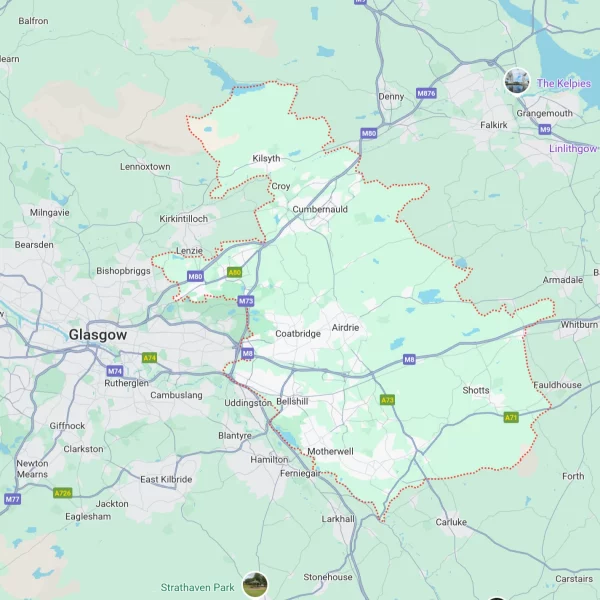
The North Lanarkshire Council (NLC) in Scotland has announced that they intend to roll-out “ultrafast broadband” connectivity across “all social housing” within the local authority (council documents suggest the goal is for speeds of 1Gbps), which is aimed at closing the authority’s digital divide, while improving access to knowledge, skills and jobs.
At present, the NLC is currently in the process of running a procurement to find a supplier (network operator) willing to deliver the new network. Once chosen, the supplier will be expected to complete the roll-out of a new “fully affordable, ultrafast, secure and reliable internet service” within around 5-7 years.
A number of pilot deployments are also expected to take place at several sites before the main roll-out begins. Nearly 2,000 initial properties will be chosen for this, reflecting the full spectrum of housing – including a high-rise tower block; temporary accommodation units; retirement complexes; a rural village and new build developments.
Advertisement
“We’ve also included homes located within the most deprived areas to ensure the initiative addresses inequalities and supports those who may benefit most from innovation. As part of the test of change initiative, nearly 400 of the 2000 will form a focused pilot for tech-enabled homes. These pilot sites will be equipped with smart home technologies tailored to tenant needs, enabling early evaluation of digital solutions in real life settings,” added the announcement.
Jim Logue, North Lanarkshire Council Leader, said:
“This project demonstrates that North Lanarkshire is leading the way to close the digital gap to level the playing field across economic, educational, and healthcare sectors, as well as social inequality.
Our project will have far reaching benefits, offering increased choice and control over how tenants interact with key services. Benefits range from people being supported to live independently and having greater control over their care, to the use of SMART technology which measures temperature, CO2 levels and humidity, optimising heating and providing alerts to faults. It also helps improve customer service and experience by enabling seamless end-to-end processes to fulfil service requests.
The effects of this programme will be felt for generations to come, improving access to increase opportunities and reduce inequalities allowing people to reach their full potential and prosper.”
The Scottish Household Survey (SHS) recently estimated that 10% of households in North Lanarkshire “do not have internet access” and furthermore, 15% of social rented tenants are the least likely across all tenures. The survey suggests that there is a correlation between digital exclusion and areas of deprivation, with households in the most deprived areas experiencing a greater rate of digital exclusion than those in less deprived areas.
At present there don’t appear to be any solid details on how much funding, if any, will be involved in the contract and naturally the timetable for any roll-out will depend upon who they pick to supply it.
UPDATE 9th April 2026
Advertisement
The contract notice (PIN) for this confirms the use of FTTP technology and values the future contract at £40m +vat. A supplier could be chosen in time for 5th June 2026.






Mark is a professional technology writer, IT consultant and computer engineer from Dorset (England), he also founded ISPreview in 1999 and enjoys analysing the latest telecoms and broadband developments. Find me on X (Twitter), Mastodon, Facebook, BlueSky, Threads.net and Linkedin.

























I think it may end up being Netomnia, they did a deal for other council properties a couple of years back, and have rolled out to the major towns in the area. If course it could also go to BT or VM as they also have a lot of coverage
Please might someone explain why it needs 1 gig when the job could be done with slower speeds just as easilly?
Also I know many people om pip that do not go short but live better than many working people.
Why not teach these people better budgeting skills so that their money goes further.
More should be done to push 5g mobile solutions